
Ragnarök: The Norse Cataclysm and the World’s Renewal
Ragnarök is the Norse myth of a final series of battles and calamities that destroy much of the old world and allow a new, reborn world to arise. Its details come chiefly from the Eddas.
Overview
Ragnarök is the term from Old Norse often translated as the "Doom of the Gods". In traditional sources it designates a sequence of events—warfare, natural upheaval, and divine deaths—that bring about the collapse of the present cosmos and the emergence of a renewed world. The story belongs to Norse mythology and is described most fully in the Poetic Edda and the Prose Edda.
Image gallery
10 Images




Principal forces and characters
The conflict pits the gods of Ásgarðr and their allies against a coalition of chaotic beings. The opposing sides include the Æsir gods and their kin, and a host of giants and monstrous entities. The accounts refer to a climactic battle in which many divine and monstrous figures meet fatal ends, and in which the present order of the world is largely destroyed.
Key participants
Primary combatants named in the sources include:
- Odin, the chief of the gods, leader of the Æsir.
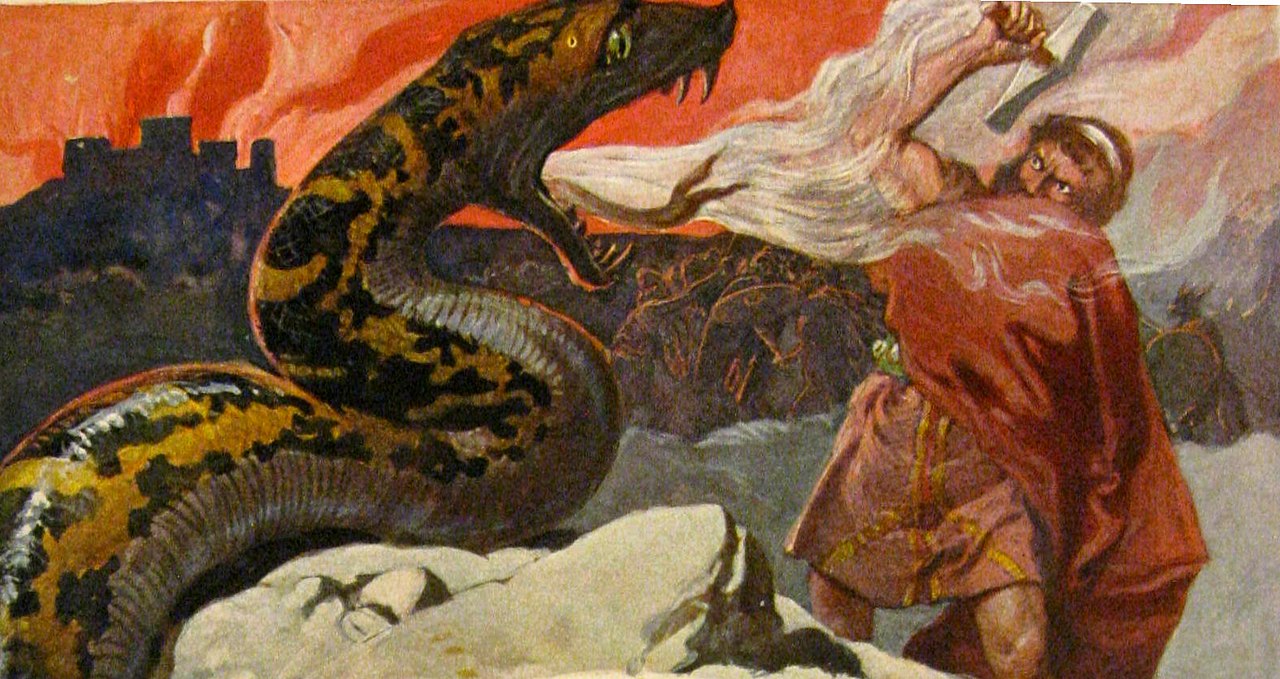
- Thor, the thunderer, fated to fight the Midgard Serpent.
- Loki, the trickster, who sides with the enemies of the gods.
- Fenrir, the enormous wolf destined to slay Odin.
- Víðarr, a god who survives long enough to avenge Odin.
- Týr and Heimdall, each paired in their own deadly confrontations.
- Forces of fire such as Surtr, and the wide-ranging giants or Jötnar, along with various monsters.
Sequence of events
Different Eddaic poems present details that vary in emphasis, but a common outline appears: a terrible winter (often called the Fimbulwinter) precedes the final struggle; bound monsters are loosed, ships crewed by the enemies put to sea, and cosmic signs appear. Seafaring enemies come on the ship Naglfar, the Midgard Serpent rises from the ocean, and wolves chase the sun and moon. Major duels occur on the battlefield: Odin confronts Fenrir; Thor battles Jörmungandr; Heimdall and Loki kill one another; and other pairings bring mutual destruction. After these combats, flames spread under the leadership of Surtr, and the world is overwhelmed by fire and water.
Aftermath and renewal
Ragnarök does not end in absolute annihilation. Many sources describe a remade world that rises from the sea, green and renewed, where a few gods survive or return and two human survivors repopulate the earth. Names such as Líf and Lífþrasir appear as the human ancestors of the renewed race. Some children of gods inherit the old powers, and the surviving gods govern a calmer order in which the old enmities are gone. Thus Ragnarök functions both as an ending and as a beginning.
Textual sources and cultural impact
The story reaches us chiefly through medieval Icelandic compilations, including both poetic and prose traditions. Interpretations range from literal eschatology to symbolic readings about cycles of nature, moral decline, or social change. Ragnarök has had enduring influence on literature, art, and modern media: it is often invoked when discussing mythic endings, apocalyptic motifs, and ideas of cyclical renewal.
For further reading and different scholarly perspectives, see introductions to the primary corpus and modern commentaries: Norse myth surveys, treatments of the battle narratives, summaries of the end-time motifs, biographical notes on figures like Odin, analyses of elemental forces such as fire, studies of the giants and Jötnar, explorations of Loki and other trickster figures, and resources on monstrous beings and the reshaping of the universe. Specific character studies include work on Fenrir, Víðarr, Thor, Týr, and Heimdall.
Related articles
Author
AlegsaOnline.com Ragnarök: The Norse Cataclysm and the World’s Renewal Leandro Alegsa
URL: https://en.alegsaonline.com/art/80845