
The World: meanings, senses, and cultural uses
Summary of how the term “world” is used to mean Earth, other planets, the universe, cultural or political spheres, and metaphorical senses in science, philosophy, and everyday language.
Overview
In ordinary speech the word "world" most often refers to Earth, the planet inhabited by humans and countless other organisms. The term serves as a shorthand for the totality of earthly life, environments, and human societies. It is used to indicate a global perspective when discussing issues that affect people everywhere, such as population, trade, climate, or cultural exchange. The idea of the world can be contrasted with more local or national viewpoints.
Image gallery
6 Images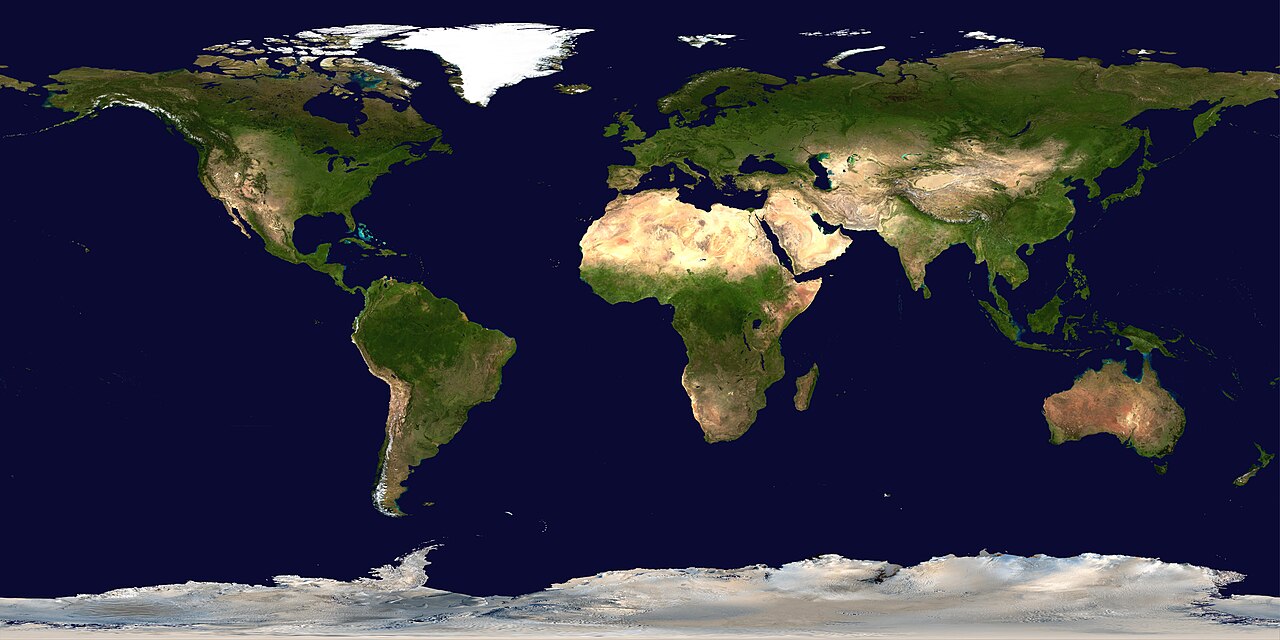




Different senses of "world"
"World" has several broad senses. In everyday and geopolitical language it often denotes the human community or civilization as a whole, a usage that links the word to concepts of international society and global public life; this sense sometimes appears in phrases like "the world community" or "the modern world." In astronomy and planetary science, the term may be applied to any planetary body, so speakers sometimes mean an other planet or a moon when they use expressions such as "a habitable world" or "an icy world." In philosophy and religion the word can signal an entire ordered cosmos, and older usage sometimes equated the world with the Universe.
Historical and linguistic development
Historically, the meaning of "world" has changed as knowledge and cultural perspectives changed. Before the scientific identification of Earth as one planet among many, many peoples described the world in cosmological, mythic, or geocentric terms. With the rise of modern science and global exploration the word gained more precise geographical and astronomical senses but retained older figurative meanings. For instance, expressions such as the "end of the world" can mean the end of history or the extinction of humanity, rather than a literal physical destruction of the planet.
Geographical, cultural and political subdivisions
Writers and commentators frequently use "world" to name cultural, religious, or economic regions rather than the planet as a whole. Examples include the Western world, the Islamic world, the historical terms "ancient world" and "new world," or geopolitical shorthand such as "the Third World" in older development discourse. Such usages highlight shared institutions, histories, religions, or economic relationships rather than strict geographic borders.
Metaphorical and specialized uses
The flexibility of the term makes it useful across disciplines. In philosophy and literature "world" can denote a conceptual or imaginary environment: authors speak of fictional "worlds," world-building, or distinct ways of seeing that constitute a person's "worldview." In everyday language it names spheres of activity (the "business world," the "scientific world") and appears in idioms such as "out of this world" or "a world of difference." In science, especially astronomy, the plural "worlds" routinely refers to multiple planets or planetary systems.
Importance and applications
Because the word functions at once as a scientific, cultural, political, and poetic term, it appears across many domains: in environmental science when discussing planetary systems and biodiversity; in international relations when framing debates about global governance; in economics when describing the world economy; and in art and religion where it carries symbolic weight. Understanding which sense of "world" is intended depends on context, discipline, and audience.
Distinctions and notable points
Ambiguity is an intrinsic feature of the term. The singular "world" often implies a totality or shared human condition, while the plural "worlds" usually signals distinct realms, whether fictional, virtual, or astronomical. Careful speakers and writers clarify their meaning by adding modifiers (for example, "the natural world," "the Western world," or "extraterrestrial worlds") to reduce ambiguity. For discussions that cross disciplines—such as debates over climate change, cultural heritage, or space exploration—explicit definitions help ensure communicative clarity.
For general background on related topics, readers may consult resources about Earth and planetary science (Earth), anthropology and human societies (humans), exoplanets (other planets), broad cosmological concepts (Universe), discussions of humanity's future (humanity), apocalyptic and eschatological language (end of the world), and regional cultural groupings such as the Western world and the Islamic world.
Related articles
Author
AlegsaOnline.com The World: meanings, senses, and cultural uses Leandro Alegsa
URL: https://en.alegsaonline.com/art/109133