
Ravana — the Rakshasa King of Lanka in the Ramayana
Ravana is a central figure in the Hindu epic Ramayana: a powerful rakshasa king, scholar and devotee of Shiva, famed as the antagonist who abducted Sita. He appears in varied religious and cultural traditions.
Ravana is a principal figure in the ancient Indian epic tradition, best known from the Ramayana. Traditionally described as the rakshasa (demon) king who ruled the island kingdom of Lanka, he is cast as the primary antagonist in the narrative yet portrayed with complex traits: a warrior-king, an accomplished scholar of the Vedas, and a devoted worshipper of Shiva. His story has been retold and reinterpreted across Hindu, Buddhist and Jain traditions.
Image gallery
10 Images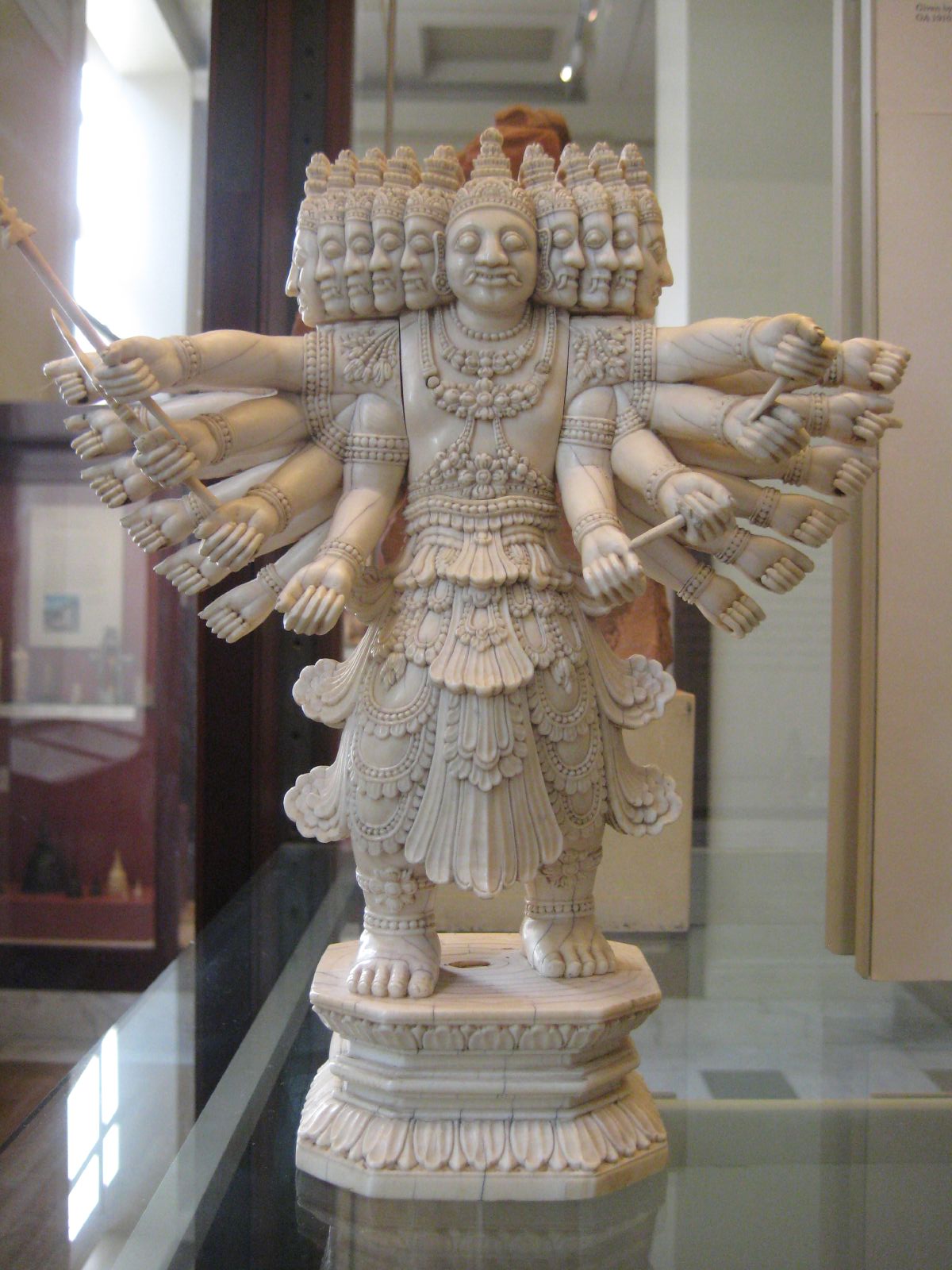


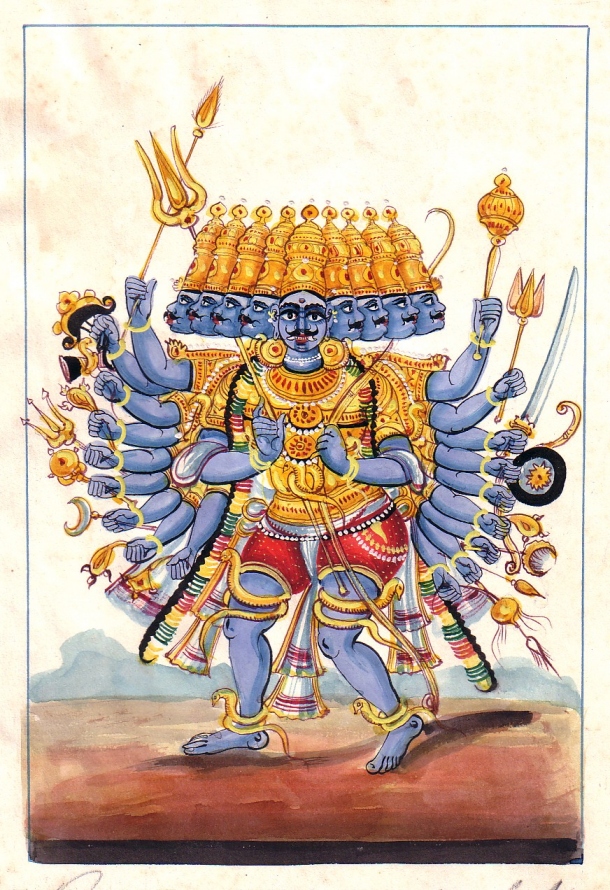


Appearance and attributes
Iconography of Ravana often emphasizes extraordinary physical and spiritual features. Popular representations show him with multiple heads and arms, a symbolic way to convey exceptional intellect, mastery of the arts of war and learning, and formidable power. He is traditionally credited with musical and poetic skill and with composition of hymns and stotras in devotional lore, though precise attributions vary by tradition.
Role in the epic narrative
In the core storyline of the Ramayana, Ravana abducts Sita, the consort of Rama, provoking an alliance of forces that culminates in a great war. Rama’s campaign to rescue Sita and the final slaying of Ravana define much of the epic’s moral and dramatic arc, where Ravana is presented as the central antagonist. His court, family and generals—figures such as his brother Kumbhakarna, his son Indrajit (also called Meghanada), and his brother Vibhishana—are recurrent characters in these events.
Origins, powers and traditions
Accounts describe Ravana as a powerful ruler who obtained boons and performed severe austerities, which made him a formidable opponent. Despite being portrayed as adharma (unrighteous) in the epic, many traditions emphasize his erudition and devotion. Different regional and sectarian tellings vary: while most Hindu accounts emphasize his opposition to Rama, some communities also acknowledge his scholarly reputation.
Cultural reception and comparative accounts
Ravana’s figure has inspired diverse interpretations. He features in Buddhist and Jain literature where episodes are retold with local emphases; see traditions recorded in Buddhist and Jain sources. In South Asian popular culture, his defeat is commemorated in festivals such as Dussehra, when effigies of Ravana are burned to symbolize the victory of dharma.
Notable distinctions
- Scholar and devotee: Often described as learned in sacred texts and a devotee of Shiva.
- King of Lanka: Traditionally identified with an island realm; later interpretations connect this setting to historical Sri Lanka in different ways.
- Complex legacy: Revered in some local traditions and criticized in others; subject of literary, religious and artistic reinterpretation.
Across centuries, Ravana has endured as a symbol of both villainy and ambiguous greatness—an emblematic figure through which themes of power, devotion, hubris and redemption are explored in South Asian cultural life.

Questions and answers
Q: Who was Ravana according to Hindu epic?
A: Ravana was a demon king of the island of Lanka according to Hindu epic.
Q: What is Ravana's portrayal in Ramayana?
A: In Ramayana, Ravana is described as a symbol of evil and the primary antagonist.
Q: Was Ravana a scholar?
A: Yes, Ravana was a learned scholar well versed in the Vedas.
Q: Which deity was Ravana the most revered devotee of?
A: Ravana was the most revered devotee of Shiva.
Q: Is Ravana's image associated with Shiva at some places?
A: Yes, Ravana's image is associated with Shiva at some places.
Q: In which other religious texts does Ravana appear?
A: Ravana appears in several Buddhist and Jain texts.
Q: What is the IAST representation of Ravana?
A: The IAST representation of Ravana is Rāvaṇa.
Related articles
Author
AlegsaOnline.com Ravana — the Rakshasa King of Lanka in the Ramayana Leandro Alegsa
URL: https://en.alegsaonline.com/art/81298
Sources
- wishyanchanuka.blogspot.com : "tha End of dayz....: Prehistoric Sri Lanka and The Great King Ravana"