
Rán — Norse goddess of the sea and the drowned
Rán is a Norse sea-goddess associated with storms, drowning and the recovery of lost goods. Wife of Ægir and mother of the Nine Waves, she is remembered through skaldic poetry and medieval Eddaic sources.
Rán occupies an ambivalent place in Norse mythology as a personification of the dangerous, consuming aspects of the sea. Traditionally described as a goddess or spirit of the deep, she is closely linked with shipwrecks, drowning and the recovery of objects lost beneath the waves. In many accounts she is presented as the wife of the sea-being Ægir and the mother of nine daughters collectively called the Waves.
Image gallery
3 Images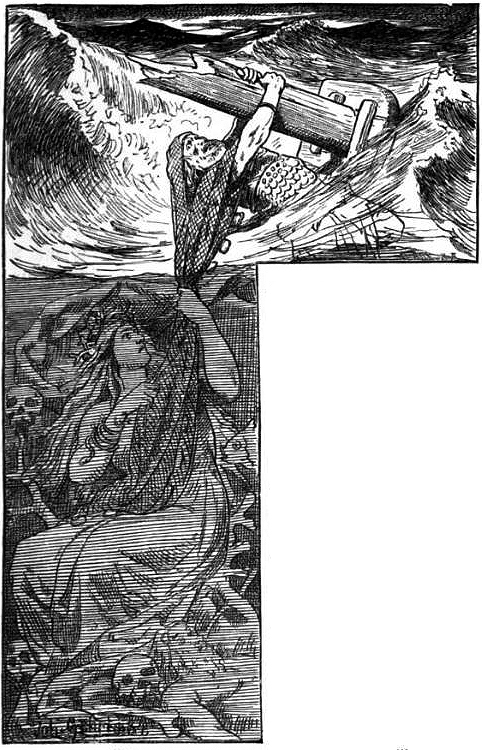


Characteristics and imagery
Rán is most famously associated with a large net that she uses to snare sailors and draw treasures to the seafloor. Poetic tradition often depicts her as greedy or remorseless, collecting valuables and the souls of those who drown. Common attributes and motifs include:
- The net: a symbolic implement for catching the drowned and their belongings.
- Nine daughters: personifications of waves or different kinds of sea-motion.
- Storms and the deep: connections to the violent, capricious nature of open water.
Sources and linguistic notes
Knowledge of Rán comes mainly from medieval Norse literature—Eddaic and skaldic poetry—and later summaries by saga-writers. Her name in Old Norse carries connotations of robbery or seizure, which fits traditional portrayals of a deity who takes both goods and lives from seafarers. Scholars note that references to Rán appear as vivid poetic kennings used by skalds to describe the sea and drowning.
Mythic role and cultural context
Within myths and poetic allusions Rán complements Ægir: where he hosts feasts and is a hospitable embodiment of the sea’s bounty, she represents the sea’s appetite and danger. Her daughters, often called the Waves, are treated as both literal swellings of water and as mythic figures. Sailors in Norse societies would have been keenly aware of her menace and sometimes invoked protective rituals or charms before voyages.
Legacy and interpretations
Rán has continued to appear in later literature, art and modern retellings as a powerful symbol of the sea’s unpredictability and the human cost of seafaring. In studies of Norse religion she illustrates how natural forces were personified and morally characterized. Her image—especially the net and the nine daughters—remains a useful emblem in discussions of maritime myth and poetic language.
For further reading on Norse texts, mythology and maritime symbolism see primary Norse sources, overviews of the sea in Viking culture, studies of storms and weather in myth, and treatments of the waves as mythic beings.
Related articles
Author
AlegsaOnline.com Rán — Norse goddess of the sea and the drowned Leandro Alegsa
URL: https://en.alegsaonline.com/art/81178