
Odin: The Norse All‑Father — roles, myths, symbols, and cultural legacy
Odin is a central god in Norse mythology: a complex figure of wisdom, war, poetry and magic, chief of the Æsir and ruler of Asgard whose myths shaped medieval literature and modern culture.
Overview
Odin (Old Norse Óðinn) is one of the principal deities in the Norse mythic tradition. He is commonly described as the chief of the Æsir and ruler of Asgard, identified with war, death, poetic inspiration, knowledge, and magic. Mythic genealogies present him as a son of the god Borr and the giantess Bestla (a jötunn). He is married to the goddess Frigg and commonly named as father to several well-known gods, including Thor, Baldr, Höðr, Víðarr, and Váli.
Image gallery
10 Images


Characteristic symbols and companions
Odin is portrayed with a distinct set of attributes that mark his functions and personality. These elements appear repeatedly in medieval poetry and later retellings, and they helped worshippers and storytellers identify his presence and role in mythic scenes.
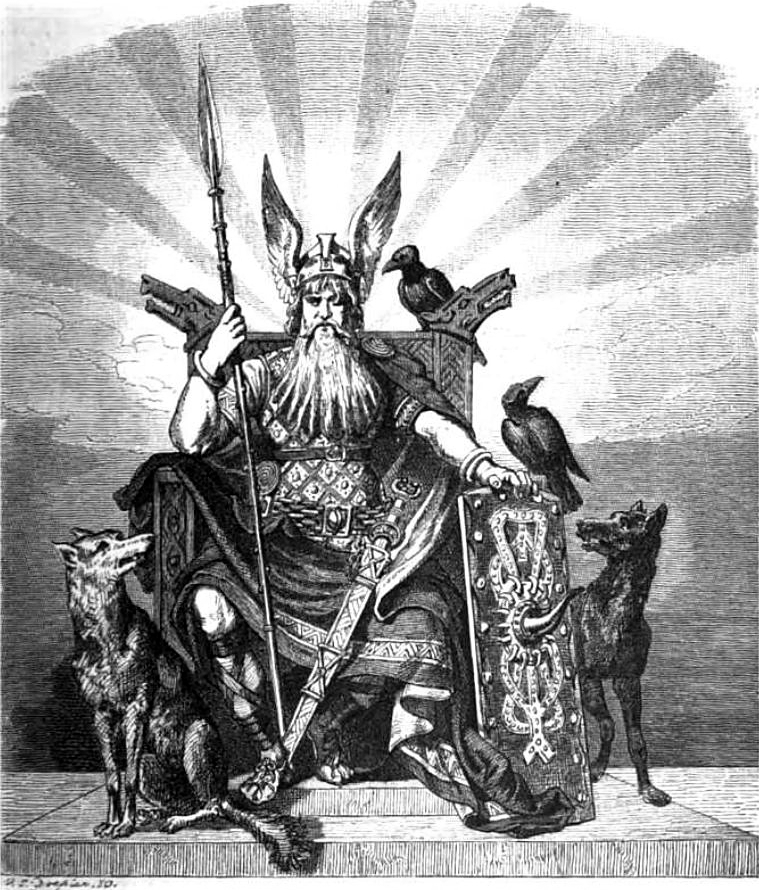
- Ravens: Huginn and Muninn provide Odin with news and thought—often represented as his scouts and advisers (Huginn and Muninn).
- Wolves: Geri and Freki are his animal companions at feasts and on the battlefield (Geri and Freki).
- Sleipnir: An eight‑legged horse that serves as Odin’s mount and conveys him between worlds (Sleipnir).
- Gungnir: A flawless spear that never misses, forged by skilled dwarven smiths (Gungnir).
Major myths and powers
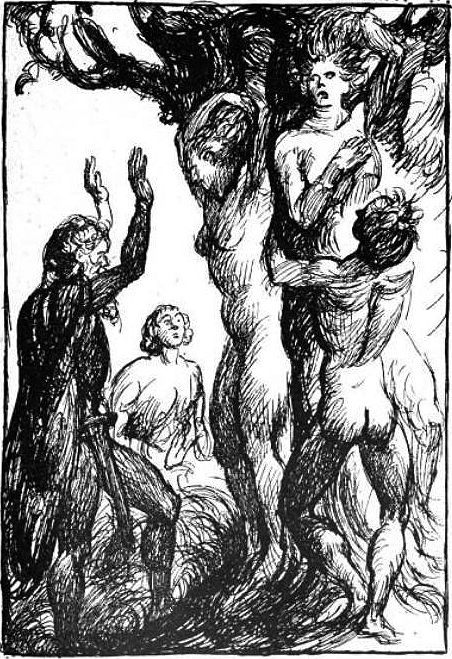
Two well‑known episodes underline Odin’s pursuit of knowledge. In one, he sacrifices an eye to drink at the Well of Urðr, gaining understanding of fate; in another, he hangs himself, wounded, from the world tree to learn the runes and the secrets of magic. He also consults the severed head of Mímir for hidden counsel. Odin is closely associated with the destiny of warriors: half of those slain in battle are taken by the Valkyries to his hall Valhalla, while the other half go to the goddess Freyja’s field, Fólkvangr. In eschatic myths he plays a central role in the events of Ragnarök, where his fate is tied to monstrous foes.
Sources, cult, and material traces
Most surviving narratives about Odin come from Old Norse literary collections, especially the Poetic Edda and the Prose Edda, together with skaldic poetry. Archaeological finds—bronze and gold bracteates, rune stones, and iconographic carvings—offer further evidence for a widespread Germanic figure resembling Odin in the migration and Viking ages. Scholarship combines literary and material evidence to reconstruct how Odin functioned in ritual and social contexts.
Names, equivalents, and cultural influence
Odin’s name and aspects appear across Germanic languages: in Old English as Wōden, and in continental Germanic as Wotan or Wōdan. His linguistic legacy survives in the modern English weekday name Wednesday (Wōden’s day). The figure has influenced medieval poetry, modern literature, visual arts, and contemporary religious movements that draw on Norse traditions.
Notable distinctions and legacy
Odin is a figure of contrasts: a war god who seeks poets’ inspiration, a ruler and a wanderer, a seeker of knowledge who practices magic and deception. His multifaceted nature made him central to Norse cosmology and later cultural reception. Because mythic sources were compiled centuries after the heyday of Germanic paganism, reconstructions of Odin blend literary invention, oral tradition, and archaeological interpretation; this makes him both one of the best‑known and one of the most debated characters of Norse mythology.
Questions and answers
Q: Who is Odin?
A: Odin is the god of wisdom, poetry, death, divination, and magic in Norse mythology. He is the chief of the Æsir and king of Asgard.
Q: Who are Odin's parents?
A: Odin's parents are Borr and the giantess (jötunn) Bestla.
Q: What animals accompany Odin?
A: Two ravens named Huginn and Muninn, along with two wolves named Geri and Freki often accompany Odin.
Q: What does Odin ride into battle on?
A: Odin rides into battle atop an eight-legged steed called Sleipnir.
Q: What weapon does he wield?
A: He wields a mighty spear called Gungnir which was fashioned for him by dwarves known as the Sons of Ivaldi. It is said to never miss its target.
Q: How did Odin become one-eyed?
A: In order to gain an incomprehensible amount of knowledge about the universe, Odin sacrificed one eye to drink from the Well of Urðr.
Q: Where do half of those slain in battle go according to Norse mythology?
A According to Norse mythology, half of those slain in battle will be guided by Valkyries - battle maidens - to Valhalla -Odin's enormous and majestic hall; while the other half go to Fólkvangr - Freyja's realm.
Related articles
Author
AlegsaOnline.com Odin: The Norse All‑Father — roles, myths, symbols, and cultural legacy Leandro Alegsa
URL: https://en.alegsaonline.com/art/71971