
Province of Quebec (1763–1791): British colony in North America
British colony created after the Seven Years' War. From the Royal Proclamation (1763) to the Constitutional Act (1791), it shaped law, settlement and Anglo‑French relations in what became Canada.
Overview
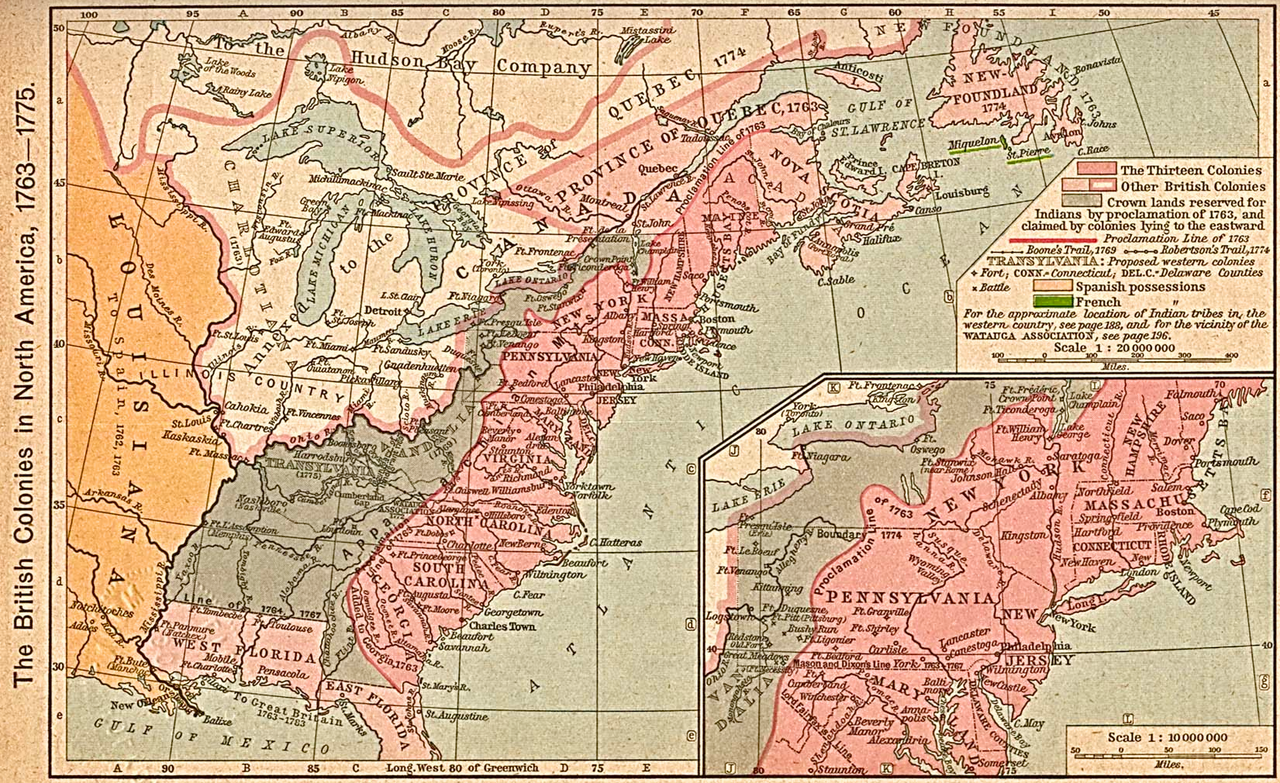
The Province of Quebec was the British political entity that replaced most of French Canada after the Seven Years' War. Created in the wake of the 1763 peace settlement, it brought a predominantly French‑speaking population under British imperial administration. The new province combined a vast geographic region centered on the Saint Lawrence River with the legal and demographic realities of the former colony of New France.
Image gallery
3 Images

Creation and legal foundation
The transfer of territory followed the European peace negotiations that ended the global conflict commonly called the Seven Years' War. Under the terms of the general settlement, known in North America as the Treaty of Paris (1763), the metropolitan rivalry was partly resolved when Great Britain gained control of most French possessions on the continent. As part of those negotiations, France accepted retaining lucrative Caribbean islands such as Guadeloupe, prized for its sugar production, rather than keeping extensive territorial claims in North America. Britain formally organized its new North American acquisition through the Royal Proclamation of 1763, which used the name Province of Quebec for the former Canadian territories and laid down initial rules for governance and settlement.
Geography and population
Geographically the province extended from the Atlantic coasts of Labrador along the Saint Lawrence River valley, past the Great Lakes, and — in British descriptions of the time — to the headwaters of the Ohio and Mississippi river systems. Its population included French‑Canadian settlers, Indigenous nations with long-established territories, and an increasing presence of British administrators, merchants and military personnel. The cultural mix and the predominance of Catholicism among the French‑speaking majority posed questions for British colonial policy about law, language and religion.
Administration, law and the Quebec Act
Early British governance in Quebec relied on a governor and appointed councils rather than an elected assembly. The imperial government initially tried to apply British legal institutions but faced practical and political resistance. In 1774 Parliament passed the Quebec Act, a measure that extended the province's boundaries and that accommodated French civil law and the free practice of Catholicism — a pragmatic step to secure the loyalty of French Canadians. The act also angered many English‑speaking colonists to the south, who viewed the measure as one of the so‑called "Intolerable Acts" contributing to colonial unrest.
Conflict, adjustment and territorial change
During and after the American Revolution, the political map of North America continued to shift. The Thirteen Colonies' rebellion and subsequent peace settlement led to boundary adjustments: portions of the southwestern territory once claimed by Quebec were assigned to the new United States in the Treaty of Paris (1783). Meanwhile, Britain's approach to Indigenous land rights, settlement beyond the Appalachian range and the balance between imperial control and local customs were shaped by earlier instruments such as the Royal Proclamation.
Legacy and end of the province
The Province of Quebec lasted until 1791, when British lawmakers sought a constitutional solution to competing demands from English‑speaking settlers and the French‑Canadian population. The Constitutional Act (sometimes called the Act of 1791) divided the territory into Upper Canada and Lower Canada, laying the groundwork for modern provincial boundaries and the enduring bilingual, bijural character of Canada. The period 1763–1791 is therefore central to understanding how British policies, French legal traditions and Indigenous presence combined to shape the region's subsequent development.
Notable points
- The province was established after diplomatic negotiations in which metropolitan powers traded territories such as small islands and colonies to balance commercial interests.
- Key legislative milestones included the Royal Proclamation (1763) and the Quebec Act (1774), both of which influenced settlement and legal practice.
- Territorial claims shifted again with the Treaty of Paris (1783), which recognized the independence of the United States and reassigned some lands.
- Debates over religion, property law and representative government during this period anticipated later constitutional arrangements formalized by the British-american legislative responses and ultimately by the imperial authorities.
For further reading and primary documents, consult published collections on the Great Lakes region, diplomatic correspondence related to the Treaty of Paris (1763), and legislative records surrounding the Royal Proclamation and the Quebec Act. Additional diplomatic context appears in sources about the negotiation choices that left France with islands such as Guadeloupe and shaped imperial priorities in the Caribbean and North America.
Selected references and archival links: British studies, military history, riverine boundaries, Mississippi basin, and administrative records from the late eighteenth century (St. Lawrence and sugar trade topics).
Related articles
Author
AlegsaOnline.com Province of Quebec (1763–1791): British colony in North America Leandro Alegsa
URL: https://en.alegsaonline.com/art/79683
Sources
- books.google.com : The Scratch of a Pen: 1763 and the Transformation of North America