
Sugar: types, chemistry, production, uses and health
Concise overview of sugar as sweet-tasting carbohydrates: common types (sucrose, fructose, lactose), chemical nature, production sources, culinary and industrial uses, nutrition and health considerations.
Overview
Sugar is the common name for a group of sweet-tasting, water-soluble chemical substances that occur naturally in many plants and are widely used as food ingredients. In everyday language it most often denotes sucrose, the familiar table sugar, but also refers to other simple sugars such as lactose (found in milk) and fructose (abundant in fruit). Sugars appear in a wide variety of foods and are central to many culinary traditions worldwide.
Image gallery
10 Images




Chemistry and classification
Sugars are a subgroup of carbohydrates, organic compounds built from atoms of carbon, hydrogen and oxygen. The simplest sugars are monosaccharides such as glucose and fructose, single-unit molecules that are directly absorbed by the body. Disaccharides, including sucrose and lactose, consist of two monosaccharide units joined by a chemical bond and are typically split into their monosaccharide components during digestion. Longer chains of monosaccharides produce complex carbohydrates such as starch and some dietary fibers, which are metabolized differently.
Common types and varieties
- Sucrose: the common table sugar obtained from plants like sugarcane and sugar beet; refined sucrose is white and crystalline.
- Fructose: a monosaccharide present in fruits and honey; it is sweeter than glucose on a per-gram basis.
- Glucose: a primary fuel for cells and a building block of many larger carbohydrates.
- Lactose: the disaccharide in milk; some people lack the enzyme lactase and are lactose intolerant.
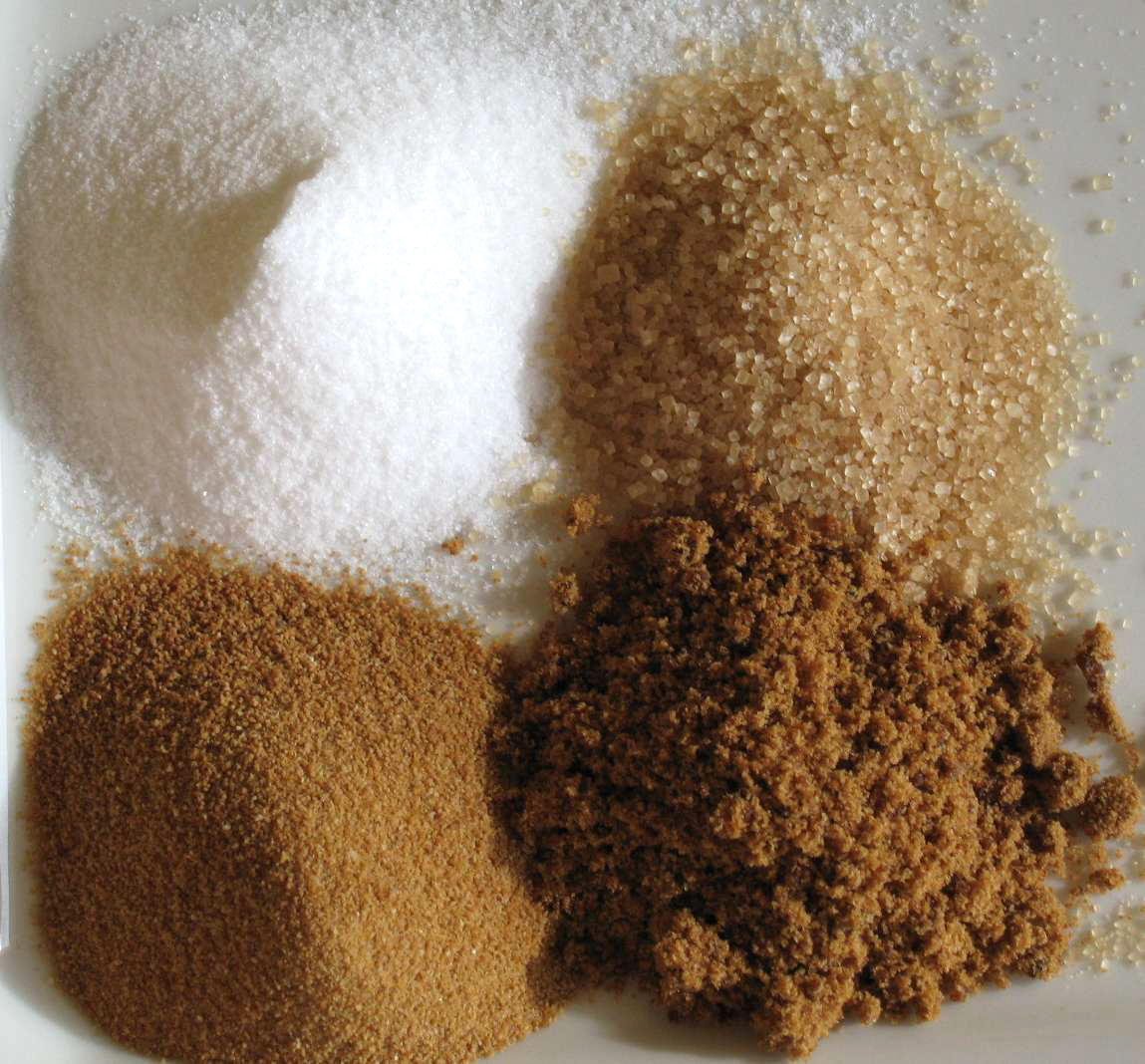
- Less-refined sugars: brown sugar and various raw sugars retain some molasses, which imparts color, flavor and moisture.
Production, geography and trade
Industrial sucrose production involves extracting juice from crushed cane or processed beet root, followed by purification, crystallization and drying to produce granulated sugar. Major producing regions combine suitable climate, land and processing infrastructure; for example, Brazil is a leading producer, while countries such as India are notable for large domestic consumption and extensive sugar industries. Refined sugars are globally traded commodities with complex supply chains and local processing practices.
Uses and culinary roles
Beyond sweetening, sugar plays multiple roles in cooking and food manufacture: it influences texture and bulk, aids browning through caramelization and Maillard reactions, supports fermentation in breads and brewing, and acts as a preservative in high-sugar preserves. Chefs and bakers select different forms—granulated, caster, powdered, inverted syrups or brown sugars—according to their effect on moisture, structure and appearance.
Nutritional information and health considerations
As an energy source, crystalline sucrose provides concentrated calories (commonly expressed as several hundred kilocalories per 100 grams). Natural sugars in whole fruits and dairy come with fiber, vitamins and minerals, whereas free or added sugars in processed foods contribute energy with few micronutrients. Excess intake of added sugars is associated with dental decay and can contribute to excess energy intake and weight gain when consumed in large amounts. Public health bodies advise limiting added-sugar consumption and replacing some sugary items with nutrient-dense alternatives.
Alternatives and substitutes
Sweetness can be provided by nutritive sweeteners (such as sugar alcohols and syrups) and non-nutritive sweeteners (synthetic or plant-derived high-intensity sweeteners). These substitutes differ in sweetness intensity, caloric contribution and functional properties in recipes, so they are chosen based on dietary goals and culinary needs.
History and cultural aspects
Plants that yield sweet juices have been used since antiquity for food and preservation. Over centuries, the production and refining of cane and beet sugar shaped trade routes, agricultural practices and cuisines. Sugar remains both a staple ingredient and a topic in public discussion about diet, health and sustainable production practices.
For further general reading, consult summaries on the nature of different sugar compounds, the role of glucose in metabolism, industrial sources such as sugarcane and sugar beet, and information from authoritative food and health organizations about dietary guidance.
Questions and answers
Q: What is the common name for several chemical substances?
A: The common name for several chemical substances is sugar.
Q: What are the two main types of carbohydrates?
A: The two main types of carbohydrates are simple carbohydrates and complex carbohydrates.
Q: How many calories are in 100 g of sugar?
A: There are 387 calories in 100 g of sugar.
Q: Where does regular sugar come from?
A: Regular sugar, or sucrose, comes from either sugarcane or sugar beet.
Q: What is fructose?
A: Fructose is the type of sugar that is found in fruits.
Q: What elements make up sugars?
A: Sugars are made up of carbon, hydrogen and oxygen.
Q: Which country has the highest total consumption of sugar?
A: India has the highest total consumption of sugar for a country.
Related articles
Author
AlegsaOnline.com Sugar: types, chemistry, production, uses and health Leandro Alegsa
URL: https://en.alegsaonline.com/art/94644
Sources
- commons.wikimedia.org : Sugars
- goldbook.iupac.org : "IUPAC Gold Book - sugars"
- illovosugar.com : illovosugar.com