
Royal Proclamation of 1763: British policy on settlement and Indigenous lands
A 1763 royal order by King George III that regulated settlement, land purchases, and relations with Indigenous peoples after the Seven Years' War; it shaped colonial tensions and later legal claims.
The Royal Proclamation of 1763 was issued on October 7, 1763 by King George III following the end of the Seven Years' War. It formed part of the British effort to reorganize newly acquired territory in North America after conflict with France and its Indigenous allies. The proclamation attempted to create a clearer system for colonial government, to regulate commerce and land transfers, and to ease friction between European settlers and Indigenous nations.
Image gallery
7 Images



Main provisions
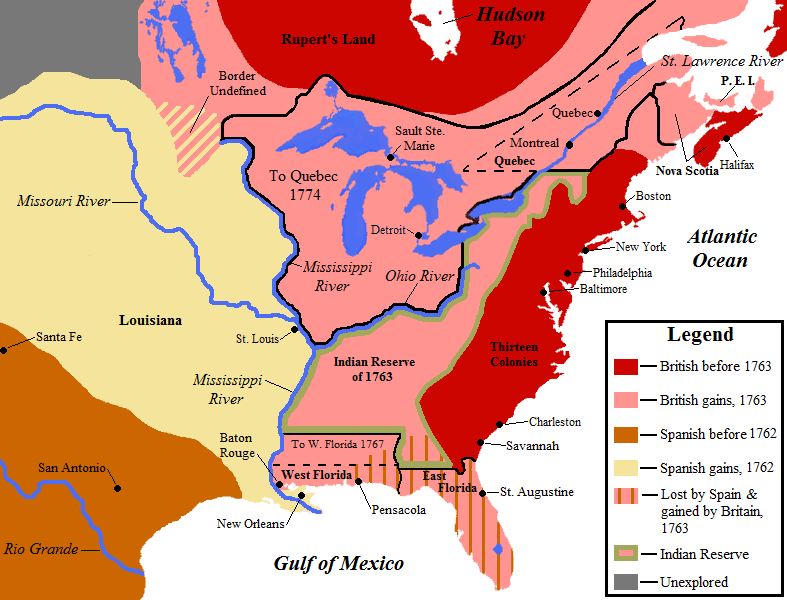
- The document established a western boundary—often called the Proclamation Line—running along the crest of the Appalachian Mountains, beyond which colonial settlement was restricted.
- It declared that private individuals could not buy land from Indigenous peoples; instead, land purchases had to be negotiated by the Crown and colonial officials, giving the Crown exclusive control over such transactions (a practical monopoly in negotiated land sales).
- The proclamation tightened regulations on trade and the establishment of military posts on the frontier to prevent unlawful encroachment and to manage relations with Indigenous nations more directly (trade, forts and diplomacy).
These measures were presented as administrative and protective: they aimed both to secure recent gains of the British Empire and to reduce violent clashes that had arisen during the French and Indian War. The Crown also sought to centralize authority in order to manage territory that had recently shifted from French to British control and to make the costs of frontier defense more predictable for the imperial government (Great Britain).
Immediate reactions and enforcement
Many American colonists, especially land speculators and settlers pushing west, resented the restrictions. Limiting settlement west of the Appalachians directly opposed the ambitions of those who expected to occupy or profit from the newly opened lands. Enforcement on the frontier proved difficult: settlers continued to move into places such as the Ohio River valley, and British authorities struggled to police the vast region or to fully prevent private purchases and local treaties.
Longer-term consequences and legacy
The proclamation is often cited as one of several imperial policies that increased colonial dissatisfaction in the decades before the American Revolution. It was followed by other measures—most notably the Quebec Act of 1774, which altered governance in former French Canada and affected religious and legal arrangements—that together heightened distrust among English-speaking colonists.
In another register, the Royal Proclamation has a continuing legal and symbolic legacy in modern Canada and elsewhere. It is sometimes invoked in discussions of Indigenous land rights, treaties, and the Crown's responsibilities because it formally recognized that Indigenous nations held title to their lands unless those lands were lawfully ceded to the Crown. Courts and political discussions have used the proclamation as historical context when addressing treaty rights and the duty to consult Indigenous peoples.
Notable facts
- The proclamation was a unilateral royal instrument rather than an act of Parliament, issued in the wake of diplomatic and military settlements.
- While aimed at order and protection, its practical effect varied regionally and over time, and it did not stop frontier expansion in practice.
- Scholars and legal authorities continue to examine the document for what it reveals about imperial intentions, Indigenous-Crown relations, and the origins of later constitutional arrangements.
For further reading consult primary documents and authoritative histories that discuss the proclamation's text, implementation, and place in the broader sequence of 18th-century British colonial policy. See also contemporary archival materials and legal analyses for its ongoing significance in discussions of Indigenous rights and colonial governance.
King George III | Proclamation date | Great Britain | French territory | North America | French and Indian War | Seven Years' War | trade | British Empire | Appalachian Mountains | monopoly
Related articles
Author
AlegsaOnline.com Royal Proclamation of 1763: British policy on settlement and Indigenous lands Leandro Alegsa
URL: https://en.alegsaonline.com/art/84494
Sources
- uppercanadahistory.ca : "The Royal Proclamation of 1763 The Quebec Act of 1774"