
Pschent: The Double Crown (sekhemti) of Ancient Egypt
The Pschent, or sekhemti, is the merged white and red crown worn by Egyptian rulers to signify sovereignty over Upper and Lower Egypt; its form and meaning are known from art, titulary and ritual contexts.
Overview
The Pschent was the combined royal headdress that signified a pharaoh's sovereignty over a united Egypt. Often rendered in English as the Double Crown, its Egyptian name sekhemti is commonly translated as "the Two Powerful Ones." The crown visually fused the emblems of the two traditional regions of Ancient Egypt, and it became a principal emblem of kingship used in official art, titulary and ritual representation.
Image gallery
8 Images


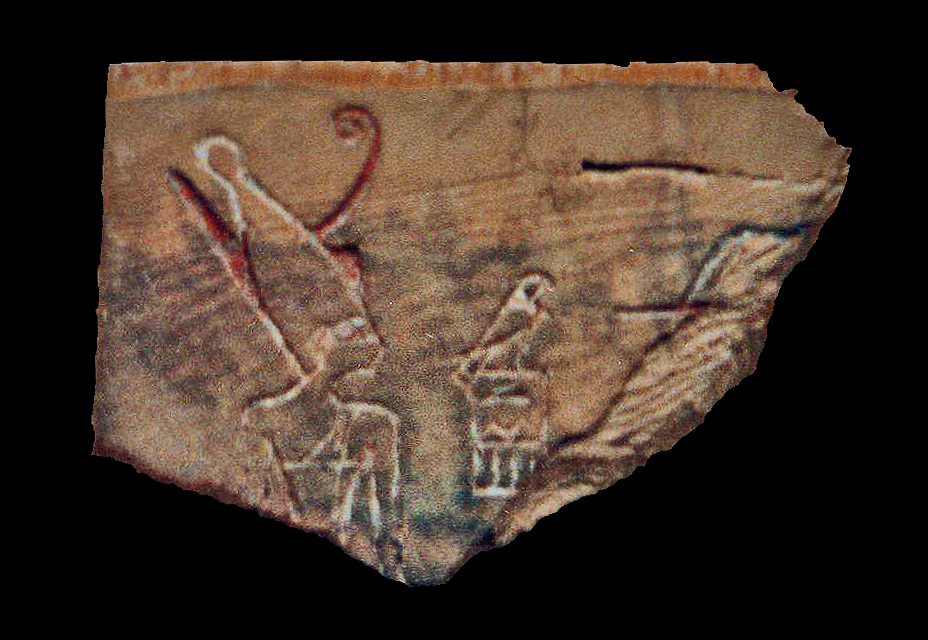


Components and appearance
The form of the Pschent results from the combination of the white conical Hedjet associated with Upper Egypt and the low red Deshret associated with Lower Egypt. Artistic conventions show the two parts fitted together to form a distinctive silhouette that is immediately recognizable as royal. On the forehead are usually two protective creatures: the rearing cobra or uraeus and the outstretched vulture, often rendered in relief or attached as metallic ornaments in painted depictions.
Religious and political symbolism
The double crown embodied the political union of the Nile valley and the pharaoh's role as guardian of order. The cobra stands for the Lower Egyptian goddess Wadjet, while the vulture represents the Upper Egyptian goddess Nekhbet. These two goddesses, sometimes called the "Two Ladies," acted as protective patrons of the king and of the two lands. As a visible symbol, the Pschent linked the ruler with divine sanction and the duty to uphold maat, the cosmic and social order central to Egyptian ideology.
Origins and historical evidence
The crown is associated with the early consolidation of political authority in the Nile Valley during the Predynastic and early Dynastic periods. Early royal iconography—on palettes, cylinder seals and reliefs such as widely cited ceremonial scenes—already conveys a concern to display domination over both regions. While precise archaeological evidence for an original, single-point invention is limited, the Pschent emerges in the visual language of kingship from the earliest historical monuments and continues in modified forms throughout pharaonic history.
Materiality and preservation
No intact ancient example of the Pschent has been recovered by archaeologists, so knowledge of its actual materials and construction is necessarily inferential. Depictions suggest the crown could be made of textile, leather, plant fiber or other perishable materials, and that metal fittings or appliqués were used for the uraeus and vulture in some cases. Because crowns were likely valuable and ritually significant, representations in stone, wood or metal give the primary evidence for their appearance rather than surviving garments.
Use in ritual and titulary
The Pschent functioned as part of the visual language of power: it appears in coronation representations, temple scenes, royal statuary and on personal seals and scarabs. The imagery of the "Two Ladies" was incorporated into royal titulary and epithets to emphasize the pharaoh's protective relationship with Wadjet and Nekhbet. Other headgear—such as the striped nemes, the blue war crown (khepresh) and the white atef crown—coexisted with the Pschent and were employed to emphasize particular ceremonial, martial or religious roles.
Artistic variation and regional styles
Stylistic treatment of the crown and its attendant emblems varies by period and medium. In the earliest depictions the forms are more schematic and symbolic; in later periods artists introduced greater naturalism and added decorative detail. Regional workshops and different genres—relief carving versus painted scenes, for example—produce variations in proportion, ornament and the rendering of the protective creatures.
Legacy and modern perception
As a concise emblem of unified kingship the Pschent remains a powerful motif in modern depictions of ancient Egyptian statehood. It is often used in museum labels, popular media and educational works to signify pharaonic authority. For deeper study consult specialist literature on royal regalia and Egyptian iconography or museum catalogs that assemble comparative images and inscriptions. General introductions to the role of the pharaoh, and studies of regional identities in Upper Egypt and Lower Egypt, place the Pschent in its broader political and religious context.
- The Pschent, called sekhemti in Egyptian, literally evokes the partnership of two protective powers.
- Depictions, rather than surviving examples, provide the basis for reconstruction of its appearance.
- The crown appears alongside other royal insignia in texts and reliefs that explain the pharaoh's duties and divine backing.
For introductory overviews and image collections consult works on royal symbols and the Double Crown in surveys of Ancient Egypt. Detailed analyses often treat the Hedjet and Deshret as distinct emblems whose union produced the distinctive Pschent, and they trace how the uraeus and the vulture were graphically rendered across media and periods by artists and craftsmen working in different royal centers. Scholarly discussions also consider the roles of Wadjet and Nekhbet in royal ideology and in the formulation of royal epithets and titulary that invoked the "Two Ladies."
Questions and answers
Q: What is Pschent?
A: Pschent was the name of the Double Crown of Ancient Egypt.
Q: What does sekhemti mean?
A: Sekhemti means the Two Powerful Ones.
Q: What was Pschent made from?
A: Pschent was made from the Red Deshret Crown of Lower Egypt and the White Hedjet Crown of Upper Egypt.
Q: What did the Pschent represent?
A: Pschent was a symbol of the pharaoh's power over all Egypt.
Q: Which animals were used in the design of the Pschent?
A: The design used two animals, a cobra and a vulture.
Q: What were the cobra and vulture called and what were they symbolic of?
A: They were placed on the front of the Pschent and called the Two Ladies. The Egyptian cobra, known as the uraeus, ready to strike, was a symbol for the Lower Egyptian goddess Wadjet. The Egyptian vulture was a symbol for the Upper Egyptian goddess Nekhbet.
Q: Why were the cobra and vulture symbolic of different Egyptian goddesses?
A: The cobra was associated with the goddess Wadjet, who was worshipped in the north, while the vulture was associated with the goddess Nekhbet, who was worshipped in the south. The combination of the two symbols helped to signify the unification of Upper and Lower Egypt under one ruler.
Related articles
Author
AlegsaOnline.com Pschent: The Double Crown (sekhemti) of Ancient Egypt Leandro Alegsa
URL: https://en.alegsaonline.com/art/79809
Sources
- commons.wikimedia.org : Crowns of Egyptian deities
- commons.wikimedia.org : Pschent
- commons.wikimedia.org : Red crown
- commons.wikimedia.org : White crown