
Ohio River: Geography, history, and role in American inland navigation
Major tributary of the Mississippi River running 981 miles from Pittsburgh; forms state borders, supports navigation and industry, and has important ecological and historical significance.
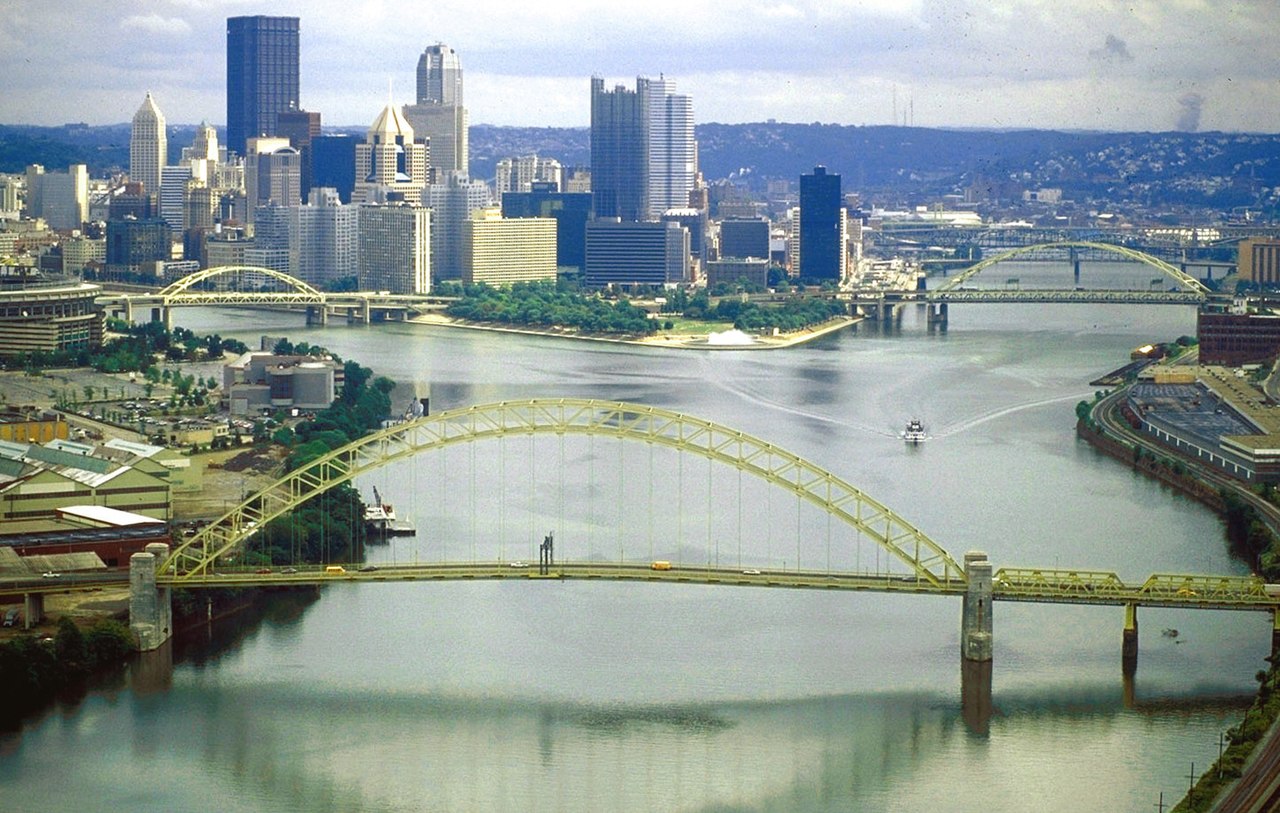
The Ohio River is a major inland waterway in the eastern United States. Formed at the confluence of the Allegheny and Monongahela rivers in Pittsburgh, it flows generally southwest for about 981 miles before joining the Mississippi River. It is widely regarded as a principal tributary of that continental drainage system and has long been central to transportation, commerce, and settlement in the region.
Image gallery
10 Images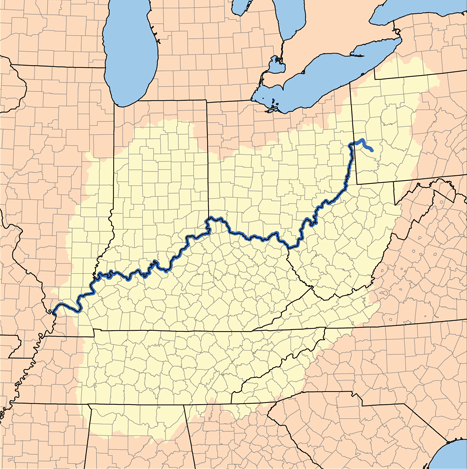



Course and bordering states
From its origin the Ohio marks or touches several state boundaries. Along its length it forms natural borders for Ohio, Kentucky, Illinois, Indiana and West Virginia, while its headwaters lie in Pennsylvania. The river’s width varies significantly; one of the widest sections is a little west of downtown Louisville, where it can expand to roughly a mile across under normal conditions.
Cities, navigation and infrastructure
Many cities and towns developed along the Ohio because of its access to trade routes. Notable urban centers on or near the river include Evansville, Paducah, Cincinnati, Louisville and the river’s origin at Pittsburgh. The river is navigable for much of its length and is managed with a system of locks, dams and ports that facilitate barge traffic carrying coal, grain, petroleum products and other bulk cargoes.
Tributaries and watershed
Its watershed collects water from many feeder streams and rivers. Among the larger tributaries are the Wabash, the Kentucky River and the Tennessee River. These and numerous smaller tributaries help define the river’s seasonal flow patterns and influence flood behavior downstream.
History, ecology and modern importance
Historically the Ohio River was a frontier between different cultures and economies and played a key role in westward expansion, industrial growth and the movement of goods and people. Today it remains important for inland shipping, regional industry, recreation and wildlife habitat. Ongoing management addresses water quality, flood control, navigation efficiency and the conservation of fish and riparian ecosystems.
- Origin: confluence at Pittsburgh
- Length: about 981 miles
- Functions: navigation, commerce, recreation, habitat
Because of its size and central location in eastern North America, the Ohio River continues to be studied and managed by federal and state agencies, local authorities, and community organizations concerned with balancing economic use and environmental stewardship.
Related articles
Author
AlegsaOnline.com Ohio River: Geography, history, and role in American inland navigation Leandro Alegsa
URL: https://en.alegsaonline.com/art/72122