
Prince Escalus (Romeo and Juliet)
Prince Escalus is the magistrate of Verona in Shakespeare's Romeo and Juliet. He represents civil authority, punishes public disorder, and ultimately presides over the play's tragic resolution and reconciliation.
Prince Escalus is a central representative of law and order in William Shakespeare's tragedy Romeo and Juliet. As the ruling magistrate of Verona, he appears at key moments to check the street violence between the Montague and Capulet houses, to sentence offenders, and to pronounce the play's final judgment. Though he is not a sympathetic intimate of the lovers, his role frames the action: public authority confronting private passion, and civic peace weighed against family honour.
Image gallery
10 Images
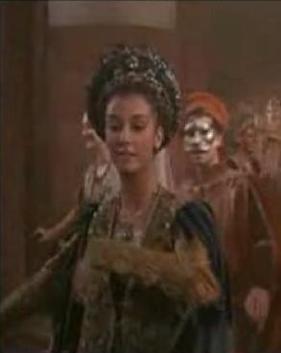


Role in the play
Escalus first appears after a brawl in the streets, where he scolds both houses and warns that further breaches of the peace will be punished by death. He returns after Mercutio and Tybalt are involved in a deadly encounter, and when Romeo kills Tybalt the prince chooses exile rather than execution, banishing Romeo from Verona. In the final scene of the drama Escalus arrives at the tomb after the suicides of Romeo and Juliet, hears the account of events, and calls for an end to the feud. His last speeches underline the civic consequences of private hatred and spur the Capulets and Montagues to reconcile and exchange memorials for the dead.
Character and dramatic function
Unlike the passionate young protagonists or the eager warriors around them, Escalus embodies restraint, legal responsibility, and public interest. Dramatically, he provides an external standard against which the lovers' illicit devotion and the families' vendetta are judged. He is related by blood to two important figures in the play—Mercutio, Romeo's friend, and Count Paris, Juliet's intended—so his positions are not purely abstract: he is personally connected to the social fabric torn by the feud. Directors and actors can choose to emphasize his severity or his weary pragmatism; either way he represents the costs that civil authority must pay when private violence overwhelms law.
Origins and historical context
The story of Romeo and Juliet predates Shakespeare, drawing on Italian tales and English translations such as Arthur Brooke's narrative poem of the 16th century. Shakespeare shaped these inherited materials into a condensed stage drama and refined certain figures—among them the civic official who enforces order. Escalus’s name and title suggest a princely magistrate drawn from Renaissance ideas about urban governance: a visible ruler whose commands are intended to stabilize a fractious society. His interventions reflect contemporary concerns about public order, duelling, and the responsibilities of rulers to prevent private violence from spilling into the street.
Performance and adaptations
Stage and screen adaptations treat Escalus in different ways: some productions make him an authoritative, almost imperial figure whose sentences seem inevitable; others present him as a beleaguered administrator, trying and failing to contain forces beyond his control. In film versions he often appears in short but decisive scenes that frame the drama’s moral arc. Critics and scholars frequently cite his final admonitions as a thematic hinge: through him the tragedy attains its public meaning, and the reconciliation between the families acquires legal and symbolic recognition.
Legacy and notable facts
Escalus's decisions—especially the banishment of Romeo and the public rebuke of both houses—drive the plot toward its tragic resolution and underscore themes of justice, responsibility, and the limitations of law. In literary studies he is a common point of discussion when critics analyze the play’s treatment of authority versus private desire. At the close of the play, the families’ promise to erect monuments for the dead underscores how civic leaders can force public acts of remembrance that seek to heal social wounds.
- William Shakespeare: overview and biography
- Text of Romeo and Juliet: critical editions and variants
- Primary sources for Romeo and Juliet
- Historical role of princes and magistrates in Renaissance cities
- Verona: historical and cultural background
- Law, order, and authority in Shakespearean drama
- Character studies: Mercutio, Romeo, and relations to Escalus
- Analyses of the play's tragic ending
- Performing Romeo and Juliet: staging the final scene
- Symbolism of monuments and memorials in literature
- Critical essays on authority and reconciliation
For readers and students, Escalus is a compact study in how public office interacts with private grief: his appearances are few but pivotal, and his judgments—whether final or compromised—shape the play’s ethical and theatrical consequences.
Related articles
Author
AlegsaOnline.com Prince Escalus (Romeo and Juliet) Leandro Alegsa
URL: https://en.alegsaonline.com/art/79162