
Puppeteer: craft, techniques, and role in performance
A puppeteer is an artist who creates and animates puppets—figures shaped like humans, animals, mythical beings or objects—using hands, rods, strings, electronics and other means for stage and screen.
Overview
A puppeteer is an artist who makes and manipulates a puppet to give the impression that an inanimate figure has life, personality and intention. Puppets may resemble a human, an animal, a legendary creature or an ordinary object. The visible result is a combination of the puppet's design and the operator's skill in timing, gesture and voice.
Image gallery
1 Image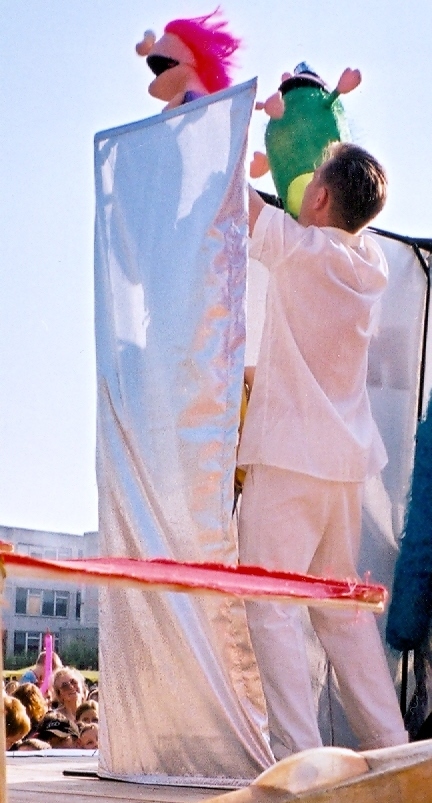
Forms and mechanisms
Puppetry encompasses many forms, each defined by how the puppet is built and controlled. Common categories include:
- Hand puppets and glove puppets: the operator's hand occupies the puppet's interior.
- Rod puppets: rods attached to limbs or head allow external manipulation.
- Marionettes: controlled from above by strings or wires for articulated movement.
- Bunraku-style: large figures operated by multiple visible puppeteers working in concert.
- Shadow puppets: flat figures between a light source and a screen create silhouettes.
Modern techniques add electronics, remote controls, animatronics and digital augmentation to expand motion, facial expression and synchronization with sound.
History and development
Puppetry is an ancient performing art found in many cultures. It has evolved from ritual and folk storytelling into theatrical forms, children's entertainment and cinematic effects. Traditions such as Indonesian wayang, Japanese bunraku and European marionette theatre illustrate regional styles, while twentieth-century innovations broadened puppetry’s presence in education, television and film.
Roles and skills of a puppeteer
A puppeteer combines craftsmanship—carving, sewing, building mechanisms—with performance abilities: timing, voice work, lip and body synchronization, and the creation of distinct characters. Often a single performer writes, designs and performs; in larger works, teams collaborate on construction, operation, lighting and sound.
Uses and cultural importance
Puppetry serves entertainment, ceremonial, educational and therapeutic functions. It can simplify complex ideas for young audiences, preserve cultural narratives, comment on social issues, or provide interactive learning. On-screen puppets and animatronics also remain important in film and television production, linking practical effects to storytelling.
Notable distinctions and contemporary practice
While some puppeteers remain hidden to maintain an illusion of independence, others perform visibly, allowing the audience to appreciate the craft. The interplay between visible operator and puppet invites different responses: invisible manipulation can create stronger suspension of disbelief, whereas visible operation highlights collaborative artistry. For introductions and resources about building and performing with puppets, see further material such as general guides and instructional collections (example: puppet resources).
Whether practiced as folk tradition or high art, puppetry continues to adapt, integrating new materials and technologies while relying on timeless principles of movement, voice and imagination.
Related articles
Author
AlegsaOnline.com Puppeteer: craft, techniques, and role in performance Leandro Alegsa
URL: https://en.alegsaonline.com/art/80108