
Juliet Capulet — Shakespeare's heroine of Romeo and Juliet
Juliet Capulet is the young female protagonist of Shakespeare's Romeo and Juliet, celebrated as an emblem of youthful love, defiance, and tragic consequence across theatre, film, opera and ballet.
Overview
Juliet Capulet is the central female figure in William Shakespeare's tragedy Romeo and Juliet. Introduced as a member of the feuding Capulet household, she falls profoundly in love with Romeo Montague, a member of the rival family. Their brief, intense relationship culminates in a secret marriage and a sequence of events that ends in both lovers' deaths. Juliet is often remembered as an archetype of passionate young love and of individual will confronting social constraints.
Image gallery
10 Images
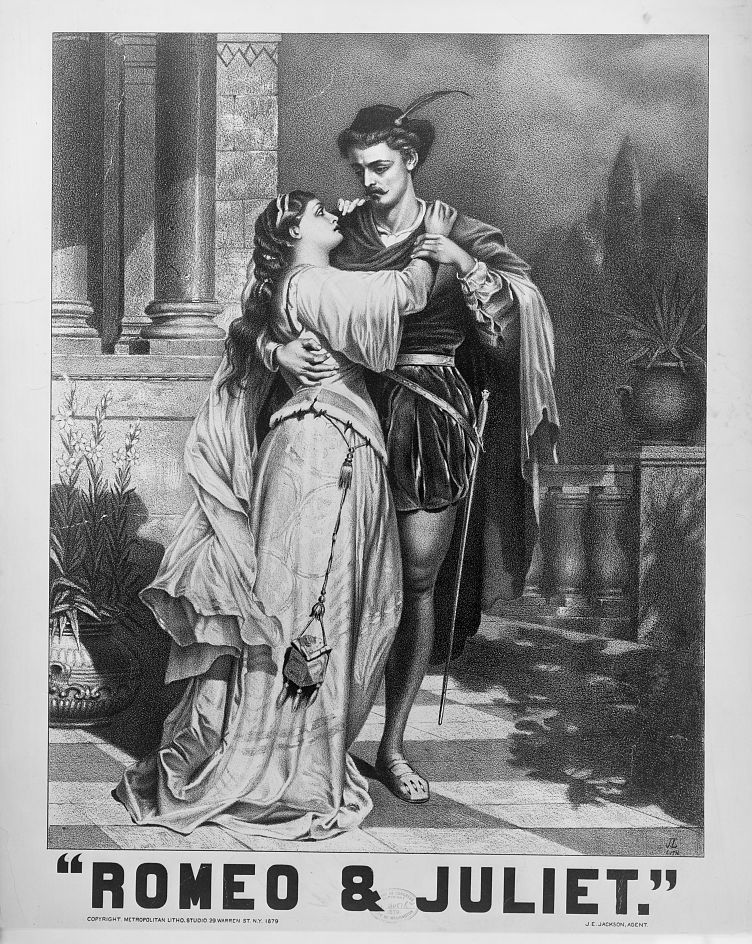





Character and role in the play
In the play Juliet is portrayed as strikingly young, commonly interpreted by actors and scholars as in her early teens. Shakespeare presents her at the intersection of innocence and rapid maturation: within a few days she moves from dutiful daughter to decisive partner who arranges a clandestine marriage and makes a dangerous plan to avoid an unwanted match. Her interactions with other characters—her parents, the Nurse, and Friar Laurence—reveal both dependence on and eventual rejection of prescribed social roles.
Major plot points
Key moments that define Juliet include the famous balcony scene where she and Romeo declare their love; the secret wedding ceremony; the public violence that follows which alters both families' fortunes; and her choice to take a sleeping potion designed to delay an arranged marriage. Believed dead and placed in her family tomb, she is discovered to be alive too late to prevent Romeo's suicide. Facing his death, she kills herself, completing the play's tragic arc.
Themes and interpretation
Juliet embodies several of Shakespeare's lasting themes: the intensity and impulsiveness of young love, the conflict between private desire and public duty, and the role of fate versus personal agency. Critics and directors have varied in their readings—some emphasize her youthful naivety, others her courage and resourcefulness in choosing her fate. The character invites questions about gender, family authority, and the costs of social division.
Adaptations and notable portrayals
The story of Juliet has been adapted across many artistic forms. Film versions and reinterpretations continue to introduce the character to new audiences; classic screen portrayals include Norma Shearer and Olivia Hussey, and many productions are collected under surveys of cinematic film adaptations. Musicians and composers turned the drama into operas—most famously Charles Gounod's Roméo et Juliette—while choreographers created ballets set to scores such as Prokofiev's Romeo and Juliet. Legendary dancers including Rudolf Nureyev and Margot Fonteyn have performed the lovers’ roles, reinforcing the tale's place in both theatrical and dance repertories.
Legacy and notable facts
Juliet's impact extends beyond theatre into literature, education and popular culture; schools and drama companies frequently stage the play, and the character often serves as a touchstone in discussions of romantic idealism and tragic consequence. She remains a focal point for adaptations that explore different historical, cultural, or psychological perspectives, from faithful period productions to modernized retellings. Whether studied for Shakespeare's language, portrayed on stage or screen, or reimagined in music and dance, Juliet continues to be one of the most recognizable and debated characters in Western drama.
- Overview and origin: Shakespeare's late-16th-century tragedy.
- Defining moments: balcony scene, secret marriage, the tomb.
- Artistic forms: stage, film, opera, ballet.
- Famous interpreters: Norma Shearer, Olivia Hussey, dancers like Nureyev and Fonteyn.
Related articles
Author
AlegsaOnline.com Juliet Capulet — Shakespeare's heroine of Romeo and Juliet Leandro Alegsa
URL: https://en.alegsaonline.com/art/51510