
Oxide (chemical compounds of oxygen and other elements)
Oxides are compounds containing oxygen and another element; they range from gases to minerals, play roles in geology, industry and the environment, and include acidic, basic and amphoteric varieties.
Overview
An oxide is a chemical compound whose structure includes at least one oxygen atom bound to at least one atom of another element. In chemistry an oxide is a type of chemical compound specifically involving oxygen. Oxides occur as simple molecular gases, discrete molecular species, ionic solids and extended covalent or metallic lattices. They are produced by direct combination of elements with oxygen, by combustion, by oxidation in air and during many geological and industrial processes. Much of the Earth's crust is composed of oxide minerals, notably silicates built from silicon dioxide and related frameworks.
Image gallery
2 Images
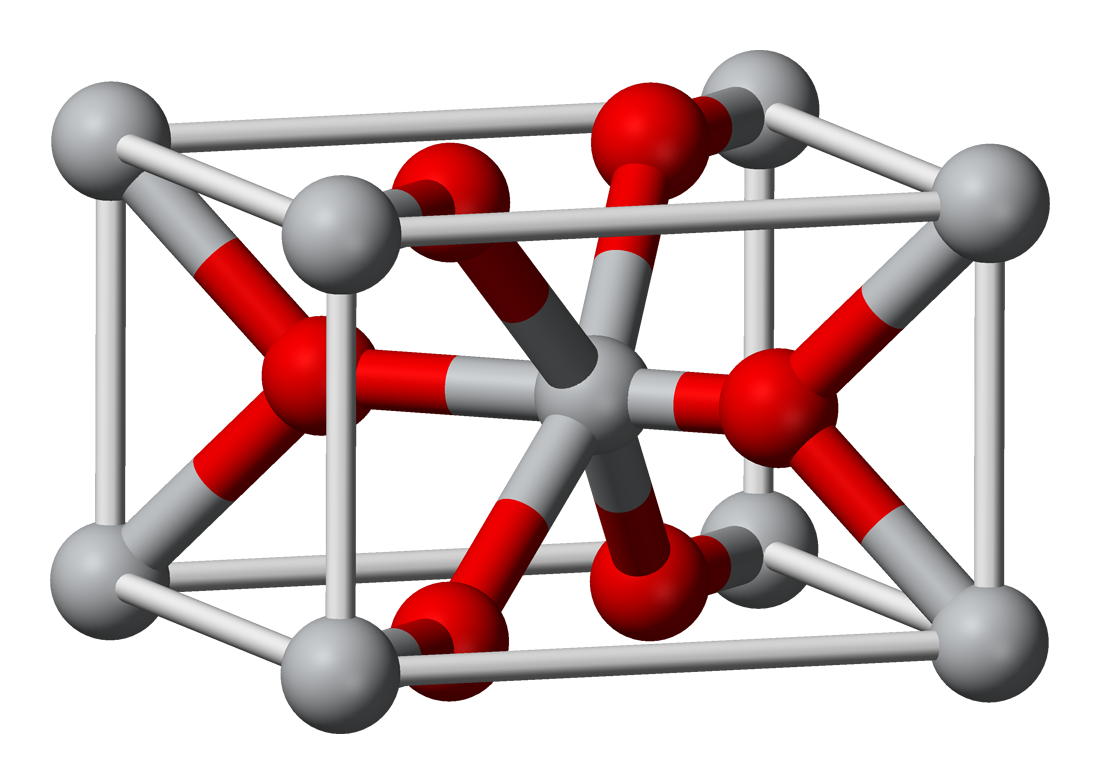
Classification and bonding
Binary oxides can be broadly classified by bonding and chemical behavior. Ionic oxides, often formed by electropositive metals, have strong metal–oxygen interactions and high melting points (examples include calcium oxide and magnesium oxide). Covalent molecular oxides, common for nonmetals, include carbon dioxide and sulfur dioxide. Transition-metal oxides may show mixed ionic and covalent character and variable oxidation states, as in the several oxides of copper (Cu2O, CuO) and iron (Fe2O3).
Chemically, oxides are often described as acidic, basic or amphoteric. Acidic oxides (typical of nonmetals) react with bases to form salts, basic oxides (typical of alkali and alkaline earth metals) react with acids, and amphoteric oxides (such as aluminium and zinc oxides) can react with both. Some oxygen-rich species such as peroxides and superoxides contain O–O linkages and are treated separately from simple oxides.
Formation and oxidation states
Oxidation of metals by air produces common metal oxides and corrosion products (for example rust from iron). Organic combustion yields gaseous oxides such as CO2 and, under incomplete combustion, CO. The formal oxidation state of oxygen is usually −2 in simple oxides, but exceptions occur (for example peroxides, superoxides and molecular oxygen). Transition metals form oxides exhibiting a range of oxidation states; control and understanding of these states underpins catalysis, battery technology and solid-state chemistry.
Representative examples and uses
- Water (H2O) — the oxide of hydrogen, essential for life and a medium for countless chemical processes.
- Iron(III) oxide (Fe2O3) — a common corrosion product and pigment; related forms of iron oxide are important in geology and materials.
- Aluminium oxide (Al2O3) — a hard, refractory and wear-resistant ceramic used in abrasives and as an electrical insulator.
- Lead(II) oxide (PbO) — historically used in glass and glazes; use is now limited because of toxicity concerns.
- Calcium oxide (CaO) — produced by heating limestone; used in cement, steelmaking and chemical processes.
- Magnesium oxide (MgO) — a refractory material used in crucibles, insulation and as a supplement in small doses.
- Zinc oxide (ZnO) — used in sunscreens, rubber vulcanization, pigments and some electronic applications.
- Copper(I) oxide and Copper(II) oxide — occur as pigments, catalysts and components in some electronic ceramics.
- Sulfur trioxide (SO3) and sulfur dioxide (SO2) — central to sulfate chemistry, acid rain formation and industrial sulfuric acid production.
- Silicon dioxide (SiO2) — dominant in sand, responsible for many rock types and the basis of glassmaking and silicon technology.
- Nitrous oxide (N2O) — used as an anesthetic and propellant; also a greenhouse gas and ozone-depleting agent in the stratosphere.
Environmental and industrial importance
Some oxides are major environmental agents: carbon dioxide is the principal anthropogenic greenhouse gas influencing climate; sulfur dioxide and nitrogen oxides contribute to air pollution and acid deposition. In industry, controlled oxide formation is used to produce ceramics, glass and catalysts, while unwanted oxidation (corrosion) is mitigated by coatings, inhibitors and alloy design. Oxide layers on metals can protect underlying material (passivation) or degrade performance depending on context.
Nomenclature and further study
Nomenclature for oxides follows IUPAC and common naming conventions: stoichiometric binary oxides are often named by the element followed by "oxide" with oxidation state prefixes where needed. For more detailed, element-specific information consult texts on inorganic chemistry and specialized resources about particular oxides and materials science; see general references on other elements and dedicated pages on oxygen chemistry and geoscience resources at Earth science portals for mineralogical context.
For applied uses and safety information consult material safety datasheets and industrial standards. To explore individual oxides in depth, follow links to basic entries such as water, carbon dioxide, silicon dioxide and metal oxide profiles like aluminium oxide and iron oxide.
Related articles
Author
AlegsaOnline.com Oxide (chemical compounds of oxygen and other elements) Leandro Alegsa
URL: https://en.alegsaonline.com/art/73819