
Copper(I) oxide (cuprous oxide)
Copper(I) oxide (Cu2O) is a red to reddish-brown inorganic compound, a p-type semiconductor used historically as a pigment and today in catalysts, antifouling paints, and research applications.
Copper(I) oxide, commonly called cuprous oxide, is an inorganic compound with the formula Cu2O. It contains copper in the +1 oxidation state and oxygen as oxide ions. As a solid it is typically red to reddish-brown and appears as crystalline grains or a fine powder. Its distinctive color and chemical behavior distinguish it from copper(II) oxide (CuO), which is black.
Image gallery
4 Images


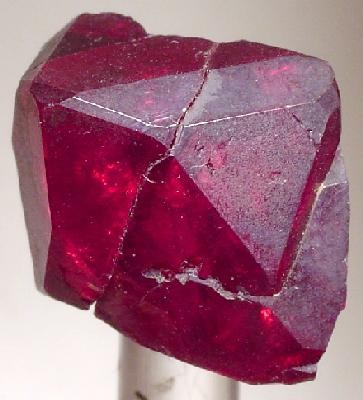
Characteristics and structure
Cuprous oxide has a cubic crystal structure (the mineral cuprite) and behaves as a p-type semiconductor with a moderate direct band gap useful in optical and electronic research. It is insoluble in water but can be converted to other copper compounds by reaction with acids or oxidizing agents. Its electrical, optical, and catalytic properties depend strongly on particle size, purity, and surface condition.
History and preparation
The compound has been known since antiquity as a pigment and has appeared in ceramics, glazes, and paints. Laboratory preparations commonly reduce copper(II) salts or oxidize metallic copper under controlled conditions to yield Cu2O. Industrially, processes that produce copper compounds as byproducts or deliberate syntheses provide the material in varied forms for different uses.
Uses and applications
- Pigment in ceramics and glass—valued for warm red tones.
- Antifouling and agricultural formulations—copper oxides are biocidal and used to control marine growth and fungal diseases.
- Catalysis and chemical synthesis—serves as a heterogeneous catalyst in several organic transformations.
- Research material—studied for photovoltaic and photoelectrochemical applications because of its semiconducting properties.
Handling Cu2O requires care: finely divided oxides can be hazardous to aquatic life and may pose inhalation risks. Unlike more stable copper(II) compounds, cuprous species are sensitive to oxidation and light, which can alter color and activity over time. For further technical details and safety data consult specialist sources or material safety data sheets (cuprous oxide info, compound data, oxidation state notes, oxide ion chemistry, nomenclature).
Related articles
Author
AlegsaOnline.com Copper(I) oxide (cuprous oxide) Leandro Alegsa
URL: https://en.alegsaonline.com/art/22964