
Oxygen difluoride (OF2)
Oxygen difluoride, OF2, is a reactive, toxic, oxygen–fluorine compound with a bent molecular shape. It is a strong oxidizer with limited practical uses and notable chemical behavior.
Overview
Oxygen difluoride is a binary compound of oxygen and fluorine commonly written as OF2. It exists as a reactive, oxidizing gas under ambient conditions and is recognized for its toxicity and corrosive behavior. Although its molecular shape is bent and reminiscent of water (H2O), its chemical properties differ markedly because fluorine is the most electronegative element.
Image gallery
2 Images
Structure and bonding
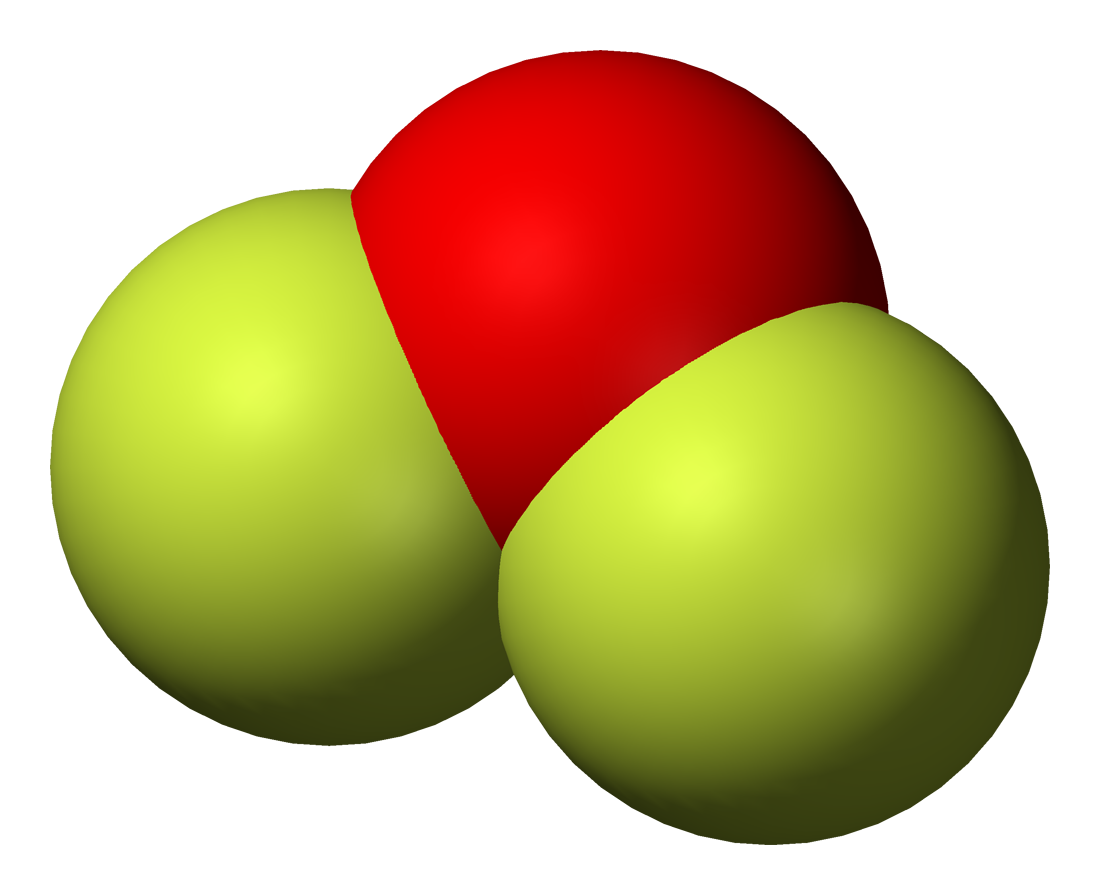
The molecule consists of an oxygen atom singly bonded to two fluorine atoms, giving a V-shaped geometry. High fluorine electronegativity draws electron density away from oxygen, making the central oxygen atom electronically positive — an uncommon formal oxidation state for oxygen. The bond polarity and lone pairs on oxygen produce a polar molecule with reactive oxygen–fluorine bonds.
Chemical behavior and reactivity
OF2 is a strong oxidizer: it can oxidize many substances that are normally considered noncombustible and it reacts vigorously with reducing agents. It hydrolyzes in the presence of water to yield oxygen and hydrogen fluoride, and it can generate corrosive and toxic fluoride species on contact with moisture or organic material. These reactions explain its hazardous character.
Preparation and uses
In the laboratory, oxygen difluoride is commonly prepared by reacting elemental fluorine with aqueous hydroxide or related fluorination routes that produce OF2 as a product. Its uses are limited because of handling difficulties and danger: it finds occasional application as an oxidant or fluorinating agent in specialized inorganic syntheses and research rather than as a mainstream industrial reagent.
Safety and notable distinctions
- OF2 is toxic, corrosive, and a vigorous oxidizer; it must be handled in corrosion-resistant equipment and under strict safety controls.
- Unlike diatomic oxygen (O2), oxygen in OF2 bears a positive oxidation state owing to fluorine's greater electronegativity.
- Its bent geometry superficially resembles that of water but leads to very different chemical properties; OF2 is not a solvent and is not miscible with water, reacting with it instead.
Because of its hazards and reactive nature, OF2 is mainly of interest in academic and specialized chemical contexts rather than in broad commercial applications. For more detailed chemical data, synthesis methods, and handling guidelines, consult authoritative chemical safety and reference sources.
Related articles
Author
AlegsaOnline.com Oxygen difluoride (OF2) Leandro Alegsa
URL: https://en.alegsaonline.com/art/73826