
Calcium oxide (quicklime)
Calcium oxide (CaO), called quicklime, is a white, caustic inorganic oxide used in construction, chemical manufacture, water treatment, agriculture and industry; it reacts exothermically with water and is strongly basic.
Overview
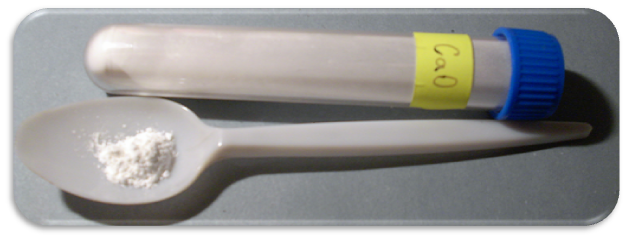
Calcium oxide is an inorganic chemical compound composed of calcium and oxygen with the formula CaO. Commonly known as quicklime or burnt lime, it is a white, alkaline solid that is highly reactive toward water and acids. The material is produced by heating carbonate minerals and is a fundamental industrial chemical with a long history of use in construction, metallurgy and environmental applications.
Image gallery
4 Images


Production and chemistry
Commercial calcium oxide is produced by calcining limestone or other calcium carbonate sources in a lime kiln. The calcination process drives off carbon dioxide and leaves CaO as the solid residue. When water is added, CaO hydrates in an exothermic reaction known as slaking to form calcium hydroxide. This hydration is vigorous and releases heat, so slaking is handled carefully in industrial practice.
Physical and chemical properties
CaO is a white or off-white powder or granular solid. It is a strongly alkaline oxide and, as a chemical base, neutralizes acids to form calcium salts. Exposed quicklime slowly absorbs carbon dioxide from the air and reverts to calcium carbonate, so storage in dry, sealed conditions is important to preserve reactivity. Because of its basic character it reacts with acidic gases and many acidic solutions.
Reactions and the lime cycle
The reversible sequence of calcining carbonate to produce CaO and later recarbonating CaO or Ca(OH)2 to form carbonate is often called the lime cycle. This cycle underlies the material's use in binding materials, pH control and carbon capture discussions, and it explains why the manufacture of quicklime is linked to emissions of carbon dioxide from the source carbonate.
Uses and applications
- Construction: quicklime is a traditional ingredient in mortar and is used in the manufacture of cement, in soil stabilization and roadworks.
- Water and wastewater treatment: used for pH adjustment, softening and precipitation of impurities.
- Industrial chemistry and metallurgy: serves as a feedstock for other calcium compounds, as a flux in metal processing, and in flue-gas desulfurization systems.
- Agriculture and food processing: used to neutralize acidic soils and as a processing aid in some food and sugar refining operations.
History and environmental considerations
Quicklime has been employed since ancient times for construction, sanitation and glazing. Historic mortars and plasters exploited the binding and chemical properties of lime. Today, the environmental footprint of lime production—especially its carbon dioxide emissions—is a subject of industrial focus, with research into efficiency improvements and alternative processes.
Safety, storage and handling
CaO is caustic and can cause severe irritation or burns on contact with skin or eyes; inhalation of dust should be avoided. Because hydration releases heat, contact with moisture can generate hazardous conditions. Recommended precautions include wearing protective gloves and eye protection, using dust control measures, and storing material dry and segregated from acids and moisture.
Further information and resources
For technical details consult authoritative sources on material properties, industrial production and safety data. Useful starting points include compound summaries (compound information), mineral and element references (calcium, oxygen), manufacturing overviews (lime kiln), hydration chemistry (calcium hydroxide), basicity and neutralization behavior (base), and cement applications (cement).
Related articles
Author
AlegsaOnline.com Calcium oxide (quicklime) Leandro Alegsa
URL: https://en.alegsaonline.com/art/16043
Sources
- gestis.itrust.de : Calciumoxid
- cdc.gov : "NIOSH Pocket Guide to Chemical Hazards #0093"