
Iron(III) oxide (Fe2O3): properties, occurrence and uses
Iron(III) oxide, Fe2O3, is a common reddish iron oxide found as hematite and rust; it has industrial uses as an ore, pigment and reactant (e.g., thermite) and distinct chemical and physical properties.
Overview
Iron(III) oxide is a chemical compound with the formula Fe2O3. It is one of the principal oxides of iron and is commonly seen as a reddish-brown solid frequently called rust in its hydrated forms. The name emphasizes the iron atom in the +3 oxidation state; see oxidation state III for context. In nature it largely occurs as the mineral hematite, an important source of metallic iron.
Image gallery
5 Images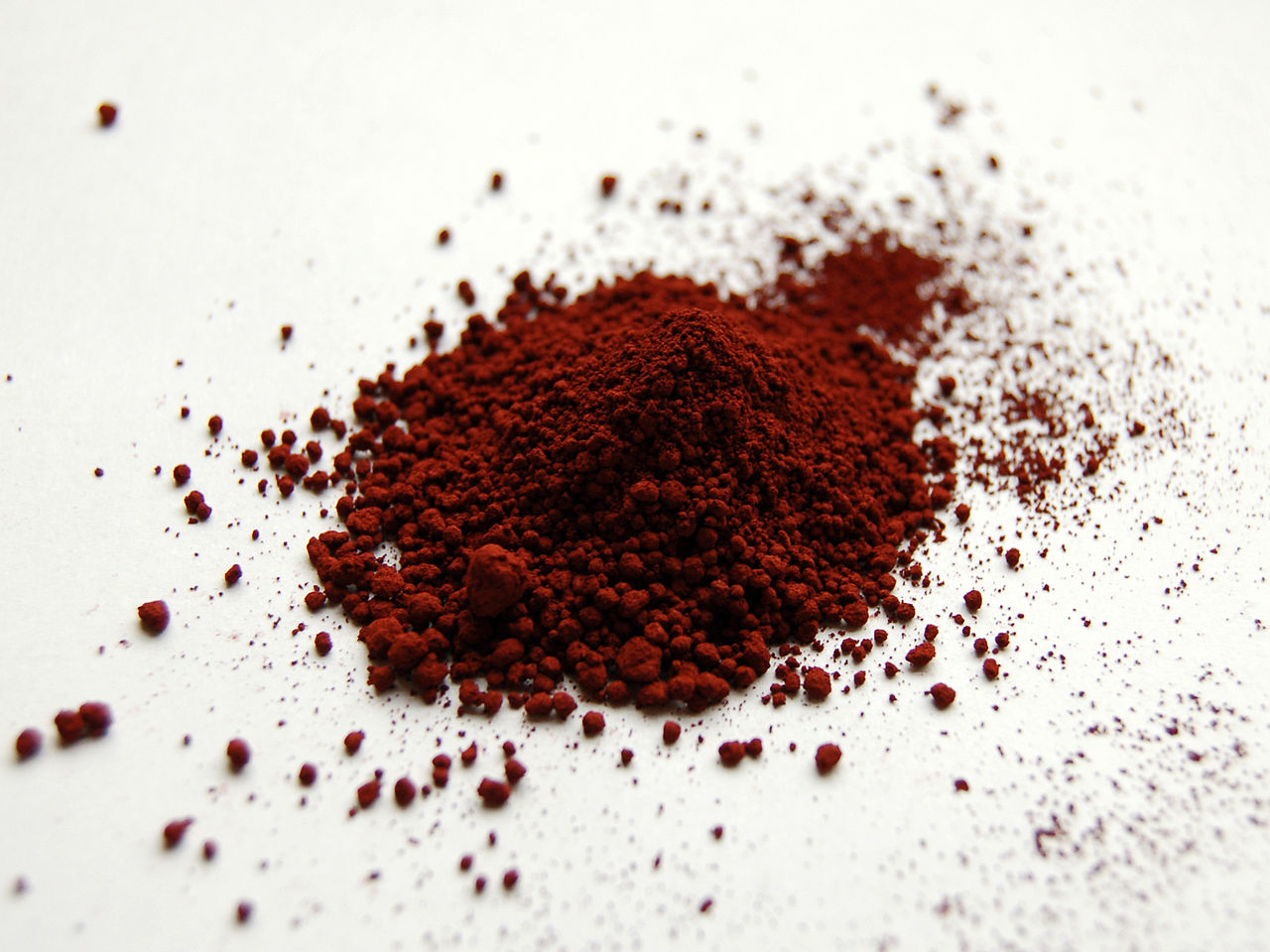


Properties and chemical behaviour
Fe2O3 is a stable oxide at ambient conditions. It forms crystalline solids and also amorphous rusty coatings when iron corrodes after exposure to air and moisture. The formation of iron(III) oxide from elemental iron and oxygen can be described by a simple redox equation: 4Fe + 3O2 → 2Fe2O3. As an oxide of a trivalent metal, it reacts with strong acids to give soluble iron(III) salts, for example hydrochloric acid yields iron(III) chloride. A closely related compound is iron(II) oxide, where iron has the +2 oxidation state.
Occurrence and extraction
Hematite and other Fe2O3-bearing minerals are widespread in the Earth's crust. Hematite is the primary iron ore used in modern metallurgy. Crushed and concentrated hematite is processed in industrial smelting: ore is fed to blast furnaces or direct-reduction plants where it is reduced to metallic iron. Surface and groundwater environments also produce hydrated iron(III) oxides during corrosion and weathering of iron-bearing materials.
Uses and applications
- Pigments: finely ground Fe2O3 pigments yield ochres and reds used in paints and coatings.
- Abrasives and polishing: very fine grades serve as polishing rouge for metals and lenses.
- Chemical reactant: mixed with aluminum powder, iron(III) oxide participates in the thermite reaction (a high-temperature exothermic process) used for welding and metal cutting; see thermite.
- Industrial feedstock: as an ore source for iron production and in some catalysis applications.
Distinctions and notable facts
Iron oxides form a family of related compounds (for example magnetite, Fe3O4, contains both Fe2+ and Fe3+). The plain term "rust" often describes hydrated mixtures rather than pure Fe2O3. For general information about iron and oxygen, see entries on iron and oxygen, and for a general article on oxides see oxides. Because of its ubiquity, Fe2O3 is important both geologically and industrially.
Safety and handling notes: as a solid it is not highly toxic, but fine powders can be respiratory irritants and should be handled with dust controls and appropriate protective equipment.
Related articles
Author
AlegsaOnline.com Iron(III) oxide (Fe2O3): properties, occurrence and uses Leandro Alegsa
URL: https://en.alegsaonline.com/art/48240