
Lakshadweep: India's Coral Atoll Archipelago
Lakshadweep is a small Indian union territory of coral atolls in the Arabian Sea with fragile reef ecosystems, a predominantly Muslim island culture, and an economy based on fishing, coconuts and regulated tourism.
Overview
Lakshadweep is a compact archipelago of low-lying coral islands in the Arabian Sea, administered as a union territory of India. The administrative centre is the town of Kavaratti. The territory covers roughly 11 square miles (about 28 km2) of land scattered across reef formations and lagoons. 
Image gallery
10 Images




Geography and formation
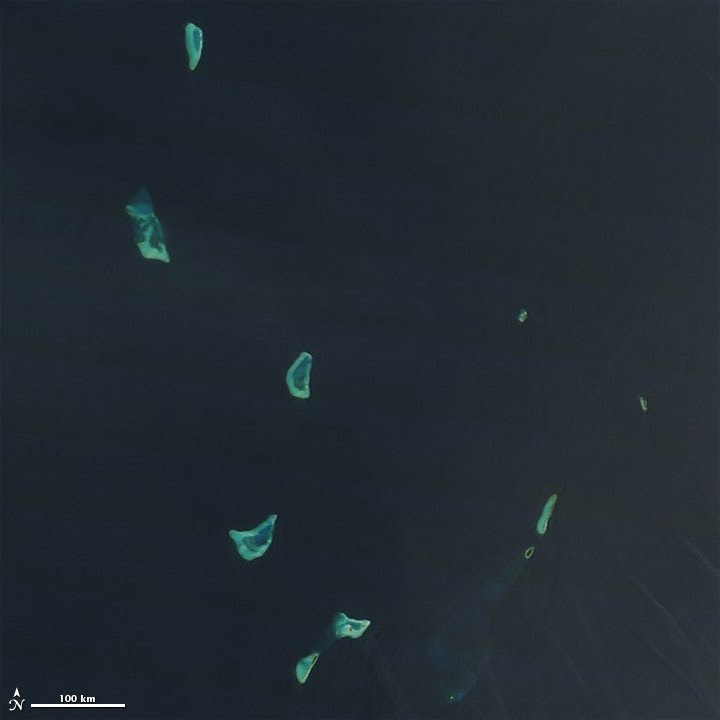
The group comprises about 36 islands and atolls, of which roughly 11 are permanently inhabited. These are true coral atolls and associated islets, characterized by encircling reefs, shallow lagoons and narrow sandy motus backed by coconut palms. Lakshadweep represents the only extensive atoll formations under Indian administration; their geology is dominated by coral growth atop submerged volcanic or basement platforms and subsequent reef development.
Climate and environment
The climate is tropical maritime, with a monsoon cycle that shapes local livelihoods and ecosystems. Seasonal winds and waves influence lagoon conditions and fishing patterns. Coral reefs around the atolls support diverse marine life, including reef fish, molluscs, sea turtles and seabirds; they are ecologically significant but sensitive to warming, bleaching events, pollution and physical disturbance. Conservation of reef health is central to the islands' environmental management.
People, language and culture
The resident population is small and concentrated on the inhabited islands. Local languages include Malayalam and Mahl (a language related to Dhivehi), and cultural influences reflect long-standing contacts across the Arabian Sea. Historical trade and seafaring brought contacts with Arab merchants and neighbouring island cultures; as a result, Lakshadweep today has a predominantly Muslim population with customs and religious life that show affinities with the Maldives.
Administration and services
Lakshadweep is governed as a union territory with a centrally appointed administrator and local institutions for civic services. Infrastructure is limited by small land area and remoteness: transport between islands relies on scheduled boats, limited air services and small ships. Basic services such as healthcare, education and telecommunications are provided through a mix of local administration and central government programs, with particular emphasis on sustaining livelihoods and managing scarce freshwater resources.
Economy and livelihoods
Economic activity is constrained by limited land area and environmental sensitivity. Principal livelihoods include traditional reef fishing, tuna and other small-scale fisheries, coconut cultivation and copra production, marine services and government employment. Tourism exists as a developing sector but is strictly regulated to protect reefs, culture and resources; visitors typically require permits and must follow local rules designed to limit environmental impact and preserve island life.
Tourism and regulation
Tourism is promoted in a controlled manner, with measures to minimise damage to coral and to respect local customs. Access to many islands is by permit only and operators must follow guidelines for waste management, anchoring and reef protection. The territory’s approach aims to balance economic opportunity from visitors with the preservation of fragile ecosystems and community priorities.
Conservation challenges
Lakshadweep faces multiple environmental pressures: coral bleaching associated with rising sea temperatures, sea-level rise, coastal erosion, overfishing in some areas and pollution from land-based sources. Freshwater scarcity and limited space for waste disposal increase vulnerability. Conservation responses include designated protected areas, restrictions on destructive fishing gear, community-based reef monitoring and research collaborations to understand climate impacts and resilience.
Significance and outlook
Despite its small size, Lakshadweep is important for marine biodiversity, traditional island cultures and strategic position in the Arabian Sea. Ongoing priorities include strengthening sustainable livelihoods, protecting reef ecosystems, improving infrastructure in climate-resilient ways, and managing tourism so that economic benefits reach island communities without compromising ecological integrity. Readers seeking official information or travel guidance should consult administrative sources and vetted travel advisories before planning a visit.
For further background on regional geography and maritime connections see the Arabian Sea context and for cultural-linguistic links consult resources on Malayalam and related island languages. Administrative details and visitor rules are available from Indian union territory authorities based in Kavaratti, while broader comparisons with other atoll societies can be drawn with the Maldives. General country-level information is provided through central sources about India, and scientific literature often treats Lakshadweep as an example of Indian coral atoll ecology and conservation systems.
Related articles
Author
AlegsaOnline.com Lakshadweep: India's Coral Atoll Archipelago Leandro Alegsa
URL: https://en.alegsaonline.com/art/55623