
Caspian Sea: geography, history, ecology and uses
The Caspian Sea is the world’s largest enclosed inland waterbody. This article summarizes its geography, hydrology, ecological value, historical context and economic importance.
Overview
The Caspian Sea is the largest enclosed inland body of water on Earth by both surface area and volume. It covers roughly 371,000 square kilometres and holds about 78,200 cubic kilometres of water. Although often called a sea, it is endorheic — it has no natural connection to the world ocean — and lies between Eastern Europe and Western Asia. The basin is shared by five countries: Russia, Kazakhstan, Turkmenistan, Iran and Azerbaijan.
Image gallery
10 Images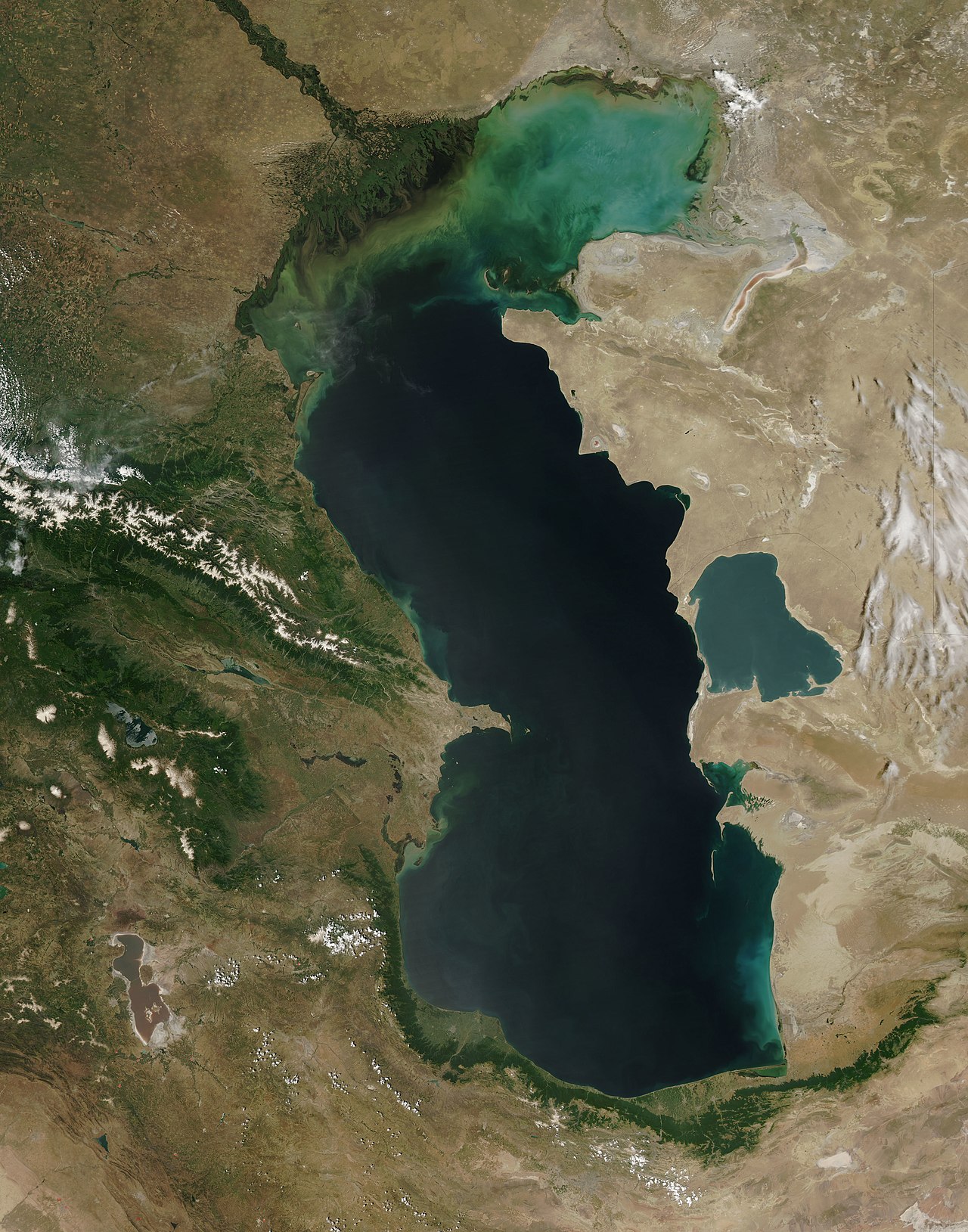


Physical characteristics
The Caspian varies in depth and salinity from north to south. Its maximum depth is about 1,025 metres in the southern basin. Surface salinity averages around 1.2%, roughly one third of typical ocean water, but the northern part is much fresher because of the large inflow from the Volga River and other rivers. As an enclosed lake its level responds to long-term climate variations and river inflow, which has caused notable fluctuations in shoreline and wetlands over recorded history.
Origin and geological context
Geologically, the Caspian is a remnant of the ancient Paratethys Sea and has evolved over millions of years through tectonic movements and changing sea levels. The sedimentary basin accumulated thick sequences of marine and continental deposits, which now underlie substantial hydrocarbon resources. The lake’s geology and sediments make it both a record of regional climate and a target for oil and gas exploration.
Ecology and living resources
The Caspian supports unique ecosystems, including endemic fish species and wetlands that are important for migratory birds. It is famous for its sturgeon, historically the source of prized caviar, though sturgeon populations have declined due to overfishing, habitat alteration and barriers to spawning migrations. Pollutants from industry and oil production, invasive species, and changes in water level present ongoing conservation challenges. The Caspian seal is the only marine mammal native to the basin and is considered vulnerable.
Human use and economic importance
The Caspian region has long been important for fishing, shipping on its calmer waters, and in modern times for substantial oil and natural gas extraction. Ports and coastal cities on its shores support commerce and industry. The legal classification of the Caspian — whether a sea or a lake — has influenced how resources, especially hydrocarbons and fishing rights, are apportioned among the littoral states. In recent years the five bordering nations negotiated agreements to manage security, environmental protection and resource use.
Notable facts and distinctions
- Largest enclosed inland waterbody by area and volume — a significant share of the planet’s inland water.
- It contains about 40–44% of the world’s lake waters, by some estimates.
- North–south gradients create distinct sub-basins with very different ecosystems and human uses.
Further reading and resources
- Why the Caspian is described as the largest lake
- Area statistics and mapping of the Caspian basin
- Volume and hydrological data
- Endorheic basins: definition and examples
- Russia's Caspian coastline and ports
- Azerbaijan's role in Caspian fisheries and energy
- Iranian coastal zones and environmental issues
- Turkmenistan's offshore fields and infrastructure
- Kazakhstan's Caspian developments and conservation efforts
- Historical accounts and early visitors to the Caspian
- Salinity and water chemistry studies
- Legal frameworks and international agreements affecting the Caspian
The Caspian continues to be an area of active scientific research, economic interest and environmental concern. Its combination of unique biology, strategic resources and complex legal and political issues makes it a distinctive and consequential inland waterbody on the world stage.
Related articles
Author
AlegsaOnline.com Caspian Sea: geography, history, ecology and uses Leandro Alegsa
URL: https://en.alegsaonline.com/art/17419
Sources
- web.archive.org : "Caspian Sea"