
Evaporation: the process of liquids turning into vapor
Evaporation is the surface process by which molecules leave a liquid and enter the gas phase. This article explains how it works, factors that affect it, differences from boiling, and practical importance.
Overview
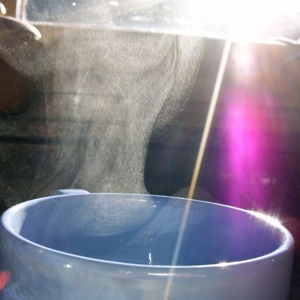
Evaporation is the outward transition of molecules from a liquid into the surrounding air as a gas. It occurs at the surface of the liquid without the formation of visible bubbles inside the bulk liquid, which distinguishes it from boiling. Because molecules leave the surface one by one, evaporation can happen at temperatures below the liquid's boiling point and is reversible by condensation.
Image gallery
5 Images


How it works
Within any liquid there is a distribution of molecular speeds. A fraction of molecules near the surface have enough kinetic energy to overcome the intermolecular attraction and escape into the air. When they do so they become part of the vapor above the liquid. Evaporation therefore depends on molecular motion and on the balance between molecules leaving the surface and those returning.
Factors that influence evaporation
- Temperature: higher temperatures increase the number of molecules with enough energy to escape.
- Surface area: more exposed surface allows more molecules to leave per unit time.
- Humidity: when the surrounding air already contains a lot of vapor, net evaporation slows because fewer molecules escape permanently.
- Air movement: wind or ventilation carries away vapor, maintaining the concentration gradient that drives evaporation.
- Pressure and liquid properties: lower ambient pressure and volatile liquids speed the process.
History and scientific context
People have observed drying and evaporation for millennia, but systematic scientific explanations emerged with the development of kinetic theory and thermodynamics. These frameworks describe evaporation as a statistical process linked to temperature and energy exchanges, including the latent heat removed when molecules leave a liquid, which produces cooling of the remaining liquid.
Uses, examples and importance
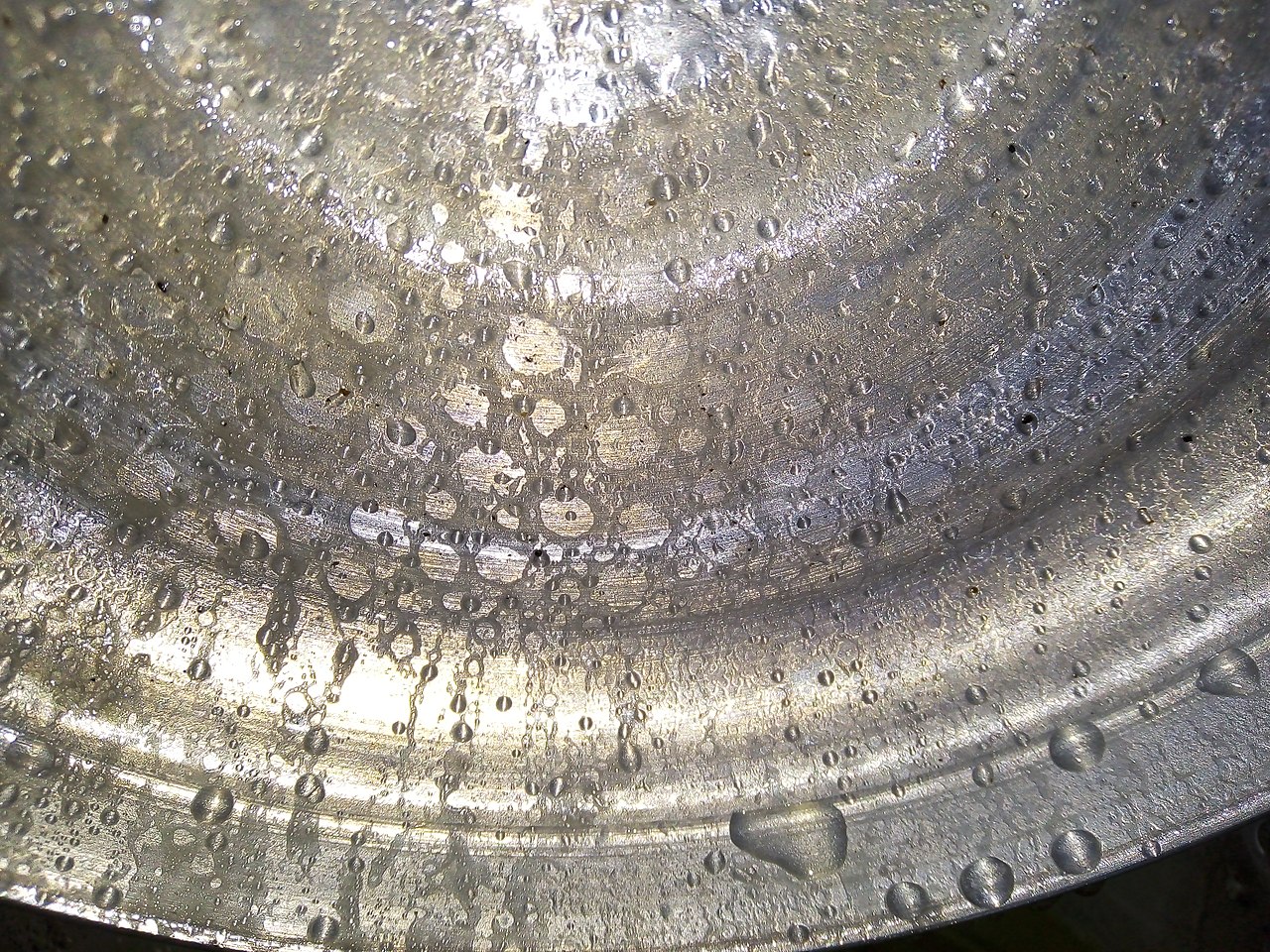
Evaporation is central to the natural water cycle: oceans, lakes and soil lose water to the atmosphere, which later returns as precipitation. It underpins practical activities such as drying clothes, cooling by sweating or evaporative coolers, and industrial operations like distillation and concentration of solutions. In meteorology and climate science, rates of evaporation help determine humidity, cloud formation and energy transfer between Earth's surface and atmosphere.
Key distinctions and notable facts
Evaporation is a surface phenomenon occurring at many temperatures, while boiling is a bulk phase change that forms vapor pockets throughout a liquid at a characteristic boiling temperature. Evaporation also consumes latent heat and often produces a measurable cooling effect at the surface. Understanding both processes is important for fields ranging from engineering to environmental science.
Questions and answers
Q: What is evaporation?
A: Evaporation is the process when a liquid turns into a gas without forming bubbles inside the liquid.
Q: How can we differentiate between evaporation and boiling?
A: If bubbles are formed during the process, it is boiling. Otherwise, it is evaporation.
Q: Can you provide an example of evaporation?
A: Yes, if we leave water in a bowl, it will slowly disappear as it evaporates into water vapor.
Q: What is the gas phase of water?
A: The gas phase of water is water vapor.
Q: What is the opposite of evaporation?
A: The opposite of evaporation is condensation.
Q: What happens to the molecules in a liquid when it is heated?
A: When a liquid is heated, the molecules move faster and become full of energy, causing them to collide with each other.
Q: What leads to the formation of gas in a liquid?
A: The collisions between the molecules of a liquid cause them to become so far apart that they become a gas.
Related articles
Author
AlegsaOnline.com Evaporation: the process of liquids turning into vapor Leandro Alegsa
URL: https://en.alegsaonline.com/art/32728