
Hand grenade
A hand grenade is a compact thrown explosive used by military and security forces. Types include fragmentation, concussion, incendiary, smoke, gas and stun; modern grenades combine safety fuzes with varied tactical roles.
A hand grenade is a small, portable explosive device designed to be thrown by a person and to detonate after a short delay or on impact. It is a common infantry weapon used to clear trenches, rooms and light fortifications or to produce concealment and non-lethal effects. For a general overview see overview.
Image gallery
10 Images
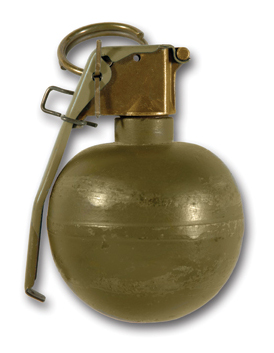


Basic components and operation
Typical grenades consist of a hard outer body, an explosive filling, and a fuze mechanism that controls the time to detonation. The outer shell may be designed to shatter into fragments, or to contain the blast for a concussive effect. A safety pin and a safety lever (often called a spoon) keep the fuze from igniting until intentionally released; pulling the pin and releasing the lever starts the timed delay. For variations in mounting or delivery, including rifle-launched types, see launcher methods and vehicle or mounted use. Information on military classifications is available at classification.
Common types
- Fragmentation: Designed to break the casing into many high-velocity fragments to wound or suppress personnel. See fragmentation details.
- Concussion (blast): Produces an intense shock wave to stun or demolish nearby structures and unprotected personnel.
- Incendiary and smoke: Used to ignite materials or create visual screening; smoke grenades also aid signaling.
- Gas and non-lethal: Include tear gas and other chemical agents for crowd control; refer to crowd-control uses and riot-control contexts.
- Stun (flashbang): Produces a bright flash and loud report to disorient without primary intent to cause fragmentation wounds.
- Training and practice: Inert or low-yield devices used to teach safe handling and tactics.
Some grenades are optimized for offensive operations—smaller fragmentation radius, greater blast—or defensive roles—greater fragmentation and protective use from cover. Differences between types and their tactical employment are detailed in field manuals and technical references: infantry use.
History and development
Explosive hand-thrown devices trace back centuries in rudimentary forms that used fire and black powder. Modern, purpose-built grenades evolved with advances in metallurgy, explosives and fuze technology; they became prominent in trench and urban warfare during the 20th century. Design evolution and regulation are discussed at historical sources.
Training, safe handling and proper disposal are essential to reduce accidental injury. Military and civilian authorities maintain procedures for storage, transport and destruction, and for separating lethal from non-lethal munitions. For safety, legal and technical guidance see safety guidance and regulatory notes. Additional technical resources include infantry doctrine, bunker/fortification tactics, and incendiary applications.
Related articles
Author
AlegsaOnline.com Hand grenade Leandro Alegsa
URL: https://en.alegsaonline.com/art/42166
Sources
- britannica.com : "grenade"