
Tear gas (riot-control chemical agents)
Overview of tear gas agents used for riot control: composition, effects, delivery methods, historical and legal context, health risks, first aid, and policy considerations.
Overview
Tear gas is a common name for several chemical irritants used to temporarily incapacitate people by irritating the eyes, nose, mouth and airways. Despite the name, most tear "gases" are solids or liquids dispersed as fine powders, mists or aerosols rather than true gases. Exposure typically causes intense tearing, burning sensations, coughing, difficulty breathing and transient visual impairment. Effects are usually temporary but can be more severe depending on dose, delivery method and individual vulnerability.
Image gallery
10 Images


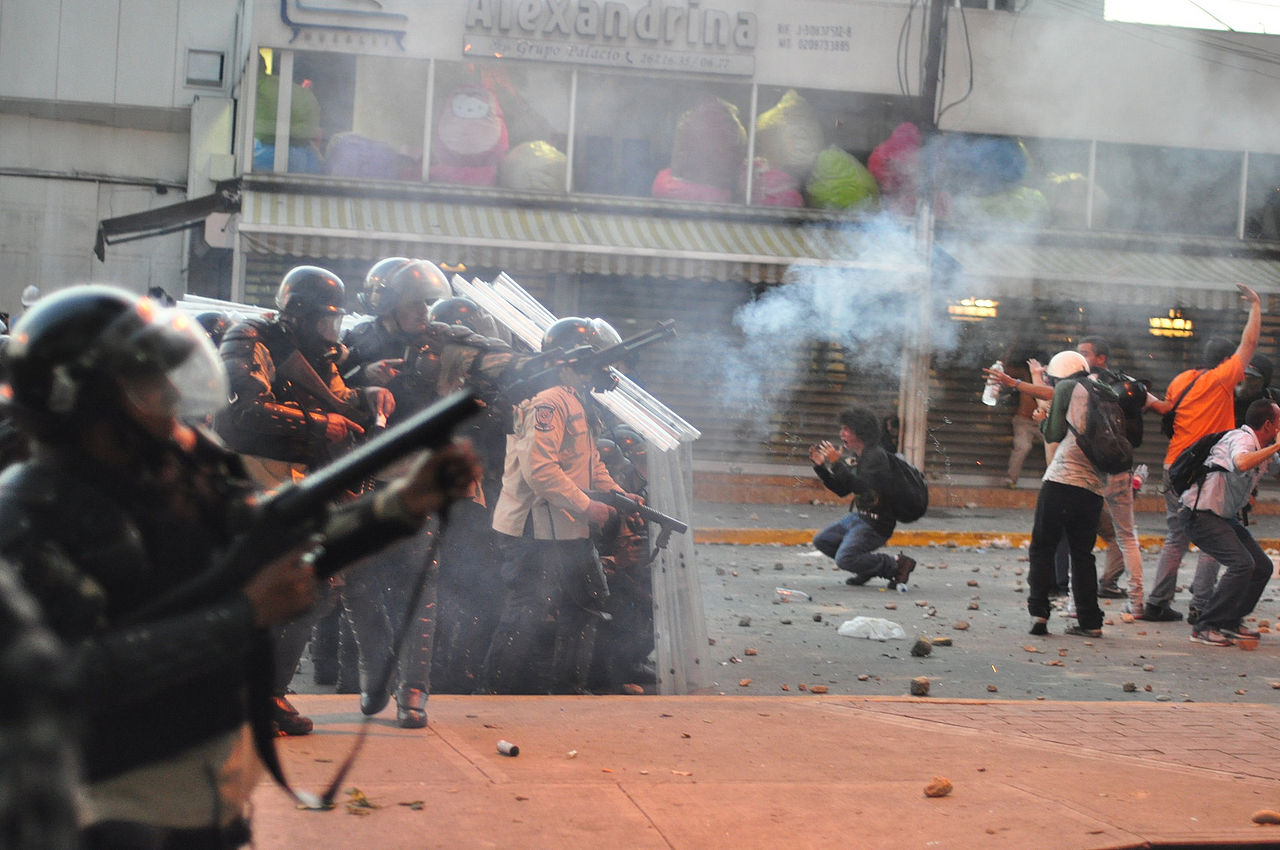


Composition and mechanism of action
Modern riot-control agents include synthetic compounds such as CS (2-chlorobenzalmalononitrile), CN (phenacyl chloride) and CR, and natural derivatives such as oleoresin capsicum (OC), commonly called pepper spray. These substances act as sensory irritants: they activate pain and irritation receptors on mucous membranes and skin, provoking reflex tearing, coughing, sneezing and inflammation. They are delivered as aerosols, powders or solutions that contact the eyes and airways; see a brief classification note for more on physical form and nomenclature.
History and international law
Irritant chemical agents have been used in policing and conflict for more than a century. They were employed during the First World War and later became the subject of international agreements and debate. Early agreements such as the 1925 Geneva Protocol addressed chemical weapons broadly but left ambiguities concerning nonlethal irritants; subsequent instruments refined the legal context. The Chemical Weapons Convention (CWC) of the early 1990s restricts the use of chemical agents in warfare while permitting certain law-enforcement applications under national regulation. For historical background see historical sources and legal overviews.
Uses and delivery methods
Tear agents are used primarily for crowd control, detention facility management and individual self-defence. Delivery systems vary: handheld spray canisters, pressurised streams, aerosol generators, smoke or fog cartridges, breakable grenades and projectiles that release powder on impact. Law-enforcement agencies set rules for use that differ by country and jurisdiction; training, oversight and rules of engagement affect how and when agents are deployed. For typical operational guidance consult materials from policing agencies and manuals on law enforcement use.
- Common agents: CS, CN, CR and OC (oleoresin capsicum).
- Delivery: sprays, aerosols, canisters, grenades and projectiles.
- Use cases: crowd control, prison disturbances, self-defence.
Health risks and vulnerable populations
In healthy adults exposure is usually self-limited, with symptoms easing after removal from the contaminated area and flushing with water. However, people with asthma, chronic respiratory disease, heart disease, the elderly, young children and pregnant people face higher risks. Severe exposure can provoke bronchospasm, chemical pneumonitis, severe eye injury or second‑degree burns in rare cases. Secondary injuries may occur from panic, trampling or from projectiles used to deliver the agents.
First aid and medical care
Basic first aid measures include moving the affected person to fresh air, loosening restrictive clothing, rinsing eyes and exposed skin with clean water, and removing contaminated clothing. Avoid rubbing eyes; do not apply creams or chemical neutralisers. Medical evaluation is advised if breathing difficulties, prolonged chest pain, diminished vision, chemical burns, or persistent coughing occur. Health professionals may provide bronchodilators, oxygen, pain control and wound care as indicated. For concise guidance see a practical treatment and risks summary.
Controversies, oversight and policy
The use of tear agents raises legal and ethical questions: appropriate circumstances for deployment, proportionality, accountability for misuse, and long-term health monitoring after large exposures. Some jurisdictions restrict or ban specific agents or delivery systems; others permit regulated use by trained officers. Debate also covers record‑keeping, independent oversight of incidents, and alternatives to chemical agents for de-escalation. For policy discussions and recommendations consult independent reviews and official effects summaries.
Further reading
Readers seeking technical, historical or legal detail may consult government health guidance, forensic toxicology references and international treaty texts. Additional materials and primary sources on history, health effects and regulation are available in specialized publications and agency reports (classification note, historical sources, legal overviews).
Related articles
Author
AlegsaOnline.com Tear gas (riot-control chemical agents) Leandro Alegsa
URL: https://en.alegsaonline.com/art/96657
Sources
- news.bbc.co.uk : "The 'rituals' of the Greek riots"
- veritagiustizia.it : "Possible lethal effects of CS tear gas on Branch Davidians during the FBI raid on the Mount Carmel compound near Waco, Texas"
- doi.org : 10.1001/jama.1989.03430050076030
- pubmed.ncbi.nlm.nih.gov : 2501523
- desastres.usac.edu.gt : "Tear gas—harassing agent or toxic chemical weapon?"
- doi.org : 10.1016/S0379-0738(03)00282-2
- pubmed.ncbi.nlm.nih.gov : 14550613
- ncbi.nlm.nih.gov : "Vascular injuries caused by tear gas shells: surgical challenge and outcome"
- pubmed.ncbi.nlm.nih.gov : 23365472
- doi.org : 10.1159/000314054
- pubmed.ncbi.nlm.nih.gov : 20453560
- doi.org : 10.1136/jramc-2013-000165
- pubmed.ncbi.nlm.nih.gov : 24379300