
Fuse (electrical) — overcurrent protection device
A fuse is a sacrificial electrical safety device that interrupts current when it exceeds a safe level. This article explains how fuses work, common types, uses, selection and safety considerations.
Overview
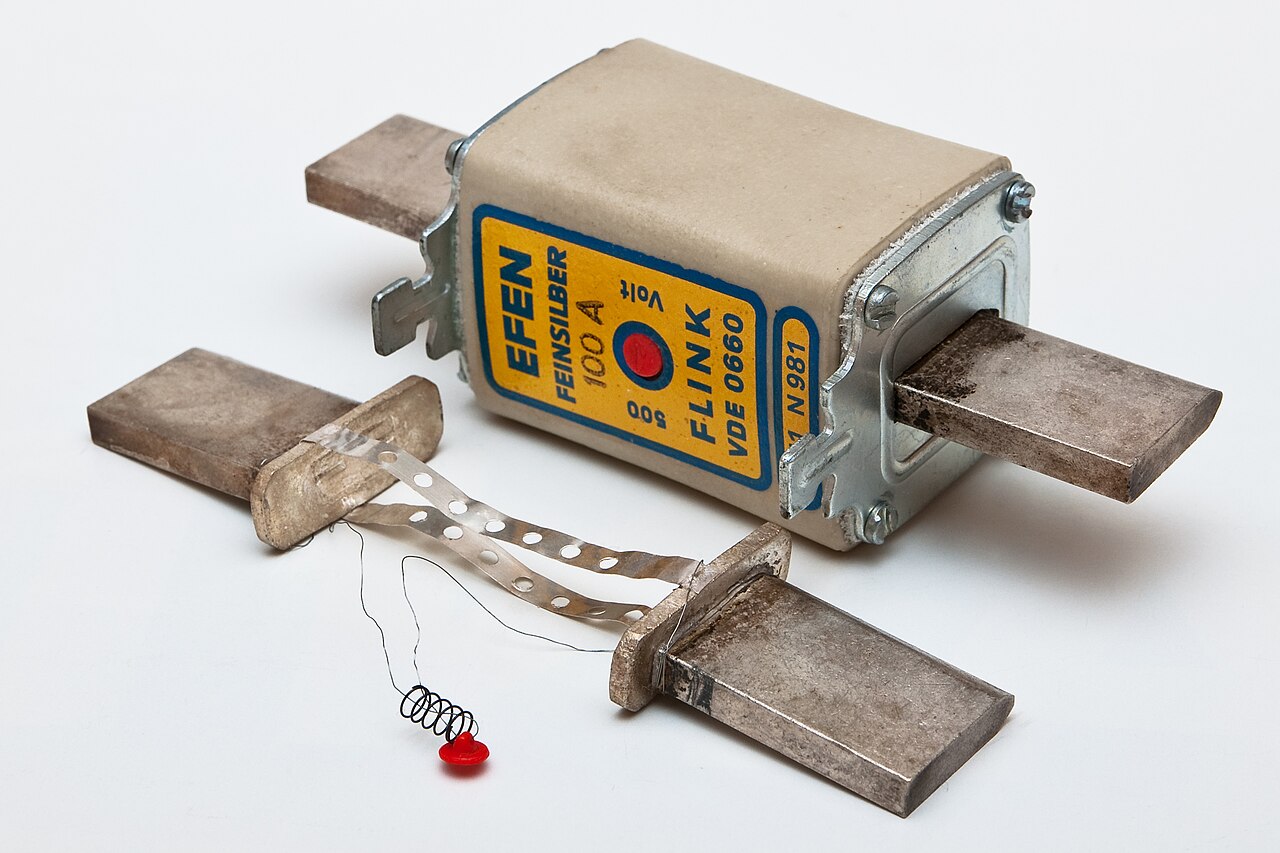
A fuse is a simple safety device placed in an electrical circuit to interrupt the flow of electricity when the current becomes too large. It contains a deliberately weak conductive element that heats and melts ("blows") if excessive electric current flows, isolating the faulty portion of the circuit. Fuses protect wiring and equipment from damage caused by overloads and short circuits. After a fuse operates, it must be replaced or reset depending on design before power is restored.
Image gallery
10 Images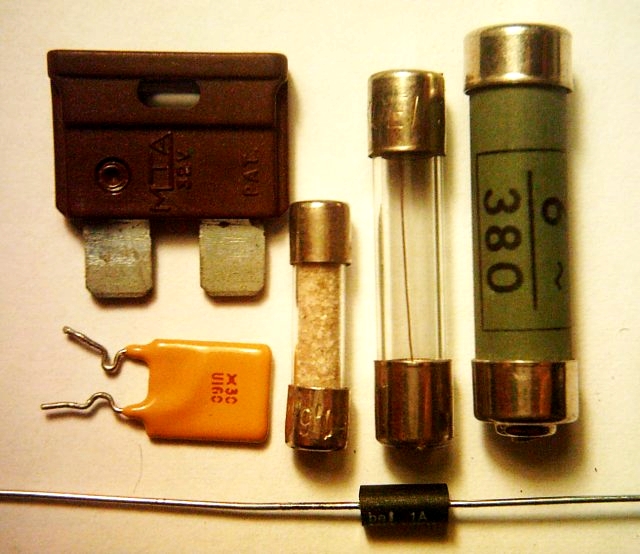





Construction and main types
At its core a fuse consists of a fusible element inside a body that supports and insulates that element. Common forms include:
- Cartridge fuses: cylindrical bodies with metal end caps, used in appliances and service panels.
- Plug fuses: threaded or wedge types used in older household fuse boxes and in some power plugs.
- Automotive (blade) fuses: flat plastic-bodied fuses for vehicles and light equipment.
- Slow-blow (time-delay) fuses: designed to tolerate short inrush currents from motors or lamps.
- Fast-acting fuses: open almost immediately when their rated current is exceeded and are used for sensitive electronics.
- Resettable polymer (PTC) fuses: thermally reactive devices that recover after fault removal instead of needing replacement.
Ratings, selection and performance
Fuses are specified by current rating, voltage rating and often an interrupting or breaking capacity. For everyday equipment, common fuse ratings include 3 A, 5 A and 13 A in many plug systems; the chosen fuse should exceed the device's normal operating current by a modest margin so it does not blow during normal peaks. Devices with large startup currents—such as motors—typically use slow-blow fuses so short, harmless surges do not cause nuisance operation.
Uses and examples
Fuses are widely used in household plugs, consumer electronics, automotive fuse boxes and industrial distribution. In a home plug, a blown fuse indicates an overload or short and must be investigated before replacement. In automobiles the blade fuse layout makes inspection and exchange straightforward. Industrial installations use high-rupture-capacity fuses to safely interrupt very large fault currents.
Safety, maintenance and comparison to circuit breakers
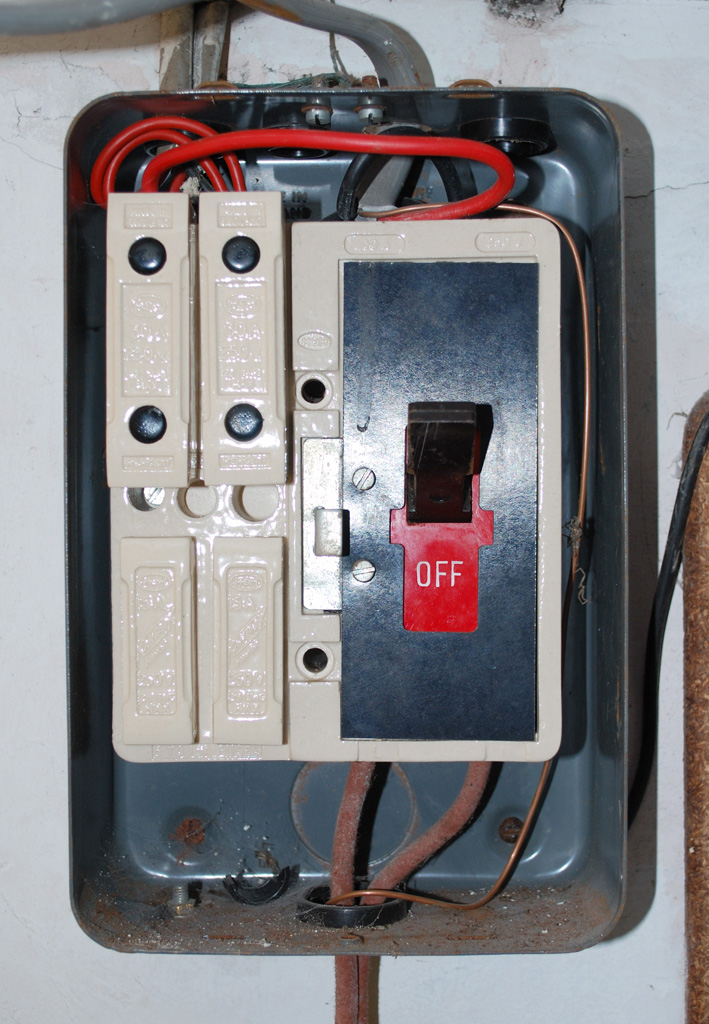
When a fuse blows it provides a clear sign of an abnormal condition, but it does not indicate the cause. Safe practice is to correct the fault—such as unplugging overloaded appliances or repairing damaged wiring—before inserting a replacement. Replacing a fuse with one of a higher rating can defeat protection and create fire risk. A circuit breaker performs the same basic role as a fuse but can usually be reset after tripping without replacing parts. Both devices coexist in modern systems according to application, cost and required interrupting capacity.
History and notable facts
Fuses evolved alongside electric distribution systems in the 19th and early 20th centuries as a simple and effective means to protect conductors and devices. Modern variants address different needs of speed, current capacity and ability to indicate faults. Whether a small glass tube in an appliance or a heavy-duty cartridge in an industrial panel, the fuse remains a fundamental and widely used element of electrical safety.
More on circuits · Current and its effects · Appliance safety · Short-circuit causes · Circuit breakers
Related articles
Author
AlegsaOnline.com Fuse (electrical) — overcurrent protection device Leandro Alegsa
URL: https://en.alegsaonline.com/art/37081