
Amplitude modulation (AM): principles, propagation, history, and uses
Amplitude modulation (AM) is a radio transmission method in which a carrier wave's amplitude is varied to carry sound or data. This article explains how AM works, its history, propagation, uses and limitations.
Overview
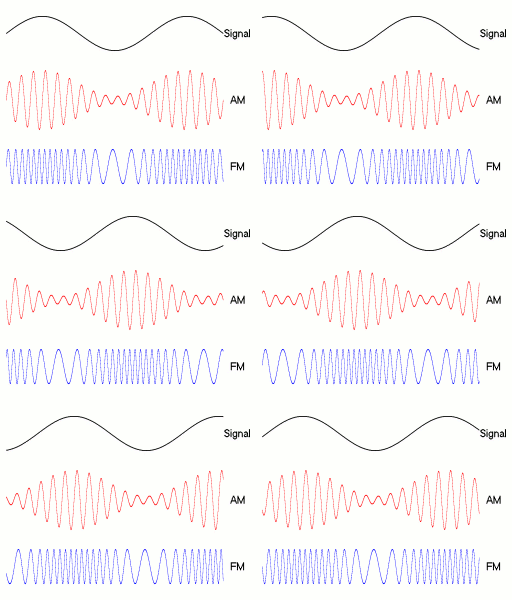
Amplitude modulation, commonly called AM, is a method for imposing information—typically audio—onto a radio carrier by varying the carrier's amplitude while keeping its frequency and phase essentially constant. Because it is conceptually simple and requires relatively little equipment at the receiver, AM played a central role in early broadcast radio and in international shortwave services. The basic technique converts sound into an electrical waveform and uses that waveform to change the strength (amplitude) of a higher-frequency carrier before transmission.
Image gallery
7 Images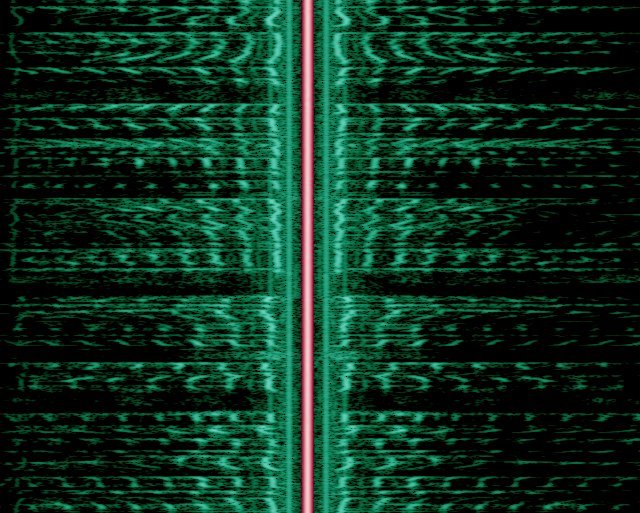



How AM works
An AM transmitter starts with a steady carrier signal at a chosen frequency. The instantaneous amplitude (the effective height of the wave) of that carrier is varied in proportion to the incoming audio or other information signal. The resulting waveform contains the original carrier plus two sidebands that carry the information. Receivers detect the envelope of the combined signal and reproduce the audio. Very simple receivers such as a crystal detector can extract speech or music without an external power source, using a passive radio set design that historically required no batteries.
Propagation and technical characteristics
AM broadcasts are commonly allocated to medium-wave and shortwave bands. Medium wave (commonly called the AM broadcast band) provides reliable regional coverage, while shortwave signals can travel vast distances by reflecting from the ionosphere. Because the method modulates amplitude rather than frequency, AM is more vulnerable to amplitude-based noise sources: electrical interference from power lines and stations, ignition noise, and atmospheric disturbances can degrade reception. AM's audio bandwidth and dynamic range are limited compared with later methods, so it does not offer the same high fidelity as modern FM or digital systems; analog signals may also fade or distort during propagation events such as enhanced sunspot activity.
History and development
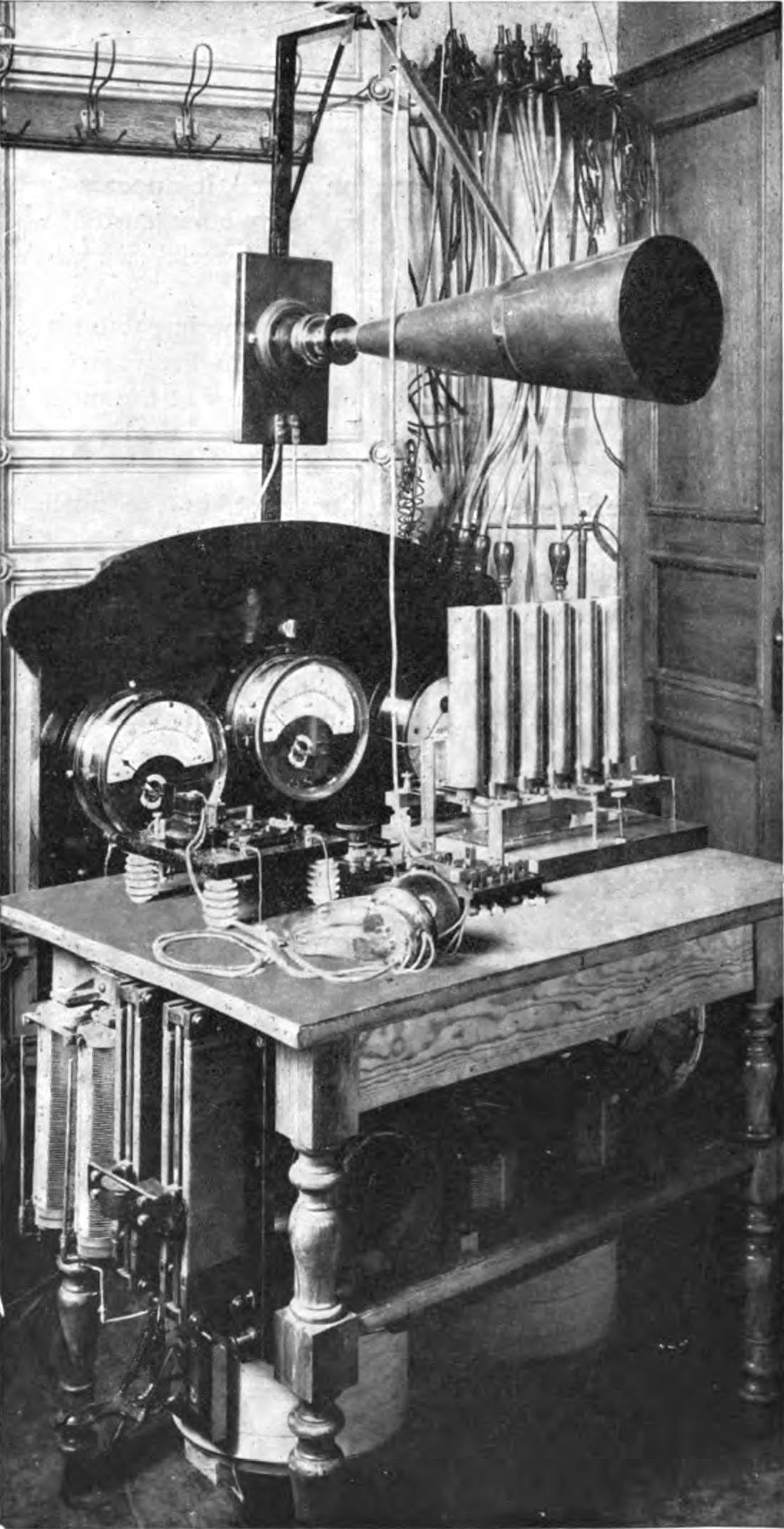
Commercial commercial broadcasting began in the early 20th century and expanded rapidly in the 1920s. During that era medium-wave AM (often cited historically as the 540–1600 kHz range in some regions) was the dominant way to deliver radio programs including news, drama, music, comedy and other entertainment. The later invention and adoption of frequency modulation (FM) provided improved audio quality and resistance to amplitude noise, but FM's line-of-sight propagation and higher frequencies limited range. The arrival of television in the mid-20th century and changing listener habits in the 1950s through the 1970s shifted many music formats toward FM, while AM evolved toward news, talk and sports programming and other spoken-word formats including modern talk shows.
Uses and examples
AM remains useful where long-range or skywave propagation is required and complex infrastructure is impractical. Shortwave AM has been used by national broadcasters to reach global audiences; countries broadcast news, cultural programming and language lessons to listeners overseas as a form of international outreach. State and private services have used AM to distribute information about a nation's history, culture and public affairs to distant or underserved areas. On a regional scale, medium-wave AM provides low-cost local radio in many parts of the world.
Advantages, limitations and modern context
Advantages of AM include technical simplicity, compatibility with inexpensive receivers and the ability to cover large areas via groundwave and skywave propagation. Limitations are lower audio quality, sensitivity to amplitude noise, and inefficient use of spectrum compared with more spectrally efficient modulation schemes. In recent decades digital techniques, FM broadcasting and internet streaming have supplanted some traditional AM roles, but AM still serves emergency alerting, maritime and aviation services, rural broadcasting and international shortwave links where its propagation properties are beneficial.
Key terms and further reading
- radio signal
- transmission method
- ionosphere
- amplitude
- wave height
- wave
- audio
- frequency
- crystal detector
- radio set
- batteryless receivers
- high fidelity
- analog signals
- power line interference
- sunspot effects
- commercial radio
- broadcasting
- 1920s broadcasting
- radio programs
- news
- drama
- music
- comedy
- entertainment
- FM
- television
- 1950s
- 1970s
- talk shows
- shortwave
- countries (broadcasters)
- native culture programming
- historical context
Related articles
Author
AlegsaOnline.com Amplitude modulation (AM): principles, propagation, history, and uses Leandro Alegsa
URL: https://en.alegsaonline.com/art/3658