
Aragonese language (Aragonés)
Aragonese is a Romance language spoken in northern Aragon. It has several thousand speakers, shares features with Iberian and Occitan languages, and is the subject of revitalization and standardization efforts.
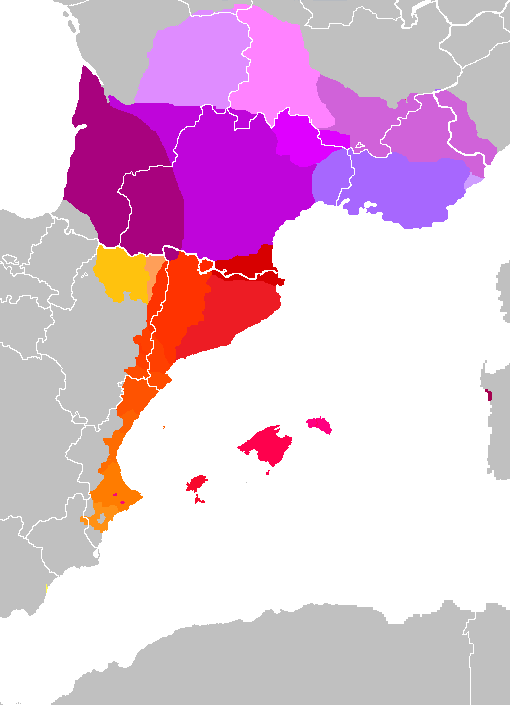
Aragonese (Aragonés) is a Romance language traditionally spoken in the high valleys and foothills of northern Aragon in northeastern Spain. It belongs to the wider Romance family, descended from Latin and related to the Iberian languages: Romance family. Most remaining speakers live in rural Pyrenean and pre-Pyrenean communities of Aragon, and estimates commonly place the number of active speakers in the low thousands.
As a language it shows strong affinities with neighboring tongues: many grammatical patterns and vocabulary items resemble those in Spanish, Catalan and Occitan. Contact with non-Romance Basque-speaking communities has also left lexical and areal traces, so some local words resemble Basque terms.
Image gallery
3 Images

Characteristics
- Phonology: preserves certain medieval consonant and vowel contrasts lost in central Spanish.
- Grammar: shows Romance inflectional patterns with distinctive verb forms and pronoun use.
- Vocabulary: a mix of Latin inheritance, shared Iberian forms, and local borrowings.
- Orthography: several spelling proposals exist; efforts aim for a usable, modern standard.
Historically, Aragonese developed from the Romance spoken in the medieval Kingdom of Aragon and its mountain communities. Over centuries it retreated to rural areas as Castilian Spanish expanded. Despite this contraction, Aragonese preserved unique features and a modest literary presence in folk songs, place names and local writing.
Today Aragonese is considered vulnerable or endangered by linguists. Local cultural organizations, educators and scholars promote transmission through courses, publications and media projects. Standardization and teaching initiatives try to balance respect for local varieties with a coherent written norm to support schooling and literature.
Notable distinctions include a rich set of local dialect names—often called "fabla"—and regionally distinct pronunciations. For learners and researchers, Aragonese offers insight into Romance diversity in the Pyrenees and the long-term effects of language contact. Further reading and resources are available from regional language bodies and academic studies.
Related articles
Author
AlegsaOnline.com Aragonese language (Aragonés) Leandro Alegsa
URL: https://en.alegsaonline.com/art/5159
Sources
- zaguan.unizar.es : zaguan.unizar.es/record/60448
- glottolog.org : "Aragonese"