
Columbian mammoth (Mammuthus columbi)
A large Pleistocene proboscidean of North and Central America; adapted to temperate grasslands and woodlands and genetically linked to other mammoth lineages through ancient hybridization.
Overview
The Columbian mammoth (Mammuthus columbi) was a large proboscidean that lived in North and parts of Central America during the late Pleistocene. Its fossil remains are known from sites as far north as Canada and widely across the United States, with discoveries also documented in Mexico and Central American localities such as Nicaragua. Unlike the cold-adapted woolly mammoth, the Columbian mammoth occupied more temperate environments, including open woodlands, savannas and mixed grasslands.
Image gallery
10 Images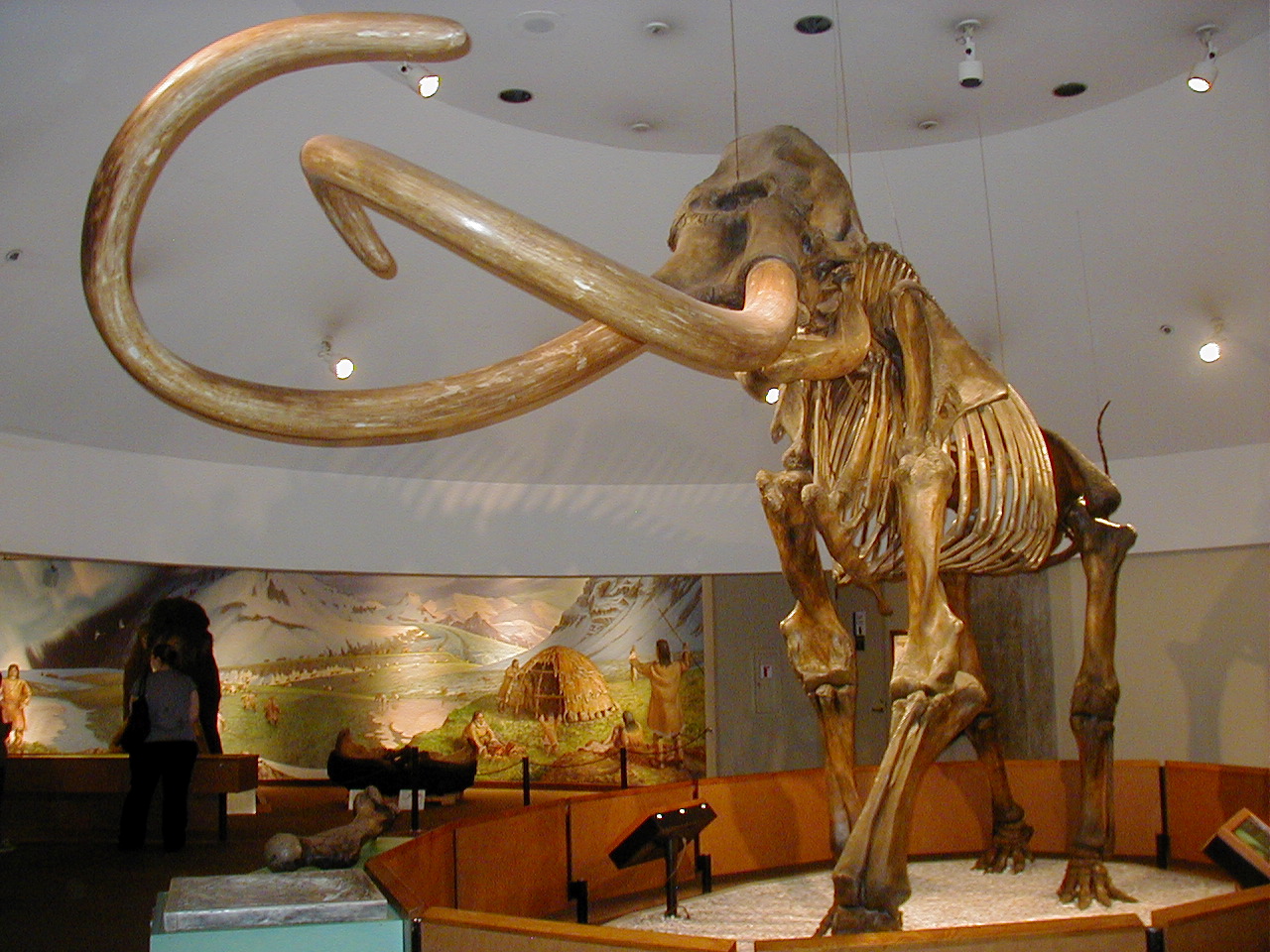


Physical characteristics
The Columbian mammoth was among the largest members of the mammoth clade. It typically had a massive, elephant-like body supported on robust columnar limbs and carried long, curved tusks. Skull shape tended to be lower and flatter than that of the woolly mammoth, and body hair was generally less dense, reflecting adaptation to milder climates. Dental anatomy—large, high-crowned molars with ridged enamel plates—indicates a diet capable of processing coarse grasses as well as browse.
Diet, growth and life history
Isotopic and wear analyses of teeth suggest Columbian mammoths were mixed feeders, consuming both grasses and woody plants depending on local vegetation. Growth patterns inferred from tusk and bone structure imply relatively slow maturation and long lifespans comparable to those of modern elephants; reproductive biology is therefore often reconstructed by analogy with living elephant species. Social organization is inferred from bonebeds and comparisons with modern proboscideans: herding behavior, care of young, and complex social bonds are plausible but cannot be observed directly.
Range, habitat and paleoecology
Columbian mammoths occupied a wide latitudinal range, generally south of the treeless Arctic zones where the woolly mammoth was adapted to live. The two species may have had overlapping ranges in some regions and could exploit different local habitats within the same broad landscapes. Many fossil occurrences cluster at places where environmental stressors or landscape features concentrated animals, such as drying waterholes or natural traps, and researchers often consider events like drought when interpreting mass-mortality sites.
Origins and genetic history
Recent ancient DNA research has shown that the Columbian mammoth had a complex ancestry. Genetic studies indicate substantial genetic contributions from the woolly mammoth and from lineages related to steppe mammoths; this mixture appears to have resulted from hybridization many hundreds of thousands of years ago. Summaries of these findings appear in broader treatments of mammoth hybrid origins and specific DNA studies.
Fossil record and notable sites
Paleontologists have recovered both isolated skeletons and bonebeds containing multiple individuals. Several well-known North American sites preserve large numbers of Columbian mammoth remains or articulated skeletons; museum exhibits and protected localities interpret these finds for the public. U.S. and regional resources provide more information on excavations and interpretation for sites within the United States and international summaries include collections from Mexico and Nicaragua. Northern occurrences are recorded in parts of Canada, typically at lower latitudes than Arctic mammoth finds.
Extinction and interactions with humans
Columbian mammoths disappeared from the fossil record near the close of the last Ice Age, around the time many other large mammals vanished from the Americas. The timing and causes of extinction remain subject to active research; prevailing explanations combine climatic and environmental change with the impacts of human hunting and landscape alteration. Scientific discussions commonly treat both climate change and human hunting as interacting factors, and place these events in the broader context of the end of the ice ages.
Research and public outreach
Ongoing studies integrate paleontology, archaeology, and genetics to refine understanding of Columbian mammoth biology, population history, and their role in Pleistocene ecosystems. Popular and academic resources on the wider mammoth lineage provide context for these efforts; for general background see accounts of mammoth evolution and classification available through institutional summaries on the mammoth group (mammoth lineage) and regional research overviews published by museums and universities (Arctic and temperate comparisons). Fieldwork, curation and laboratory study continue to add detail about how these iconic animals lived and ultimately vanished from the Americas.
Related articles
Author
AlegsaOnline.com Columbian mammoth (Mammuthus columbi) Leandro Alegsa
URL: https://en.alegsaonline.com/art/21810
Sources
- ncbi.nlm.nih.gov : "Complete Columbian mammoth mitogenome suggests interbreeding with woolly mammoths"
- doi.org : 10.1186/gb-2011-12-5-r51
- fossilworks.org : "†Mammuthus columbi Falconer 1857 (Columbian mammoth)"