
Pleistocene: Ice Ages, megafauna, and the rise of modern humans
The Pleistocene (2.6 million–11,700 years ago) was an epoch of repeated glaciations, large mammals, major environmental change, and key stages in human evolution and migration.
The Pleistocene epoch extended from about 2.6 million years ago until roughly 11,700 years ago and marks a defining interval in Earth’s recent geologic past. It succeeds the Pliocene and is identified as the first epoch of the Quaternary period and the sixth epoch of the Cainozoic era. Its close is conventionally taken as the start of the present Holocene. The name is often associated with the colloquial term “Ice Age,” reflecting the repeated growth and retreat of continental and alpine ice sheets that shaped much of today's landscapes.
Image gallery
10 Images
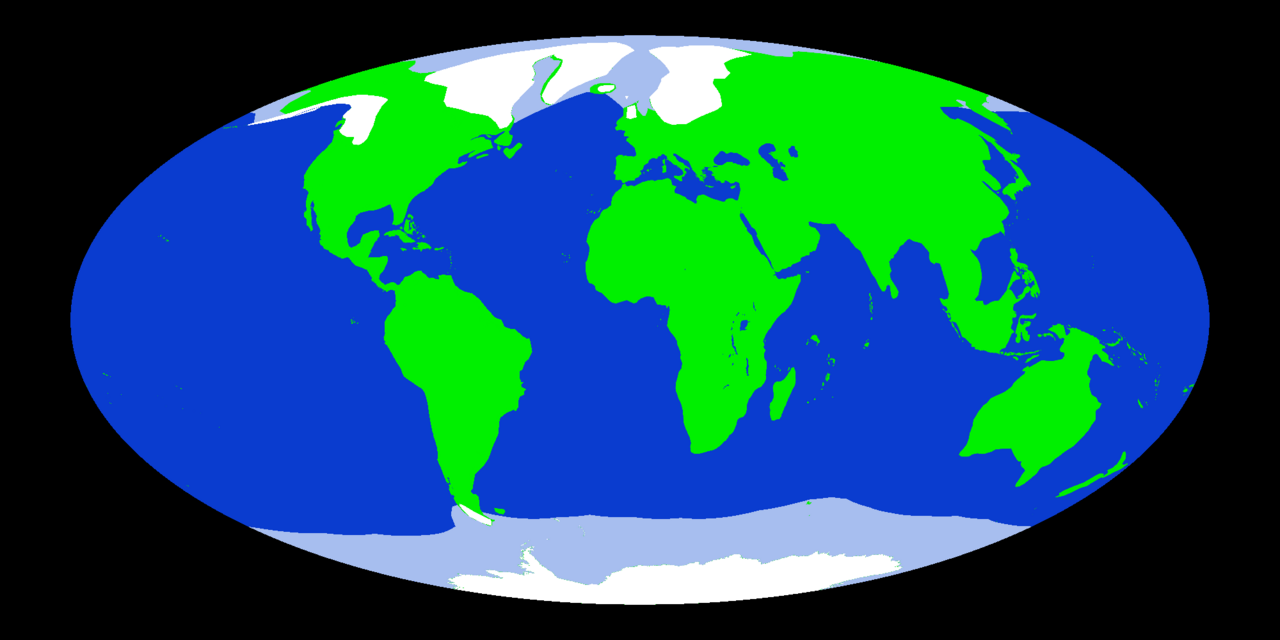


Climate and glaciations
The distinctive feature of the Pleistocene was a pattern of alternating cold glacials and warmer interglacials driven by changes in Earth’s orbit, atmospheric composition and ocean circulation. These cycles — commonly referred to as ice ages in broad terms — produced large continental ice sheets that extended deep into mid-latitudes. Vast ice coverage included parts of North America reaching below the Great Lakes, almost all of northern Russia, extensive areas of Europe, and ice that once reached across Britain. Repeated glaciations lowered global sea levels, altered river systems and carved many of the valleys and lakes familiar today.
Plants, animals and extinctions
Pleistocene ecosystems hosted abundant large mammals adapted to cold or variable climates. Many became extinct near the end of the epoch. Examples include armored herbivores such as the South American glyptodon, which resembled a giant armadillo, and proboscideans like mammoths, relatives of modern elephants known popularly as the woolly mammoth for its insulating coat — an adaptation to cold environments. Causes of these extinctions are debated but commonly include rapid climate change at the end of glacial intervals and increased pressures from human hunting and landscape alteration (hunting).
Human evolution and archaeology
The Pleistocene saw major events in human evolution and dispersal. Several archaic human groups lived and adapted within Pleistocene environments. In Europe and western Asia, the Neanderthals (Homo neanderthalensis) persisted until near the close of the epoch. Anatomically modern humans evolved in Africa, from branches of the broader Homo lineage, and later spread across Eurasia and the Americas. During the Pleistocene, human populations developed diverse stone-tool technologies, hunting strategies and cultural behaviors that laid foundations for later Holocene civilizations.
Key characteristics and legacy
- Timeframe: ~2.6 million to 11,700 years ago, ending with the Holocene (Holocene).
- Major processes: repeated glaciations (ice ages), sea-level fluctuations and large-scale biome shifts.
- Biotic changes: prominence and subsequent loss of Pleistocene megafauna such as mammoths and glyptodons.
- Human milestones: emergence and dispersal of Homo species including Neanderthals and modern humans originating in Africa.
The Pleistocene remains central to understanding modern landscapes, species distributions and the early chapters of human history. Its glacial legacies are visible in river courses, moraines and coastal platforms, while the epoch’s ecological upheavals set the stage for the ecological communities and human societies that followed.
Questions and answers
Q: What is the Pleistocene stage?
A: The Pleistocene stage or epoch was a long period of time that stretched from 2.6 million years ago to 11,700 years ago. It followed the Pliocene and is the first epoch of the Quaternary period and sixth in the Cainozoic.
Q: What are ice ages?
A: Ice ages are when the world becomes much colder for a long time. During these glaciations, much of the world we know was covered by ice.
Q: How many "major" ice ages were there in much of the 20th century?
A: In much of the 20th century geologists counted four "major" iceages, although nowadays several more are called "major".
Q: What animals lived during this time?
A: Many animals that lived during this time have become extinct due to climate change and hunting by humans. Some examples include Glyptodon which was something like a giant armadillo, as well as mammoths which were a species of elephant adapted to cold weather with their long hair.
Q: Who were Neanderthals?
A: Neanderthals (Homo neanderthalensis) were an ancient human species who lived in Europe and Asia until about 30,000 years ago. They did not descend from modern man but originated from another branch of genus Homo in Africa instead.
Q: When did modern man originate?
A: Modern man originated in Africa from another branch of genus Homo around 30,000 years ago.
Related articles
Author
AlegsaOnline.com Pleistocene: Ice Ages, megafauna, and the rise of modern humans Leandro Alegsa
URL: https://en.alegsaonline.com/art/77453
Sources
- quaternary.stratigraphy.org.uk : ICS geologic time scale