
Mammoth: an overview of the Ice Age elephants
Large, hairy relatives of modern elephants (genus Mammuthus) that roamed Pliocene–Pleistocene landscapes, adapted to cold environments, hunted by humans and studied through fossil and DNA evidence.
The term "mammoth" refers to several species of large, long‑tusked elephants in the genus Mammuthus. These animals are best known from cold northern regions of Eurasia and North America, and fossil remains show they persisted in parts of Europe and beyond until late prehistory. Mammoths occupy an important place in paleontology because they bridge the ecology of living elephants and vanished Ice Age ecosystems.
Image gallery
10 Images




Description and adaptations
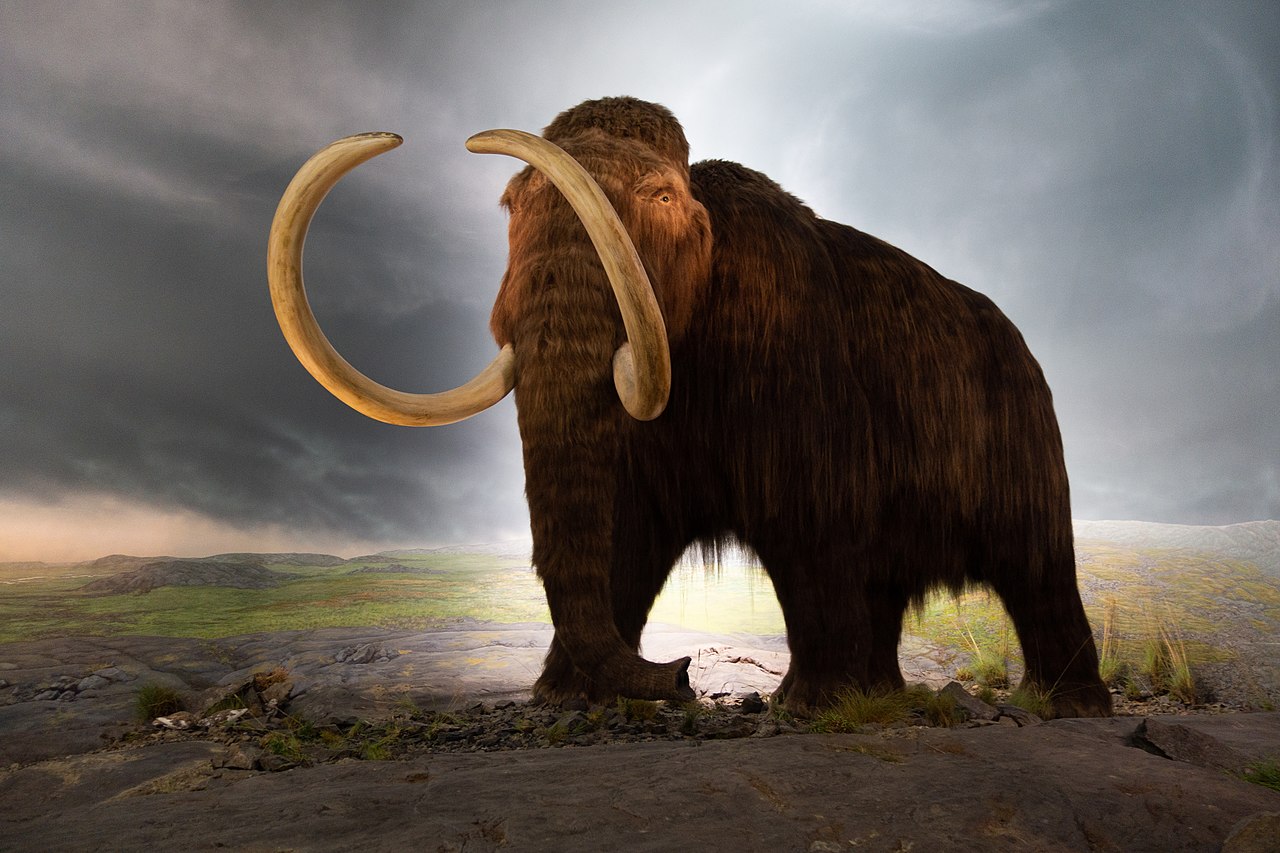
Mammoths are commonly reconstructed with dense fur, a thick layer of subcutaneous fat and elongated, curved tusks suited for foraging and fighting. These traits reflect physiological and behavioral adaptations to cold environments and open habitats. Insulating hair and fat helped them tolerate cold climates, while high-crowned molars were adapted to grinding the coarse grasses and shrubs of Pleistocene steppes.
Distribution and geological context
The lineage that produced mammoths arose in the late Pliocene and diversified during the Pleistocene, a time marked by repeated glacial cycles. Large parts of northern continents were affected by ice sheets and periglacial environments: extensive ice cover altered sea levels and vegetation, while open tundra and steppe supported vast herds. A sequence of ice ages created corridors and barriers that influenced mammoth migrations and regional extinctions.
Human interaction and archaeological evidence
Early humans encountered and exploited mammoths for meat, hides and bones. Archaeological sites show coordinated hunting and butchery: animals were taken down with pointed hafted tools and thrusting implements such as spears (spear technology) and later processed using stone tools including hand axes. Bone and ivory from mammoths were also adapted into shelters, tools and art in some prehistoric cultures.
Extinction, preservation and scientific study
Mammoth populations declined for complex reasons that combined environmental change and human impacts. Many scientists consider a mix of warming climates, habitat loss and hunting pressure as drivers of regional extinctions; the relative importance varied by place and time (extinction research). In cold regions, exceptionally preserved carcasses and frozen remains have yielded soft tissues and genetic material, allowing DNA studies that illuminate their relationships to modern elephants and population histories.
Species diversity and cultural legacy
Notable forms include the woolly mammoth known from northern steppe environments and smaller, island‑dwarf populations known from isolated refuges. Mammoths feature prominently in human myth, prehistoric art and modern science; their bones and tusks are important sources of information about Ice Age environments. Ongoing research continues to refine our understanding of their biology, ecology and extinction.
- Taxonomic group: Mammuthus
- Epochs: Pliocene to Pleistocene
- Environment: glaciated, tundra, steppe
- Human tools: spears, hand axes
- Research topics: extinction, cold adaptation, genetics
Questions and answers
Q: What are mammoths?
A: Mammoths were a type of hairy elephant belonging to the genus Mammuthus.
Q: Where did mammoths live?
A: Mammoths lived in Europe until around 4,500 years ago.
Q: What kind of climate were mammoths adapted to?
A: Mammoths were adapted to cold climates.
Q: What caused the extinction of mammoths?
A: Mammoths were killed off by both hunters and climate change.
Q: During which epochs did mammoths live?
A: Mammoths lived in the Pliocene and Pleistocene epochs.
Q: What was the environment like during the Pleistocene epoch?
A: During the Pleistocene epoch, northern Europe was covered in ice and tundra, and there were a series of ice ages.
Q: How were mammoths hunted by early humans?
A: Early humans hunted mammoths using spears, and cut them up with hand axes.
Related articles
Author
AlegsaOnline.com Mammoth: an overview of the Ice Age elephants Leandro Alegsa
URL: https://en.alegsaonline.com/art/61137
Sources
- ansp.org : "Woolly Mammoth ('Mammuthus primigenius)"
- doi.org : 10.1038/nature02612
- pubmed.ncbi.nlm.nih.gov : 15201907
- live.psu.edu : "Scientists sequence woolly-mammoth genome"
- reuters.com : "Mammoth genome sequence may explain extinction"
- rw.mammoth.psu.edu : "Whole-Genome Shotgun Sequencing of Mitochondria from Ancient Hair Shafts"
- doi.org : 10.1126/science.1146971
- worldcat.org : 1095-9203
- pubmed.ncbi.nlm.nih.gov : 17901335