
Hunting: practices, history, regulation, and conservation
Overview of hunting as a human activity and ecological process, its methods, cultural history, uses, regulation, and controversies including conservation and animal welfare concerns.
Hunting is the practice of seeking, pursuing and killing wild animals for food, materials, population control, or sport. Both nonhuman predators and people take part in hunting: many predators rely on it to survive, and humans have hunted for millennia to obtain meat and other resources. Modern discussions of hunting address techniques, legal frameworks, ecological effects and ethical debates.
Image gallery
6 Images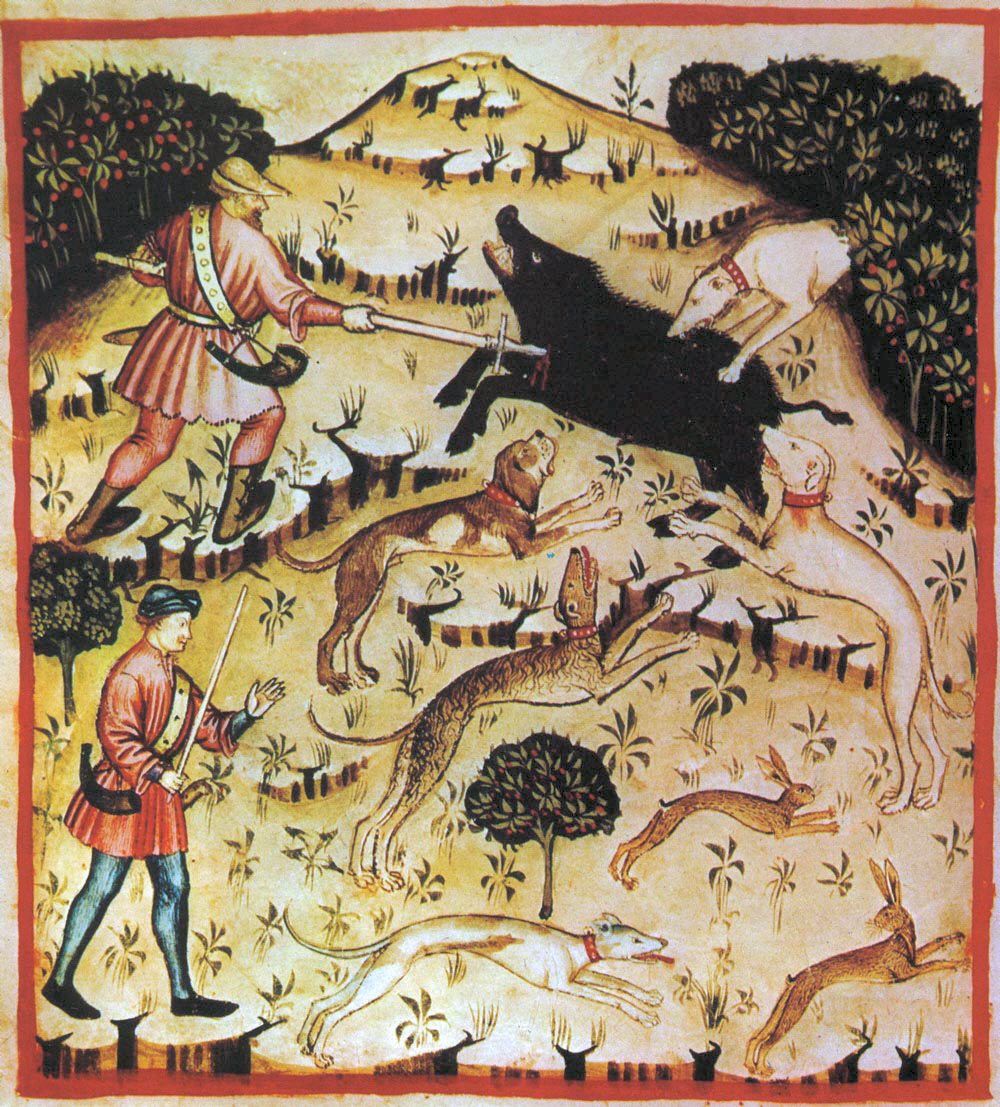


Methods and equipment
Techniques used by hunters vary widely by region, target species and purpose. Traditional tools included spears, traps and snares; later technologies added bows and ranged weapons. Today many hunters use firearms, but methods still range from stalking on foot to ambush, calling, driving and the strategic placement of blinds. Trapping remains a distinct method that captures animals rather than killing them outright; it is regulated separately in many jurisdictions and discussed under trapping.
Reasons for hunting
People hunt for several main reasons: to obtain food and materials such as hides or fur; to control populations of game or pest species; for cultural and subsistence traditions; and for recreation or sport. In some cultures hunting remains a central part of seasonal cycles and local economies. Historically, before widespread domestication and herding, hunting was the primary way to get meat and other animal products.
Historical development
Evidence of human hunting goes back to prehistoric times, when stone-tipped tools and coordinated group strategies were used to pursue large game. Over centuries, hunting practices adapted to new technologies, landscapes and social norms. Certain forms of hunting—such as mounted fox pursuit in parts of Europe—became organized social pastimes involving dogs and riders; foxes and other targets such as boar have long histories as quarry in both subsistence and leisure contexts. The extinction of some species, notably the dodo on Mauritius, illustrates how human pressure can eliminate species when combined with habitat change and introduced animals.
Regulation, conservation and management
Most countries regulate hunting to balance human uses with conservation goals. Rules may set seasons, bag limits, permitted methods and licensing requirements; they also protect certain species and habitats. Well-managed hunting programs are sometimes used as a tool for wildlife management: selective harvesting can help reduce overabundant populations and fund conservation through license fees and taxes. At the same time, excessive or unregulated hunting has caused population declines and extinctions, prompting legal protections and international agreements.
Controversies and ethical perspectives
Hunting raises ethical and social debates. Advocates argue it supplies food, supports rural livelihoods and can contribute to habitat protection. Critics, including many in the animal rights movement, object on welfare grounds and oppose practices they consider cruel. Distinctions are often drawn between subsistence hunting, regulated recreational hunting, commercial exploitation and trophy hunting. In many regions, management seeks compromise by allowing culturally important subsistence hunting while restricting harmful commercial or unregulated activities.
Examples and further reading
- Traditional communal hunts and subsistence practices in indigenous communities — see local ethnohistorical records (hunting).
- Predator-prey dynamics and the role of natural hunters in ecosystems (predators).
- Regulatory frameworks and conservation outcomes vary by country; review national wildlife agencies for specifics (foxes, bow hunting, meat provisioning).
For balanced perspectives, consult materials on wildlife management, hunting ethics and local laws. Introductory summaries and legal texts can clarify permitted methods and the roles hunting plays in modern conservation and rural economies (herding, firearms, fur, trapping, sport, food, spears, dodo, animal rights, predators, hunting).
Questions and answers
Q: What is hunting?
A: Hunting is the act of going out to find and kill animals for various reasons such as food, clothing, shelter, decoration, or sport.
Q: What did people use for hunting in the stone age?
A: In the stone age, people used spears for hunting.
Q: What do people use mostly for hunting nowadays?
A: Nowadays, people mostly use guns and bows for hunting.
Q: Why do some people kill animals for fur?
A: Some people kill animals for fur to make clothes and shelter, or to decorate their homes, or to sell.
Q: What is fox hunting?
A: Fox hunting is a type of hunting that is sometimes considered as a sport.
Q: Why can hunting be good?
A: Hunting can be good as it can help to keep animal populations from getting too high.
Q: What are the consequences of hunting too much?
A: Hunting too much can lead to the extinction of species of animals, as in the case of the dodo bird.
Related articles
Author
AlegsaOnline.com Hunting: practices, history, regulation, and conservation Leandro Alegsa
URL: https://en.alegsaonline.com/art/45773