
Columbia River
Major Pacific Northwest river flowing from the Canadian Rockies through British Columbia, Washington and Oregon to the Pacific; known for large discharge, hydroelectric dams, and historic salmon runs.
Overview
The Columbia River is a principal waterway of the Pacific Northwest. Rising in the Canadian Rockies, it flows generally southeast then west and south through British Columbia and the U.S. states of Washington and Oregon before emptying into the Pacific Ocean. The river is about 1,243 miles long and drains roughly 254,000 square miles (about 657,857 km2). It is the fourth-largest river in the United States by volume and has the greatest discharge of any North American river entering the Pacific.
Image gallery
10 Images



Geography and course
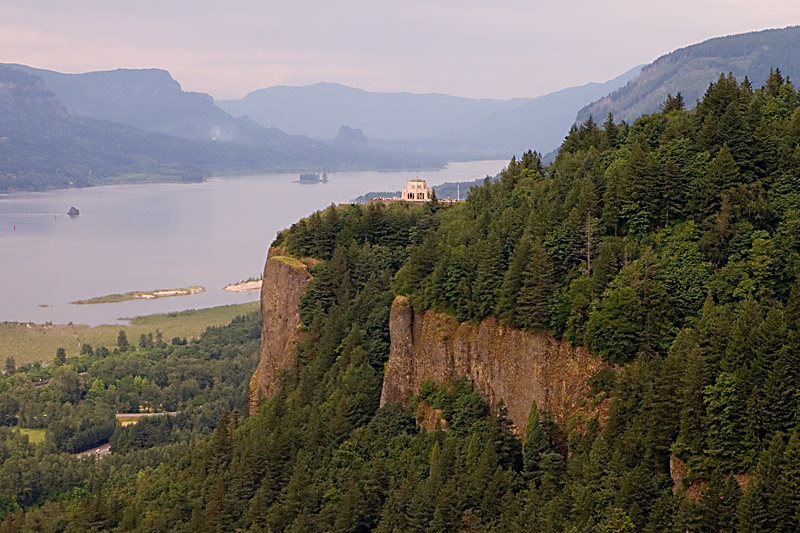
The Columbia begins among mountain streams and alpine lakes in British Columbia and gains volume as it passes through varied terrain: mountain valleys, the Columbia Plateau, and a dramatic canyon known as the Columbia River Gorge. In its lower reach the river makes part of the boundary between Washington and Oregon before widening into an estuary at its mouth. Major tributaries include the Snake River, the river's largest tributary, which drains much of the inland Northwest, along with numerous smaller rivers and creeks that feed the system.
History and human use
For millennia the Columbia supported Indigenous peoples whose cultures and economies were tied to its abundant fish, particularly salmon. The river later became an important route for exploration, trade, and settlement during European and American expansion. Its corridor facilitated inland navigation, railroads, and road networks, and towns and cities developed along its banks. The river remains important for irrigation, transportation, and regional industry.
Dams, power and ecology
Extensive damming has reshaped the Columbia's flow. There are 14 main dams on the river—three in Canada and eleven in the United States—plus additional dams on the Snake River and many tributaries. These structures provide hydroelectric power, flood control, and water storage for agriculture, and several large projects are widely known as major elements of regional infrastructure. At the same time, dam construction and altered flow regimes have contributed to declines in native salmon and steelhead runs and have prompted ongoing efforts to mitigate ecological impacts.
Navigation, economy and recreation
The Columbia remains a working river: it carries commercial shipping to inland ports, supports a sizeable hydroelectric generating capacity, and supplies irrigation that underpins agriculture across a vast basin. Recreationally, the river and its gorge attract boating, fishing, windsurfing, hiking and scenic tourism. Management of the Columbia balances competing needs for power generation, habitat restoration, flood safety, and community use.
Further reading and resources
- Columbia River overview
- British Columbia sections
- Canada and the Columbia
- Washington state information
- Oregon's Columbia River coast
- Length and basic facts
- U.S. river rankings by volume
- Discharge and flow data
- Pacific Ocean outlet and estuary
- Tributary networks
- Snake River basin
- Idaho connections
- Cascade Range interactions
- Dams and infrastructure
- Hydroelectric power on the Columbia
- Flood control and water management
- Salmon and fisheries issues
Related articles
Author
AlegsaOnline.com Columbia River Leandro Alegsa
URL: https://en.alegsaonline.com/art/21803