
Albert Namatjira: Arrernte watercolourist and bridge between cultures
Albert Namatjira (1902–1959) was an Arrernte artist whose Western watercolours of Central Australia brought Indigenous perspectives into the Australian art mainstream and influenced generations of painters.
Overview
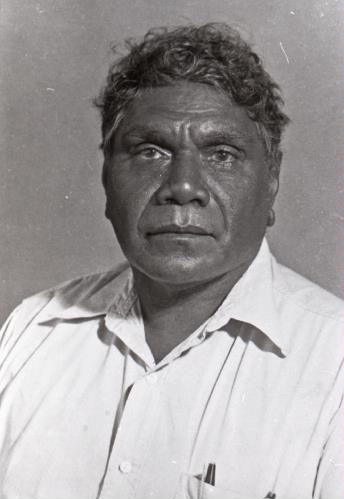
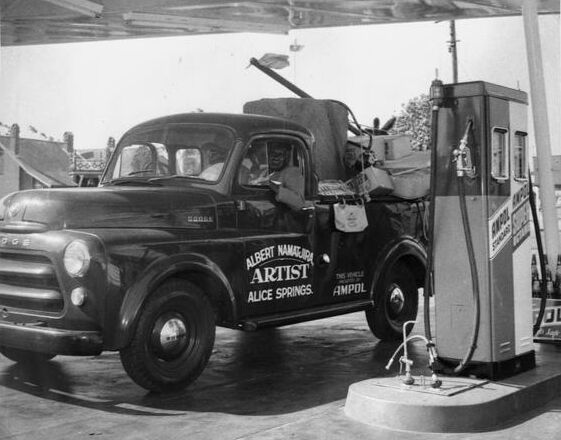
Albert Namatjira (born Elea Namatjira, 28 July 1902 – 8 August 1959) was an Indigenous Australian artist of the Arrernte people. He is best known for watercolour landscapes of Central Australia that combined European painting techniques with a lived, culturally informed knowledge of Country. Namatjira achieved national prominence from the late 1930s and played a central role in opening new opportunities for Aboriginal artists to exhibit to wider Australian audiences.
Image gallery
9 Images





Early life and cultural background
Namatjira was born at Hermannsburg, a Lutheran mission near Alice Springs in the western MacDonnell Ranges. Baptised as Albert, he experienced both the mission's Western-style upbringing and, after returning to the bush as an adolescent, traditional Arrernte initiation and cultural instruction. He later described his deep kinship with the land as central to his sense of identity and to the landscapes he painted.
Training and development as an artist
In the 1930s Namatjira began to experiment with watercolours, a medium widely used in European landscape painting. He learned techniques such as layered washes, handling of light and shadow, and perspective while also preserving an Arrernte understanding of place, season and story. He worked with and was encouraged by non‑Indigenous artists and supporters who visited the region; these contacts helped him access materials, exhibitions and new audiences. His sensitive observation of colour, atmosphere and the geological forms of the MacDonnell Ranges became a hallmark of his work.
Career, exhibitions and public reception
Namatjira's first significant exhibition was held in Melbourne in 1938. Shows that followed in Sydney and Adelaide drew strong public interest and often sold out. Reproductions and postcards of his paintings became widely circulated, contributing to his public profile. In 1956 the portrait of Namatjira by William Dargie won the Archibald Prize, further increasing attention to the artist and his art. Alongside popular acclaim, his career also raised debates about cultural translation, authorship and the commercial demands placed on Indigenous artists.
Legal status, later life and controversies
During his lifetime Namatjira's prominence coincided with complex legal and social issues for Aboriginal people. In 1957 he was granted Australian citizenship, an unusual development at that period and one that attracted public attention. He later became the subject of legal trouble under liquor laws then applied to Indigenous communities; his conviction and short imprisonment in 1958 provoked public debate and is often cited in accounts of the hardships he faced in later years. He died in 1959.
Artistic style and themes
Namatjira's watercolours are notable for their clarity of light, economical brushwork and evocative colouration: ochres, reds and cool blues that register the desert's changing moods. He reduced complex landforms to simplified, rhythmic shapes while retaining a sense of place and cultural meaning. Although his work did not follow the iconographies of traditional dot or bark painting, it represented a syncretic mode in which Indigenous ways of seeing were translated through European materials and pictorial conventions.
Legacy and influence
Albert Namatjira is widely regarded as a foundational figure in twentieth‑century Australian art. He inspired an informal group often called the "Hermannsburg School," whose members adopted aspects of his watercolour technique and outlook. His success led to increased public interest in art by Aboriginal people and influenced later generations of Indigenous artists who explored a diversity of styles and media. At the same time, scholars and commentators emphasise the mixed nature of his legacy: celebrated as an artist, he also experienced exploitation, legal discrimination and the pressures of sudden fame.
Collections and where to see his work
Namatjira's paintings are held in major Australian public and private collections and continue to be reproduced in books and exhibitions. They are studied for both their aesthetic qualities and for the cultural histories they represent, including questions about mission life, cross‑cultural exchange and the politics of recognition.
Notable facts
- Born Elea Namatjira at the Hermannsburg mission and baptised as Albert.
- First major public exhibition in Melbourne, 1938, with later successful shows in Sydney and Adelaide.
- Known for small- to medium-scale watercolours of the MacDonnell Ranges and Central Australian desert.
- Portrait by William Dargie won the Archibald Prize in 1956, increasing public attention.
- Often described as the leader of the Hermannsburg School and an important bridge between Indigenous and non-Indigenous art worlds.
Further reading and resources
- Biography and overview
- Examples of watercolour works
- MacDonnell Ranges: landscape context
- Landscape painting in Australia
- Distinctive styles in Aboriginal art
- Arrernte people and country
- Hermannsburg mission history
- Lutheran mission context
- Mission communities and art
- Alice Springs regional information
- Baptism and name change
- Western influences on upbringing
- Bush life and initiation practices
- Arrernte initiation customs
- Concepts of kinship with land
- 1938 Melbourne exhibition details
- Melbourne art scene, 1930s
- Sydney exhibitions and reception
- Adelaide exhibitions and collectors
- Archibald Prize 1956: William Dargie's portrait
Notes: This entry summarises widely known aspects of Albert Namatjira's life and work. Some details of personal history and legal matters are complex and discussed in more depth in specialised biographies and scholarly literature.
Related articles
Author
AlegsaOnline.com Albert Namatjira: Arrernte watercolourist and bridge between cultures Leandro Alegsa
URL: https://en.alegsaonline.com/art/113574
Sources
- adb.online.anu.edu.au : "Namatjira, Albert (Elea) (1902 - 1959)"