
Melbourne: capital city of Victoria, Australia
Melbourne is a major Australian city and the capital of Victoria, known for its cultural diversity, trams, sports events, parks and universities, and a varied economy spanning services, industry and education.
Overview
Melbourne is widely recognised as the second-largest city in Australia and serves as the state capital of Victoria. Its wider metropolitan area holds several million residents and a mix of long-term communities and recent arrivals — references to the city's population vary by census and estimate. The central business district is built around the river that winds through the city and contributes to the waterfront character of many inner suburbs.
Image gallery
2 Images
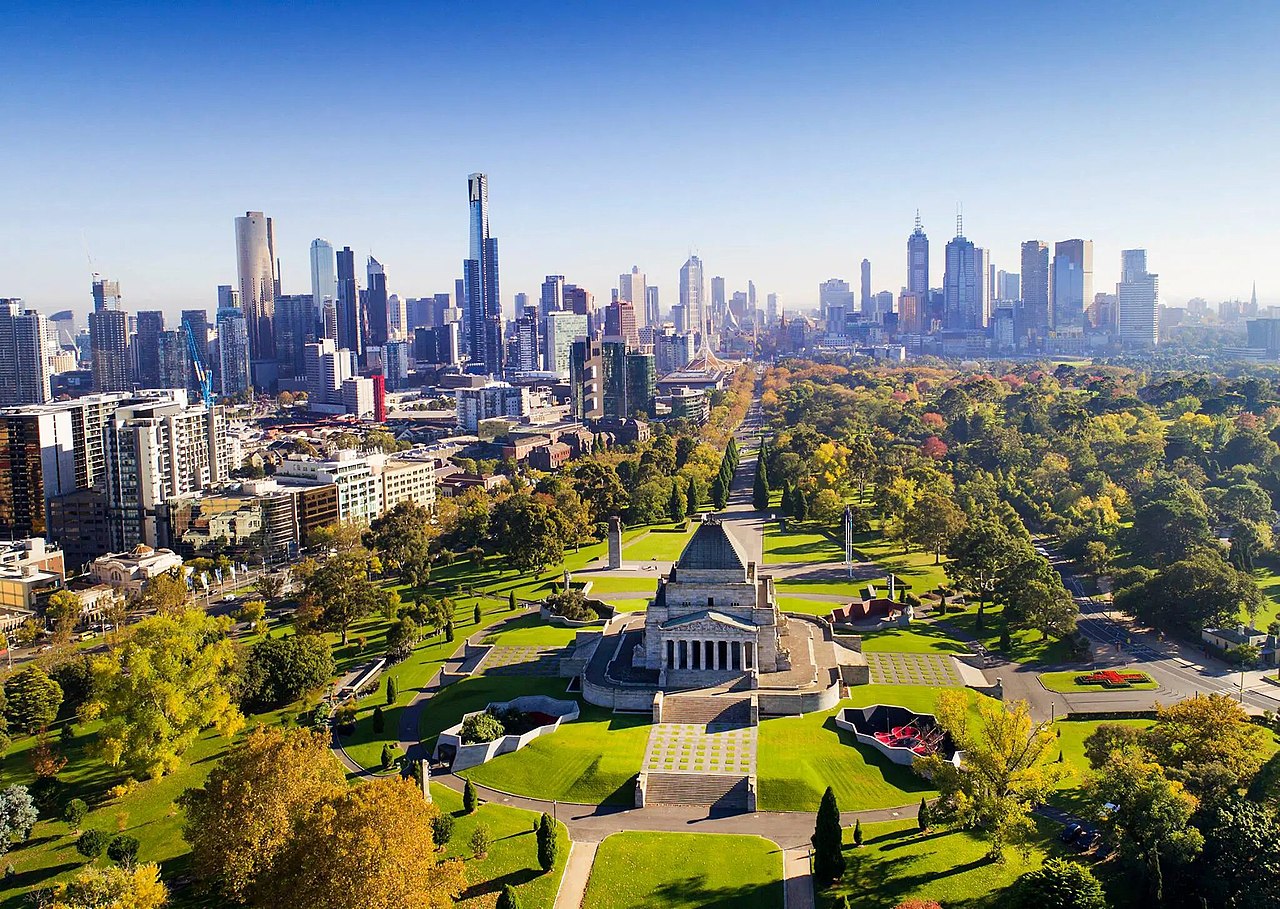
Geography, parks and transport
Melbourne sits on the southern coast of the Australian mainland, with a coastline of bays and some popular beaches within easy reach. The urban area includes extensive open spaces and public gardens; many neighbourhoods border large parks and botanical gardens. Public transport is notable for its extensive tram network, one of the largest in the world, which remains a visible part of daily life and tourist experience.
Culture, arts and leisure
Melbourne has a reputation as a multicultural centre that actively welcomes people and cultures from around the world — reflected in food, festivals and community organisations (multicultural). Visitors and residents can explore museums and galleries throughout the city: major collections and smaller institutions showcase history, science and visual museums and contemporary art. Dining ranges from casual cafes to acclaimed restaurants and a broad range of international cuisines (restaurants), while laneways and retail precincts offer diverse shopping experiences (shops).
Sports, events and recognition
Sport plays a central social role in Melbourne. The city hosts internationally recognised events such as the tennis tournament early each year and motorsport races, and its stadiums are used for Australian rules football and other major fixtures. Over the 2010s Melbourne received repeated high rankings in global liveability surveys and continues to be promoted for its cultural infrastructure and quality of life (international recognition).
Economy, industry and higher education
Melbourne's economy spans services, finance, manufacturing and a busy port. The metropolitan region supports substantial industry and a history of factories, while commerce and corporate headquarters underpin its role as a business centre (commerce). The city is also an important education hub, home to many universities and research institutions; students from across Australia and abroad attend its campuses (universities).
Notable sectors and recent changes
Automotive manufacturing was long an important sector in the region, with major carmakers contributing to local employment; in recent years much vehicle production has shifted offshore and the sector has contracted (automotive). The city continues to adapt by expanding technology, research, professional services and creative industries, while maintaining a strong calendar of cultural events and public life.
- Key features: riverfront neighbourhoods (the Yarra River), extensive tram network, green open spaces.
- Activities: museums and galleries (museums, art), sporting events and festivals, dining and shopping (restaurants, shops).
- Economy: services, port operations, light manufacturing (industry, factories) and higher education (universities).
For more focused information about transport routes, visitor attractions and official statistics consult local guides and government resources or dedicated city profiles and tourism pages (city overview, national context). Melbourne's story combines a colonial foundation with ongoing waves of immigration, economic change and cultural innovation that continue to shape its neighbourhoods and public life.
Questions and answers
Q: What is the population of Melbourne?
A: The population of Melbourne is 3.7 million, second only to Sydney.
Q: What is Melbourne famous for?
A: Melbourne is famous for its trams (small short trains).
Q: How many times has Melbourne won the Economist's 'World's most liveable city' award?
A: Melbourne has been the winner of the Economist's 'World's most liveable city' award for 7 consecutive years, from 2010 - 2017.
Q: What type of industry and commerce can be found in Melbourne?
A: There is a lot of industry (factories) and commerce (buying and selling) in Melbourne. Many of Australia's largest companies and many large companies from other countries work there. It is home to Australia's largest seaport.
Q: Are there any universities in Melbourne?
A: Yes, there are a number of universities in Melbourne including the University of Melbourne, Monash University, Deakin University, Victoria University, La Trobe University, RMIT University, Swinburne University and the Australian Catholic University.
Q: Is there an automotive industry present in Melboune?
A: Yes, much of Australia's automotive (car) industry can be found in Melboune including engine maker "Holden", "Ford" and "Toyota" car builders although all three have announced plans to move their manufacturing plants overseas with Ford already shutting down its manufacturing plant in Broadmeadows.
Q: What activities can visitors enjoy when visiting Melboune?
A: Visitors to Melboune can go to museums, look at art galleries , eat food at restaurants , go shopping or attend international events such as Australian Open or Formula One both held during early year .
Related articles
Author
AlegsaOnline.com Melbourne: capital city of Victoria, Australia Leandro Alegsa
URL: https://en.alegsaonline.com/art/63649
Sources
- en.wikivoyage.org : Melbourne
- commons.wikimedia.org : Melbourne
- abs.gov.au : "3218.0 – Regional Population Growth, Australia, 2015–16"
- abs.gov.au : "3218.0 – Regional Population Growth, Australia, 2015–16: Population Estimates by Statistical Area Level 2 (ASGS 2016), 2006 to 2016"
- ga.gov.au : "Great Circle Distance between MELBOURNE and CANBERRA"
- ga.gov.au : "Great Circle Distance between MELBOURNE and ADELAIDE"
- ga.gov.au : "Great Circle Distance between MELBOURNE and SYDNEY"
- ga.gov.au : "Great Circle Distance between MELBOURNE and BRISBANE"
- ga.gov.au : "Great Circle Distance between MELBOURNE and PERTH"
- abc.net.au : "A tale of three cities: Populations soar in Melbourne, Sydney and Brisbane"
- egold.net.au : "Gold in Melbourne - Concept - Electronic Encyclopedia of Gold in Australia"
- bom.gov.au : "Monthly climate statistics"
- wikidata.org : wikidata.org/wiki/Q3141
- catalogue.bnf.fr : cb11953198f
- data.bnf.fr : (data)