
Aboriginal art: traditions, materials, history and contemporary significance
Aboriginal art refers to the visual and material practices of Indigenous Australian peoples, spanning ancient rock art to contemporary painting, with deep cultural meanings tied to the Dreaming and country.
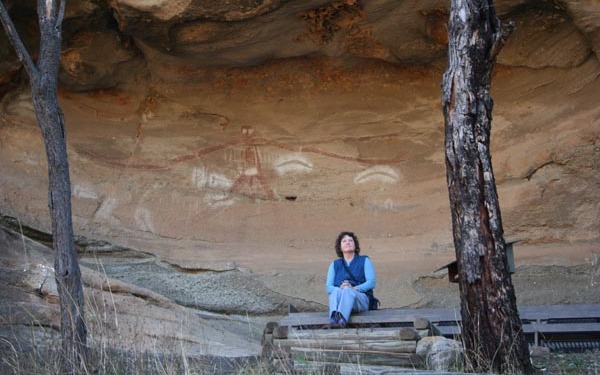
Aboriginal art describes the creative practices of Australia's Indigenous peoples and the artworks they produce. These works range from ancient rock engravings and body painting to bark painting, sculpture and modern canvas painting, and they are closely connected to cultural law, ceremony and stories often known as the Dreaming. For context and further reading see Aboriginal art and the role of Indigenous Australian artists in maintaining living traditions.
Image gallery
10 Images




Materials, techniques and common forms
Artists have used local materials and techniques adapted to environment and purpose. Common forms include:
- Rock painting and engraving on cliff faces and shelters, some of which are among the oldest figurative artworks in the world.
- Bark painting and wooden carving, often prepared with natural ochres and charcoal on bark sheets or carved objects.
- Body painting and ceremonial designs, applied for ritual occasions and social events.
- Sand and ground designs made during ceremonies and transient performances.
- Contemporary works in acrylic on canvas and board, a movement that began in the late 20th century and made remote art styles visible to national and international audiences.
Symbolism, meaning and cultural context
Aboriginal artworks frequently use a structured set of symbols to represent people, animals, waterholes, tracks and events. These visual signs act as a form of communication: they record ancestral journeys, map country, mark ceremony and express identity. While some motifs are widely recognisable, meanings vary between language groups and may be restricted by cultural protocol. Many paintings and objects relate to totems and creation narratives; see common references to totems and the use of symbolic signs across communities.
History and development
Archaeological evidence and continuous cultural practice show a long history of artistic expression across the continent. Rock art, body painting and ground designs have existed for tens of thousands of years and form part of one of the world's oldest continuing artistic traditions. In the 20th century new markets, materials and cross-cultural exchanges altered production: for example, the adoption of acrylic paints and board enabled artists from inland communities to create portable works that could be sold and exhibited, while preserving traditional stories in new formats.
Contemporary importance, exhibition and market
Today Aboriginal art appears in galleries, public commissions and private collections worldwide. Some artists achieve significant recognition and prices, and works are used to raise awareness of cultural history and land rights. As an example of market value and recognition, Pitjantjatjara painter Yannima Pikarli Tommy Watson achieved a notable sale reported in the 21st century (Yannima Pikarli Tommy Watson). Public art projects also showcase Indigenous styles: in one high-profile commission the Queensland Government arranged for the first two Tilt Trains to be painted by Indigenous artists, decorating seven carriages (seven carriages) and two locomotives (two locomotives) that operate on the route between Brisbane and Cairns.
Distinctions and contemporary issues
Aboriginal art is distinct from, but related to, the arts of Torres Strait Islander peoples; both are often grouped under the term Indigenous Australian art, yet they come from different cultural and ecological contexts. Key contemporary concerns include proper attribution, respect for restricted knowledge, ethical sale and provenance, and protection against unauthorised reproduction. Museums, Indigenous organisations and communities continue to work on protocols that respect cultural authority while allowing wider audiences to learn from and appreciate these vibrant artistic traditions.
For those studying or viewing Aboriginal art, attention to provenance, community context and local meanings helps ensure appreciation without appropriation. The visual language of Aboriginal art remains a vital medium for cultural continuity, education and creative expression across Australia and beyond.
Questions and answers
Q: What is Aboriginal art?
A: Aboriginal art is art made by indigenous Australian people, which includes work made in many different ways including painting on leaves, wood carving, rock carving, sculpting, ceremonial clothing and sand painting. It is closely linked to religious ceremonies or rituals and is an important part of the world's oldest continuous cultural tradition.
Q: How old is Aboriginal art?
A: Aboriginal art dates back more than 30,000 years and is the oldest ongoing tradition of art in the world.
Q: What symbols are used in aboriginal art?
A: Symbols are used in aboriginal art to show different things; while the meaning of these symbols can be shared between groups they can also change meaning within the same piece or be different between different groups.
Q: How did aboriginal artists start making artwork?
A: Aboriginal artists started making artwork around 30,000 to 40,000 years ago using beautiful patterns as a language.
Q: Are there any famous examples of aboriginal artwork that have been sold for a lot of money?
A: Yes - In 2007 Pitjantjatjara artist Yannima Pikarli Tommy Watson sold a painting for AU$240,000.
Q: What was the largest modern aboriginal art piece created recently?
A: The largest modern aboriginal art piece was created by Judy Watson and Alick Tipoti for Queensland Government’s Tilt Trains which run between Brisbane and Cairns; with seven carriages and two locomotives it will be 185 metres long when completed.
Q: Is there any significance behind why certain colours are used in Aboriginal Artwork? A: Yes - Certain colours often have symbolic meanings associated with them such as red representing bloodlines or yellow being associated with spiritual energy.
Tags
Related articles
Author
AlegsaOnline.com Aboriginal art: traditions, materials, history and contemporary significance Leandro Alegsa
URL: https://en.alegsaonline.com/art/464
Sources
- commons.wikimedia.org : Aboriginal art
- australia.gov.au : www.australia.gov.au/about-australia/australian-story/austn-indigenous-art
- abc.net.au : "An Aboriginal art success farewells Sydney"
- aboriginalartnews.com.au : "Artists Named For Iconic Indigenous Tilt Trains at Aboriginal Art News"
- aboriginalartonline.com : Rock Art
- abc.net.au : "Megafauna cave painting could be 40,000 years old"
- antiquity.ac.uk : "An ancient rock painting of a marsupial lion, Thylacoleo carnifex, from the Kimberley, Western Australia"
- australiangeographic.com.au : "Aboriginal rock art may depict first sea arrivals"
- dec.wa.gov.au : "Creation of Western Australia's 100th National Park - Murujuga National Park"
- ausemade.com.au : "Aboriginal Symbols"