
Arshile Gorky: Armenian‑born American painter and precursor of Abstract Expressionism
Arshile Gorky (c.1904–1948) was an Armenian‑born American painter whose biomorphic abstractions and surrealist methods helped shape Abstract Expressionism and mid‑20th‑century modern art.
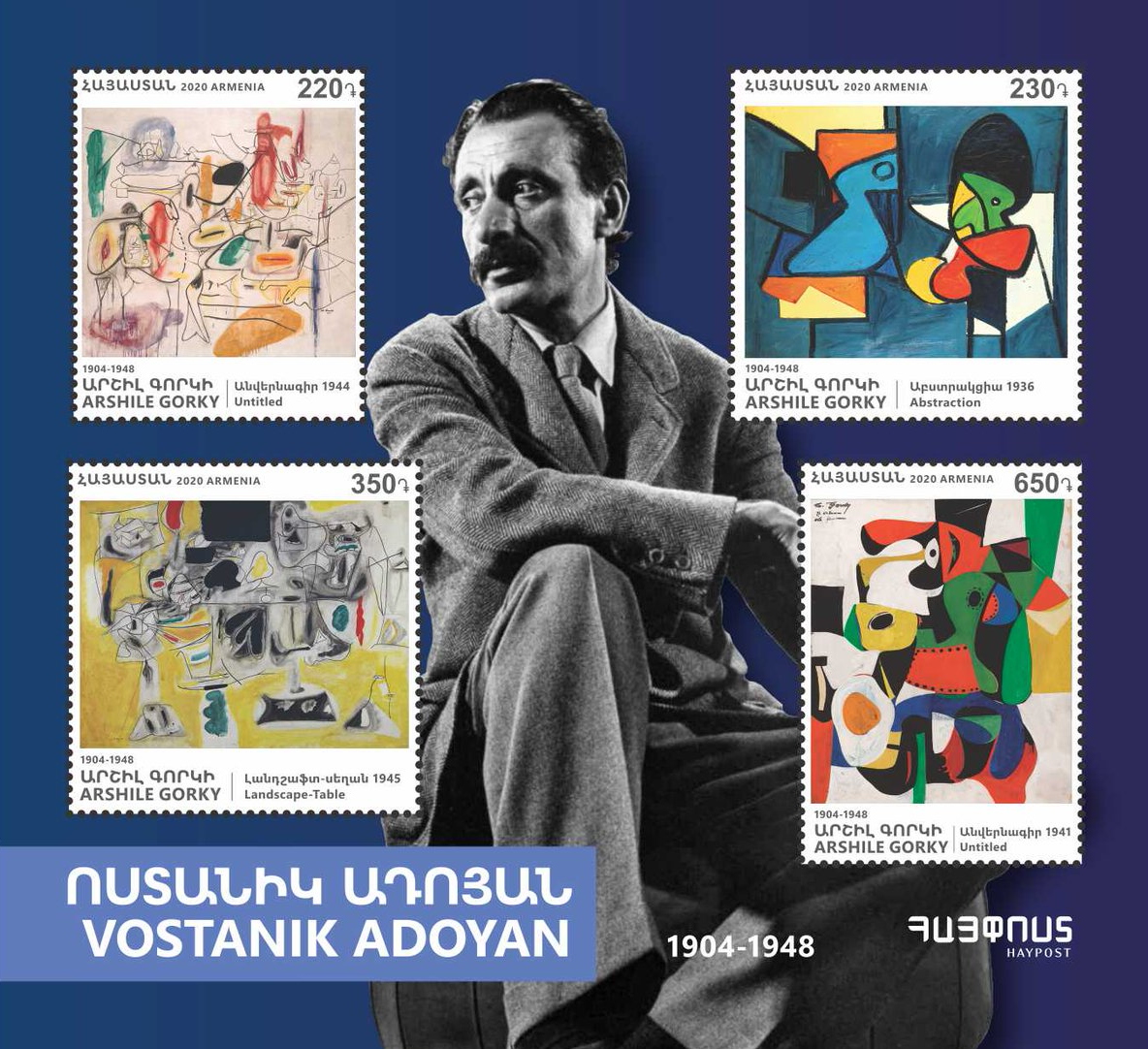
Arshile Gorky was an Armenian‑born American artist whose work formed an important bridge between European Surrealism and the emergence of Abstract Expressionism in the United States. Born Vostanik Manoug Adoian, he later adopted the name Arshile Gorky; the name change and persona are part of his complex biography and self‑fashioning in a new country. His birthdate is uncertain and often given as around 1904. Early experiences in the region of Lake Van and the traumas of the early 20th century informed the emotional undercurrent of much of his later painting; his life in the United States was marked by artistic experimentation and personal difficulty.
Image gallery
6 Images


Early life and emigration
Gorky was born in the Ottoman Empire near Lake Van and spent his childhood in a multilingual, agrarian environment. The upheavals affecting the Armenian population in the region during the 1910s contributed to his family’s dispersal and eventual migration. As a young man he arrived in the United States, where he lived and worked in New England and later in New York. The experience of displacement and loss remained an important, if often oblique, influence on his imagery and thematic concerns.
Artistic development and influences
Gorky absorbed a mixture of European avant‑garde currents and contemporary American tendencies. He was familiar with Surrealist ideas such as automatism and the use of the unconscious as a source for imagery, but he adapted these to produce a more lyrical and painterly idiom. His compositions frequently combine biomorphic forms, fragmentary figuration and a calligraphic line that suggests both memory and invention. Art historians often discuss Gorky in relation to the European modernists he knew about and to younger American painters whom he influenced.
Style, technique and themes
Gorky worked in oil, charcoal and drawing media and used collage and layering to develop complex surface relationships. His paintings range from intimate drawings to large canvases that employ rich, modulated color and energetic brushwork. Recurring themes include family memory, landscape motifs transformed into abstracted organic shapes, and a tension between control and chance. He sought to make painting that conveyed personal feeling rather than straightforward narrative.
Major works and critical reputation
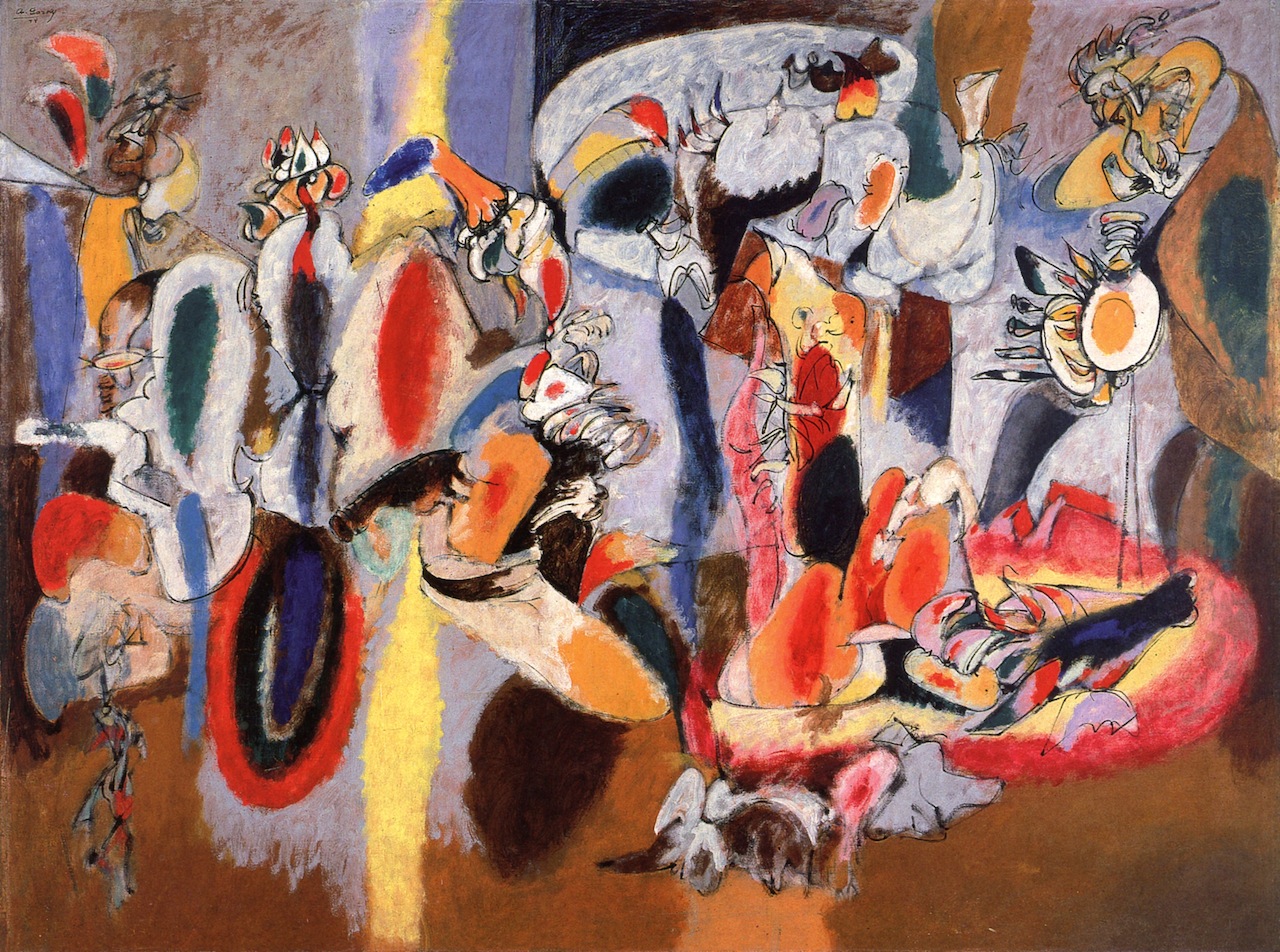
Works from the early to mid‑1940s demonstrate a mature synthesis of his approaches; one of his best known canvases from this period is often cited as a pivotal example of his lyrical abstraction. Critics and later artists credited Gorky with helping to open a distinctly American path toward expressive abstraction. His methods and compositional experiments were influential on figures such as Jackson Pollock and Willem de Kooning, who acknowledged his importance in conversations about postwar art.
Legacy and collections
Gorky’s reputation grew after his death in 1948, and museums and scholars have continued to reassess his work within the history of twentieth‑century art. Major public collections hold paintings and drawings that document his development from more representational early works to fully realized abstract compositions. For introductory biographical references see materials that discuss his Armenian name and origins: Vostanik Manoug Adoian, or summaries that discuss the name he adopted: Arshile Gorky.
Further reading and resources
Readers interested in deeper study can consult museum catalogues and critical essays that situate Gorky within Surrealist and Abstract Expressionist contexts; these resources discuss his use of automatism, his compositional strategies and his continuing influence: critical discussions. For practical information about holdings, exhibitions and archives consult institutional guides and museums that preserve his work and papers: museum and archive guides.
Summary
Arshile Gorky remains a central, somewhat enigmatic figure in modern American art. His paintings combine memory, invention and painterly freedom, and their emotional intensity helped shape the language of mid‑20th‑century abstraction. While his biography includes elements of displacement and tragedy, it is his formal innovations and the expressive range of his work that have secured his place in art history.
- Birth name: Vostanik Manoug Adoian
- Adopted name: Arshile Gorky
- Context: linked to Surrealist methods and a precursor role for Abstract Expressionism — see critical discussions
- Collections and catalogs: consult museum resources and exhibition guides: museum and archive guides
Related articles
Author
AlegsaOnline.com Arshile Gorky: Armenian‑born American painter and precursor of Abstract Expressionism Leandro Alegsa
URL: https://en.alegsaonline.com/art/114580