
Varve: annual sedimentary laminations and their significance
Varves are paired seasonal layers in fine-grained lake sediments. They form under low-disturbance conditions and are used for high-resolution dating, climate reconstruction, and sedimentary studies.
Overview
A varve is a pair of sedimentary layers that together represent one year of deposition in a lake or similar still-water environment. Varves record seasonal changes in sediment supply and chemistry, producing a repeating pattern that can be counted and studied to produce annual chronologies. As a smallest-scale feature in stratigraphy, varves preserve high-resolution information about past environments and are an important tool in Quaternary geology, paleoclimatology and palynology.
Image gallery
4 Images



Typical characteristics and formation
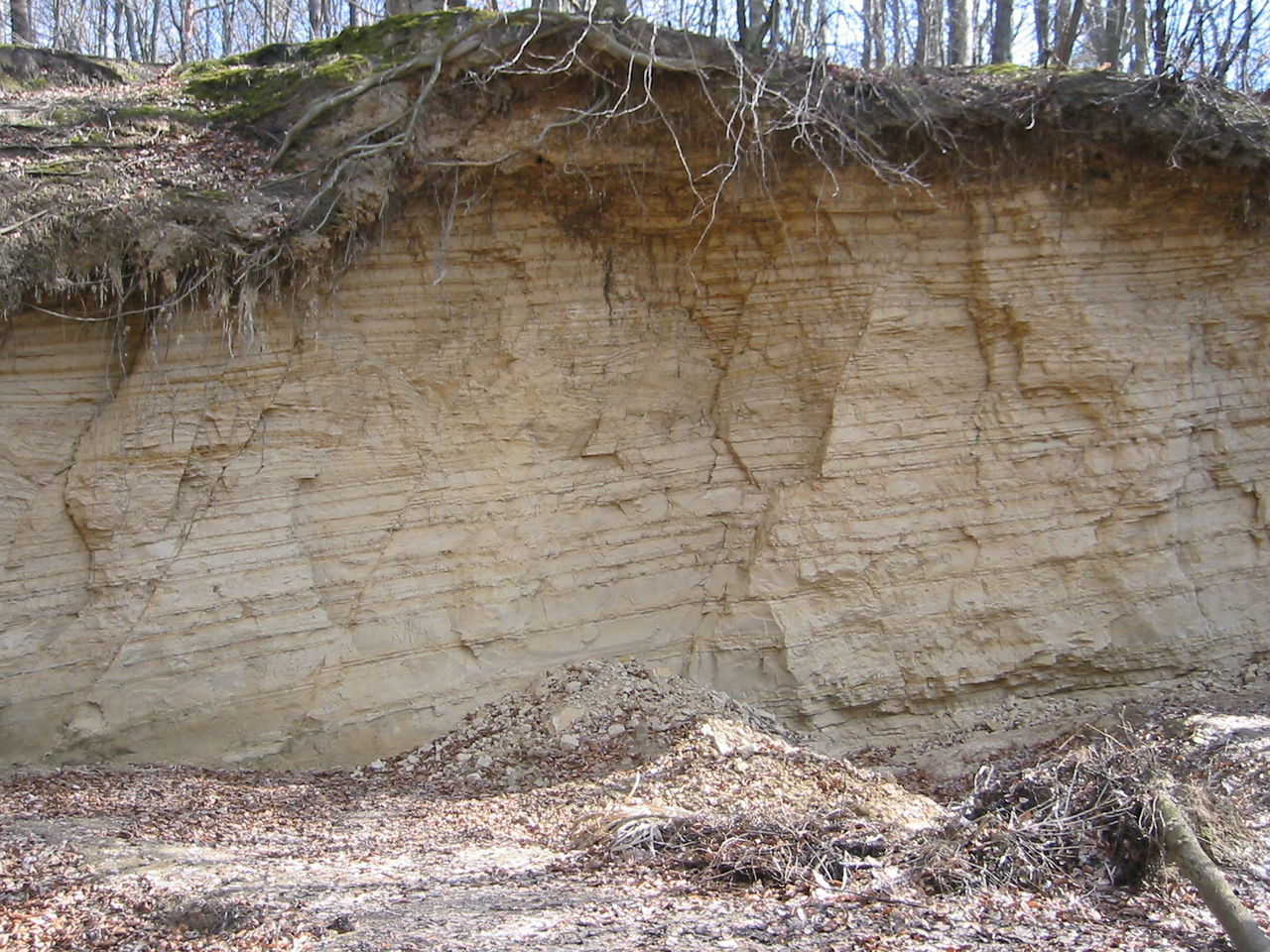
The classic varve consists of a light-coloured layer deposited during the warmer, higher-energy part of the year and a darker, finer layer laid down during the colder, quieter season. In many glacially influenced lakes the light portion is composed of coarser particles such as silt and fine sand carried in by meltwater in spring and summer, while the dark part is dominated by very fine clay that settles in winter when inflow is reduced and the water column is still. This archetypal pattern is often associated with a glacial lake setting, but varve-like couplets can form in other calm fresh or slightly saline basins as well (fresh or brackish water).
Conditions favouring preservation
Preservation of clear annual layers requires minimal disturbance of the sediment surface. Biological mixing of the bottom (known as bioturbation) tends to blur or destroy varves, so they are most likely to survive where bottoms are oxygen-poor and benthic organisms are scarce. Rapid burial, continuous basin sedimentation, and low-energy depositional settings all aid in retaining uninterrupted varve sequences. When preserved in the rock record, such rhythmic bedding may be described as rhythmites.
Uses and scientific importance
Varves provide annual to sub-annual resolution of environmental change, giving researchers the ability to count years much like tree rings. Varve chronologies can be correlated across basins, used to date geological events, and serve as independent checks for radiometric dates. They also supply material for pollen and microfossil studies, helping reconstruct vegetation and climate variations season by season or year by year. Because of their role in reconstructing past meltwater fluxes and seasonal sedimentation, varves are valuable for understanding deglaciation processes and the dynamics of past classic varve archetype environments.
Practical considerations and limitations
- Counting varves yields an annual record, but gaps or extra laminations can occur after floods, storms, or sediment slumping.
- Post-depositional disturbance, compaction, and chemical alteration can change the appearance of layers, complicating interpretation.
- Varves are typically restricted to low-energy basins and are not a universal sedimentary archive; they are most common in sediment-rich, calm lakes influenced by seasonal input.
Because varves capture repeated seasonal processes, they remain a cornerstone for studies that require annual precision and for linking short-term climatic events to longer-term geological records. For additional context and technical methods for reading and correlating varve sequences, see specialized sedimentology and paleolimnology literature (sediment, stratigraphy, palynology).
Related articles
Author
AlegsaOnline.com Varve: annual sedimentary laminations and their significance Leandro Alegsa
URL: https://en.alegsaonline.com/art/104288