
Stratigraphy: Principles, History, and Applications
Stratigraphy studies rock layers (strata), their relationships and ages. It uses principles like superposition, fossil correlation, and radiometric dating and supports resource exploration, environmental studies and Earth history.
Overview
Stratigraphy is the scientific study of rock layers, their composition, distribution and temporal relationships. A branch of geology, it focuses on the ordered packages of sediment, volcanic and chemical deposits commonly called strata. Stratigraphers reconstruct how layers accumulated, were altered, or were removed, and build chronologies for landscapes and basin histories, especially in sedimentary rocks and layered volcanic sequences.
Image gallery
8 Images



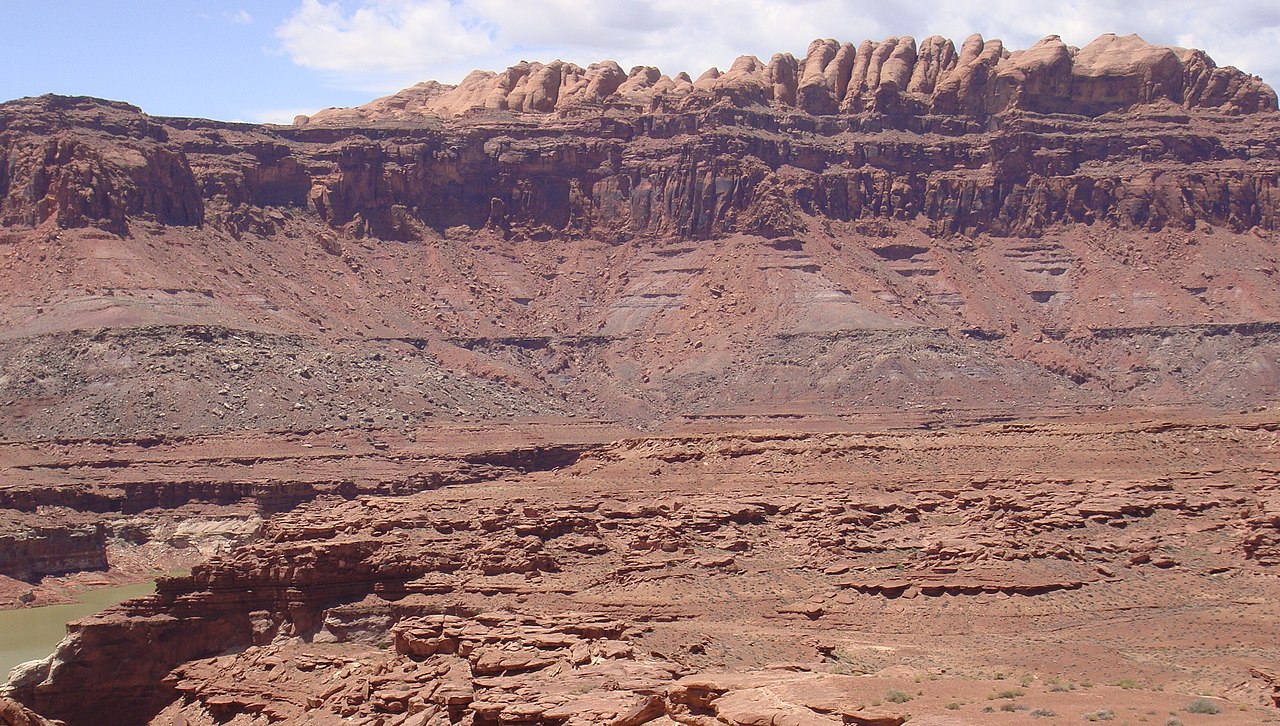


Key principles and methods
- Law of superposition: in an undisturbed stack, younger layers overlie older ones.
- Original horizontality and lateral continuity: beds form broadly horizontal sheets that can be traced across distances.
- Biostratigraphy, lithostratigraphy, chronostratigraphy: fossil content, rock characteristics and time-correlative frameworks used to correlate units.
- Analytical tools: radiometric dating, magnetostratigraphy, chemostratigraphy and sedimentological logging refine age and environmental interpretations.
History and development: Fundamental concepts emerged from the 17th through 19th centuries. Early thinkers established basic layering laws, and mapmakers and paleontologists later used fossils to correlate strata regionally, enabling the first geologic maps and the construction of a relative geologic time scale. In the 20th century, absolute dating methods and geophysical techniques integrated with classical field stratigraphy.
Uses and importance: Stratigraphy is central to petroleum and mineral exploration, groundwater assessment, engineering geology and archaeological context. It underlies reconstructions of past climates, sea-level change and basin evolution. Sequence stratigraphy links sedimentary patterns to changes in relative sea level and sediment supply, helping predict reservoir extent and environmental shifts.
Distinctions and challenges: Stratigraphy differs from sedimentology by emphasizing correlations and time relationships rather than only depositional processes. Key concepts include formal stratigraphic units (formations, members), unconformities that represent missing time, and the problem of incomplete or reworked records in tectonically active or metamorphosed regions. Effective stratigraphic work blends careful field mapping, fossil study and laboratory dating to build robust regional and global frameworks.
Related articles
Author
AlegsaOnline.com Stratigraphy: Principles, History, and Applications Leandro Alegsa
URL: https://en.alegsaonline.com/art/94209