
United States Army Corps of Engineers
Federal agency and major Army command that provides military engineering and civil public works, including water resources, navigation, flood risk management, environmental restoration and emergency response.
Overview
The United States Army Corps of Engineers (commonly USACE or CoE) is a federal agency within the Department of Defense that serves as a major Army engineering organization. It carries out both civil and military tasks, combining uniformed and civilian specialists to plan, design, construct, operate and maintain a wide variety of infrastructure and environmental projects. USACE succinctly frames its purpose as ‘‘Deliver vital public and military engineering services; partnering in peace and war to strengthen our Nation’s security, energize the economy and reduce risks from disasters.’’ Its stated vision is "Engineering solutions for our Nation’s toughest challenges."
Image gallery
10 Images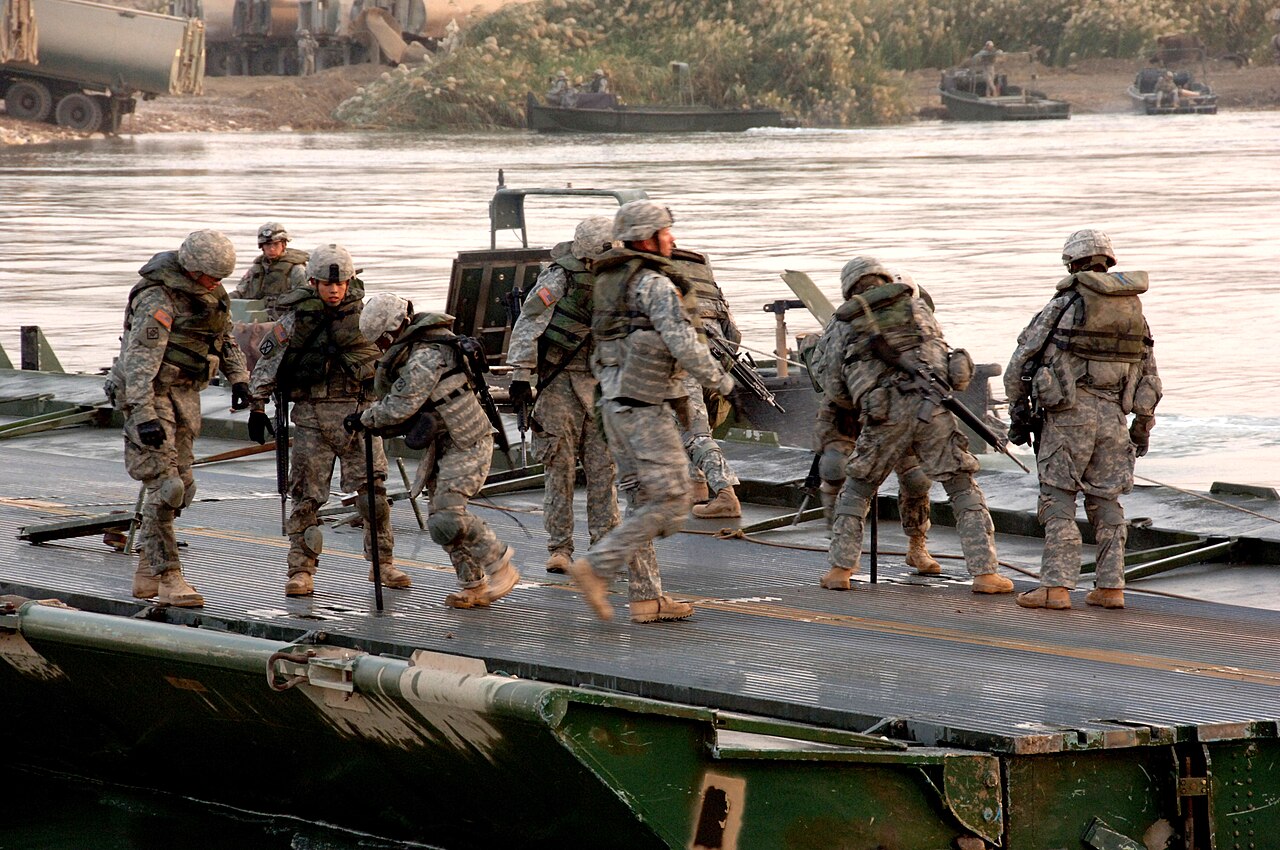





Primary missions and activities
The Corps has broad responsibilities that intersect public safety, commerce and natural resources. Its most familiar civil works include large-scale water resources projects, but its portfolio extends well beyond that. Key activities include:
- Planning, designing, building and operating locks and dams, and managing reservoirs that support navigation, water supply and recreation.
- Flood risk management and flood control systems, including levees, floodwalls and storm risk reduction projects.
- Maintaining and improving waterways for commercial navigation, including dredging and channel work.
- Coastal protection and beach nourishment projects to slow erosion and sustain shorelines, such as restoring beaches.
- Managing public outdoor recreation areas at Corps reservoirs and facilities, and operating hydropower capacity that contributes to the regional electric supply (hydropower).
Organization, workforce and engineering functions
USACE blends engineers, planners, scientists and construction managers drawn from both military and civilian ranks. The workforce has historically numbered in the tens of thousands and supports the Department of Defense while also delivering civilian infrastructure. The Corps provides engineering design and construction management services for Army and other defense components, for example assisting the Air Force and Reserve components such as the Army Reserve. It also carries out a wide range of civil engineering responsibilities domestically and overseas.
Environmental and regulatory roles
Beyond hard infrastructure, the Corps has a long-standing role in environmental stewardship and regulation. USACE administers permit programs for work in navigable waters and wetlands, implements ecosystem restoration projects, and partners on habitat recovery and native species protection. Its environmental work encompasses compliance oversight and large-scale environmental planning as well as deliberate ecosystem restoration to reconcile infrastructure needs with natural resource conservation.
History and development
The Corps traces its roots to the early continental period of the nation and evolved through successive conflicts and peacetime expansion. A notable milestone occurred during the American Civil War, when responsibilities from the Corps of Topographical Engineers were consolidated into the Army Corps of Engineers, broadening its civil mapping and construction duties. Over two centuries the organization adapted from military fortifications and river navigation to modern water management, civil works, and disaster response.
Importance and notable facts
USACE projects strongly influence commerce, public safety and environmental conditions: its dams and locks enable inland shipping; its reservoirs and powerplants contribute to regional energy supply; and its flood risk projects reduce consequences from storms and high water. The Corps also plays a central role in disaster response and long-term recovery after floods and hurricanes. As a hybrid military–civil engineering agency, USACE uniquely bridges national defense needs and civilian infrastructure delivery, continuing to evolve technical practices while managing complex social, economic and environmental tradeoffs.
Related articles
Author
AlegsaOnline.com United States Army Corps of Engineers Leandro Alegsa
URL: https://en.alegsaonline.com/art/102998
Sources
- usace.army.mil : "The Corps Environment, April 2013"
- usace.army.mil : USACE Mission and Vision webpage
- topogs.org : "A History of the U. S. Topographical Engineers, 1818-1863"