
V6 engine: design, balance, uses, and modern developments
Compact six-cylinder V-shaped internal combustion engine widely used in cars and light trucks; balance, packaging, fuel types, advantages, limitations and modern technologies explained.
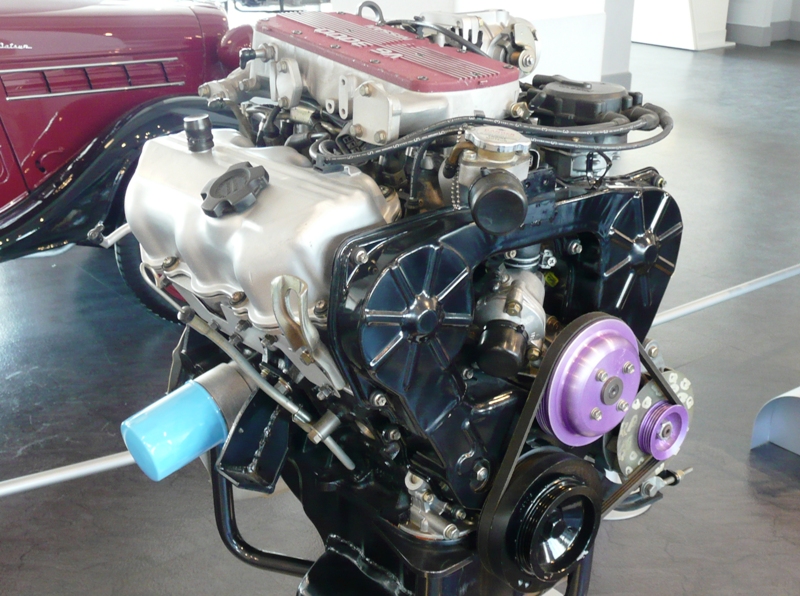
The V6 is an internal combustion engine configuration that arranges six cylinders in two banks of three, forming a characteristic "V" when viewed from the front. Each piston converts combustion into rotational motion on a common crankshaft, producing the power that drives a vehicle. V6 engines are a prevalent choice in passenger cars and SUVs because they provide a compromise between size, smoothness, and power output.
Image gallery
9 Images




Design and main characteristics
Typical V6 layouts place three cylinders on each bank with a central crankshaft. The angle between the banks varies: 60° is often chosen for natural balance and even firing intervals, while 90° can simplify manufacturing for companies adapting V8 production techniques. Crankshaft design (straight or split crankpins) and the firing order determine smoothness and vibration characteristics. V6s can run on several fuels, including gasoline, diesel, natural gas and certain alcohol blends.
Balance, vibrations and engineering solutions
Because of the uneven primary forces inherent in some V6 geometries, designers often add countermeasures such as balance shafts, tuned engine mounts, or specific crankshaft configurations to reduce vibration. A well-engineered V6 can approach the smoothness of an inline-six or higher-displacement V8, but it commonly requires more complex internal geometry and auxiliary components to do so.
Packaging and comparison with other engine types
The compact length of a V6 makes it easier to fit transversely in the engine bay of modern cars compared with a straight-six. That compactness is one reason V6 units are common in vehicles with a transverse engine layout and front-wheel drive architecture. Compared with an inline-four, a V6 generally offers more power and torque for the same displacement range but is mechanically more complex and heavier. Against a V8, a V6 is narrower and lighter, often delivering similar performance when combined with turbocharging or cylinder deactivation strategies.
Uses and modern developments
V6 engines are used across a wide range of vehicles from family sedans to performance cars and light trucks. Recent trends include downsizing combined with turbocharging, direct fuel injection, variable valve timing and cylinder deactivation to improve fuel economy without sacrificing peak power. Construction materials also vary: aluminum alloy blocks and heads reduce weight, while some heavy-duty applications still use cast iron for durability.
Typical advantages and limitations
- Advantages: compact packaging, good power-to-size ratio, adaptable to many drivetrains.
- Limitations: greater mechanical complexity than inline engines, potential vibration issues requiring mitigation, and typically higher production cost than four-cylinder units.
For more technical background and related topics, see these entries: internal combustion engine, six cylinders, pistons, V8 engine. Further reading on packaging and drivetrain layouts is available under transverse engine and front-wheel drive.
Questions and answers
Q: What is a V6 engine?
A: A V6 engine is an internal combustion engine with six cylinders, arranged in two banks of three cylinders each. The two banks form a "V" shaped angle, usually at a right angle (90°) or less to each other. All six pistons turn a common crankshaft.
Q: What type of fuels can power a V6 engine?
A: A V6 engine can be powered by different types of fuels, including gasoline, diesel, natural gas and alcohol.
Q: How does the size of the V6 compare to other engines?
A: The V6 is a very compact engine design and it is shorter than the straight-4. Many V6 engines are narrower than the V8 engine. It has largely replaced the inline-6 as it is too long to fit in many modern cars.
Q: Why has the inline-6 been replaced by the V6?
A: The inline-six has been replaced by the more compact and rigid V6 as it fits better into modern cars and offers good fuel economy without sacrificing power or torque output like its predecessor, the classic v8 did.
Q: Is the performance of a v6 comparable to that of other engines?
A: Yes, while not as smooth as an inline-six, due to its high power and torque output combined with good fuel economy, it has become increasingly popular for high performance applications.
Q: Are there any drawbacks to using a v6 compared to other engines?
A: One potential drawback could be increased vibrations due to its more complex design when compared with an inline-six or four cylinder engine.
Related articles
Author
AlegsaOnline.com V6 engine: design, balance, uses, and modern developments Leandro Alegsa
URL: https://en.alegsaonline.com/art/103822
Sources
- epi-eng.com : Torsional Output of Piston Engines