
Sugarcane: biology, cultivation, uses and global production
Sugarcane (genus Saccharum) is a tropical grass grown for sucrose-rich stalks. This article describes its biology, history, cultivation, processing, uses and environmental and economic significance.
Overview
Sugarcane is a tall, perennial grass of the genus Saccharum in the grass family, grown primarily for the sweet juice contained in its stalks. It thrives in warm, tropical and subtropical climates and is the principal source of commercial sugar and a feedstock for biofuels. Major modern producers include Brazil and India, but cultivation occurs across Africa, Asia, Australia and the Americas.
Image gallery
2 Images
Biology and varieties
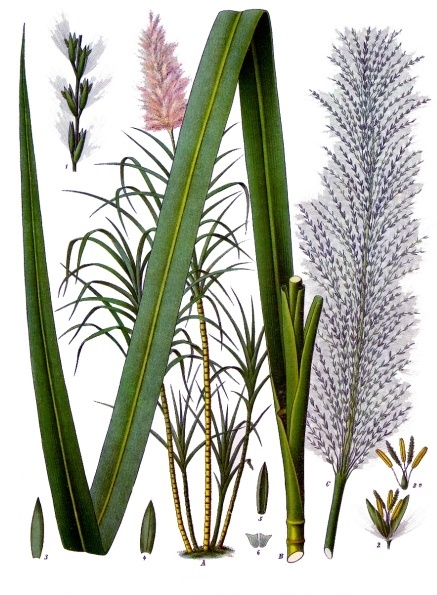
Sugarcane plants produce jointed stalks that typically reach between two and six metres in height. The stalks store sucrose within their fibrous tissues; the exact sugar content varies by variety and growing conditions. Cultivated types are largely the result of hybridization between domesticated species and wild relatives for traits such as disease resistance and hardiness. Important botanical and agronomic characteristics include ratooning ability (regrowth from the base), long growing season and high water demand. Breeding programs and modern agronomy focus on yield, sugar concentration and stress tolerance.
History and spread
Sugarcane was first domesticated in tropical Asia and later spread by trade and migration. Historical movements brought cultivation to the Middle East, Africa and the Mediterranean, and European colonial expansion introduced it to the Americas and to islands in the Atlantic and Pacific. Over centuries sugarcane has shaped economies and societies through trade, plantation agriculture and the development of sugar refining and distillation technologies.
Cultivation and processing
Successful sugarcane production requires warm temperatures, ample sunlight and abundant moisture; in lower-rainfall regions, irrigation is often used. Soils with good depth and water-holding capacity are preferred. Farmers apply organic and mineral fertilizers to replenish nutrients removed by the crop and manage pests and diseases through integrated practices. Harvesting can be manual or mechanized; after harvest the stalks are crushed or milled to extract juice, which is clarified, concentrated and crystallized to produce raw and refined sugar. By-products from processing include bagasse, a fibrous residue used as fuel or for materials, and molasses, used in fermentation and animal feed. See cultivation resources at agronomy guides.
Uses and economic importance
Sugarcane is a multi-purpose crop. Primary uses include:
- Production of sucrose for food and beverages (table sugar).
- Fermentation feedstock for distilled spirits such as rum and for industrial ethanol used as a biofuel (bioethanol).
- Bagasse used as a renewable source of heat and electricity in mills, and as a raw material for paper, board and some biodegradable products (bagasse applications).
- Molasses and other residues used in animal feed and industrial fermentation (molasses uses).
Environmental and social notes
Sugarcane cultivation has both positive and negative impacts. When processed efficiently, sugarcane can provide renewable energy and lower greenhouse emissions relative to fossil fuels. However, expansion of plantations has in some regions contributed to water stress, nutrient runoff and habitat change. Social dimensions include labor conditions on plantations and the crop's role in rural economies. Sustainable practices, such as efficient irrigation, soil conservation, use of bagasse for energy and careful land-use planning, are important to reduce environmental footprints (sustainability, water management, soil care).
Varieties, pests and research
Modern cultivars are selected for yield, sugar concentration and resistance to pests and diseases such as borers and fungal infections. Ongoing research includes breeding, biotechnology, and improved processing methods to raise efficiency and reduce waste. Agricultural extension and industry bodies provide cultivar recommendations, pest management guidance and market information (breeding programs, integrated pest management, processing technology).
Notable facts and distinctions
Unlike many annual row crops, sugarcane is often harvested repeatedly from the same plants for several cycles (ratoons), which can improve overall productivity. The crop is distinct from sugar beet, another major sugar source that grows in temperate climates and uses different processing methods (sugar beet comparison). Global markets and national policies—particularly for biofuels—strongly influence which regions expand production and how the industry evolves (market factors, policy impacts).
For further reading consult agricultural encyclopedias, national agricultural extension services and industry reports, which provide region-specific guidance on varieties, planting schedules and sustainable management practices.
Related articles
Author
AlegsaOnline.com Sugarcane: biology, cultivation, uses and global production Leandro Alegsa
URL: https://en.alegsaonline.com/art/94646