
Basalt — common extrusive igneous rock and its properties
Basalt is a dark, fine‑grained mafic volcanic rock formed from mantle-derived lava. This entry describes its composition, textures, tectonic settings, industrial uses, metamorphism and occurrence on Earth and other planets.
Basalt is a dark-coloured, fine-grained igneous rock that forms when mafic lava cools rapidly at or near the Earth's surface. It is one of the most abundant volcanic rocks on Earth and appears in many volcanic settings, from mid-ocean ridges to continental flood provinces. For a general overview see basalt.
Image gallery
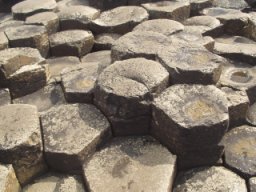
10 Images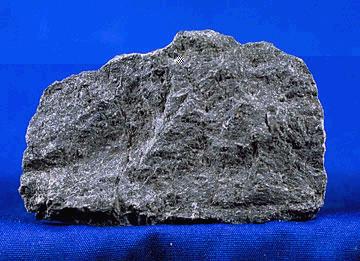



Composition and mineralogy
Basaltic rock is typically rich in iron and magnesium. The principal crystalline minerals are olivine and clinopyroxene, with lesser amounts of plagioclase feldspar and accessory iron‑titanium oxides. The bulk chemistry is described as mafic because it contains higher proportions of magnesium and iron relative to silica. Geochemical differences divide basalts into types such as tholeiitic and alkaline basalts; these differences reflect source composition and melting conditions.
Texture and structures
Because basaltic lava cools quickly at the surface, the groundmass is usually fine grained or aphanitic; individual mineral crystals are small. Larger crystals, or phenocrysts, may form if part of the magma cools slowly before eruption. Distinctive textures include vesicular basalt (bubbly from trapped gases), massive dense basalt, and columnar jointing produced by contraction during cooling. Submarine eruptions commonly create pillow basalts with bulbous, pillow-like shapes.
Formation and tectonic settings
Most basalt magmas are produced by partial melting of the upper mantle. Rising mantle material decompresses and melts beneath divergent plate boundaries such as mid-ocean ridges, producing much of the oceanic crust. Basalt is also erupted at hotspots and in continental rift systems. Very large, long-lived eruptions can form extensive flood basalts that cover thousands of square kilometres. The composition and eruptive behaviour depend on the degree of melting, the mantle source, and any crustal contamination; see further discussion of basaltic magmas and eruptive lava processes.
Variations and named forms
Basalts are classified by texture, mineralogy and chemistry. Common varieties include olivine basalt (containing olivine phenocrysts), tholeiitic basalt typical of mid-ocean ridges, and alkali basalt more common in intraplate settings. Pillow basalt denotes the shape produced under water, while extensive sheet flows characterise flood basalt provinces. The study of these varieties helps interpret tectonic and mantle processes.
Uses, durability and industrial products
Unweathered basalt is typically black or grey and valued for its hardness, density and thermal resistance. It is used as crushed stone for road aggregate, railway ballast, and construction aggregate. Basalt may be cut into blocks for paving and architectural uses. Processed basalt can be drawn into a continuous mineral fibre used in composites for insulation, reinforcement and geotechnical products; because it lacks the fibrous silicate structure of asbestos, basalt fibre is often offered as a safer alternative.
Weathering, soils and environmental aspects
Basalt weathers to form fertile soils rich in iron and magnesium; in tropical climates rapid chemical weathering produces clay minerals and laterite. Weathered basalt landscapes may develop characteristic red or brown soils. Quarrying and use of basalt require consideration of land disturbance, dust control and sustainable extraction practices.
Metamorphism and related rocks
When basalt is buried and subjected to increased temperature and pressure it alters to metamorphic equivalents. Low-grade metamorphism can produce greenstone and chlorite‑rich assemblages; higher-grade metamorphism may form amphibolite and granulite facies rocks. For more on these transformations see metamorphic equivalents.
Basalt beyond Earth
Basaltic compositions are common on other rocky bodies where mantles have melted. Vast mare basalts cover parts of the Moon (Moon), while basaltic volcanism has been identified on Mars and Venus. Some large asteroids also show basaltic crustal fragments. Planetary basalts provide important comparative information about mantle composition and volcanic processes across the Solar System.
Further reading and resources: General info, lava processes, magnesium in rocks, iron-rich minerals, olivine, pyroxene, flood basalts, basaltic magmas, lunar basalts, martian basalts, venusian volcanism, oceanic crust, basalt fibre, asbestos alternatives, metamorphic equivalents.
Related articles
Author
AlegsaOnline.com Basalt — common extrusive igneous rock and its properties Leandro Alegsa
URL: https://en.alegsaonline.com/art/9188