
Lava: molten rock that erupts and flows on Earth's surface
Lava is molten rock expelled onto the Earth's surface during volcanic activity. This article explains how lava forms, its common types, hazards, and why scientists study it.
Overview
Lava is the term geologists use for molten rock that reaches the Earth's surface. It originates as magma beneath the ground and, when expelled through vents or fissures, becomes lava. On the surface it cools and solidifies into various kinds of igneous rock, shaping landscapes and producing volcanic landforms.
Image gallery
10 Images


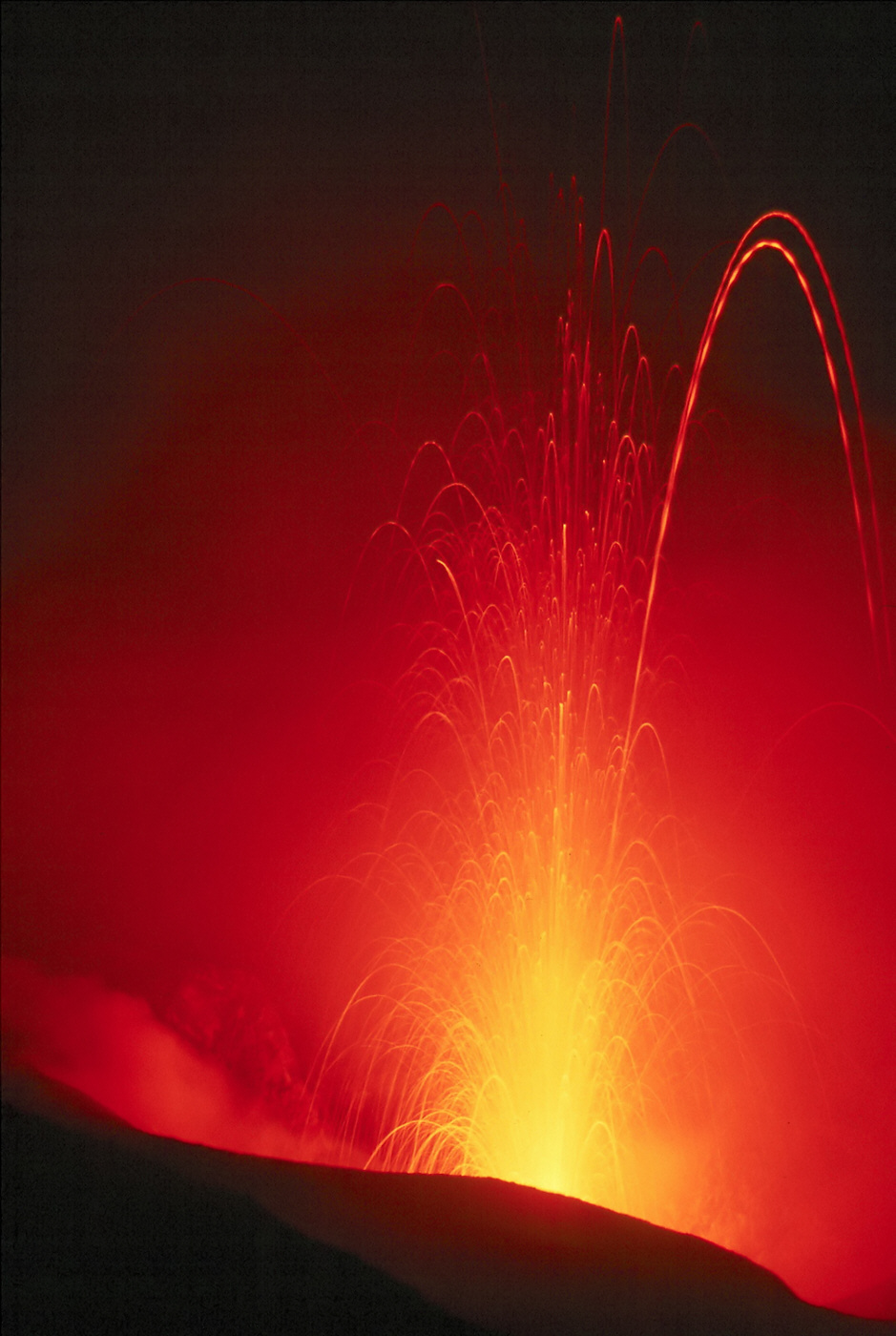


How lava forms and reaches the surface
Molten rock forms in the mantle or lower crust where heat, decompression, or addition of volatiles melts solid rock. When pressure forces this material upward it travels along conduits and fractures; these pathways can be long tubes or open cracks. The molten material flows through openings in the crust (vents and fissures) and emerges onto the exterior (the surface), where it is then called lava. Movement and behavior depend on temperature, chemical composition and gas content.
Common types and characteristics
Lava ranges from very fluid to very viscous. Scientists classify flows by texture and form:
- Pahoehoe — smooth, ropy surfaces formed by low-viscosity, hot lava.
- Aa — rough, clinkery blocks produced by faster surface cooling and higher viscosity.
- Blocky lava — very thick, slow-moving fragments that pile up near vents.
- Pillow lava — bulbous shapes that form when lava erupts underwater.
Viscosity, the resistance to flow, is a key property: more viscous lava resists movement and builds steep features, while fluid lava spreads widely (viscosity).
Hazards, uses, and scientific importance
Lava can ignite vegetation, destroy buildings and infrastructure, and reroute rivers. Despite its danger, cooled lava provides fertile soils and new land. Volcanologists study lava chemistry, temperature and flow patterns to assess eruption style and risk, and to interpret Earth’s geological history. Remote sensing and field measurements of flow behaviour (flow dynamics) help forecast hazards and guide evacuations.
Notable distinctions
Unlike the word magma, which refers to molten rock still underground, lava specifically denotes material on or above the surface. Its forms record eruption conditions: glassy textures indicate rapid cooling, while crystalline structures suggest slower cooling at depth. Understanding these differences helps geologists reconstruct past eruptions and anticipate future activity.
Questions and answers
Q: What is lava?
A: Lava is hot molten rock that flows through holes in the Earth's crust and onto the surface.
Q: Can lava be either thick or thin?
A: Yes, lava can be either viscous (~thick) or fluid (~thin).
Q: What is blocky lava?
A: Blocky lava is so thick and slow that it barely moves along the ground.
Q: Are there different types of lava?
A: Yes, other types of lava, like pahoehoe, aa, and pillow lava, are thinner and flow faster.
Q: What can happen when lava sets things on fire?
A: When lava sets things on fire, it can result in damage and loss of property.
Q: Can towns be destroyed by lava?
A: Yes, sometimes lava can destroy towns.
Q: Where does lava come from?
A: Lava comes from magma, which is hot molten rock that flows through holes in the Earth's crust and onto the surface.
Related articles
Author
AlegsaOnline.com Lava: molten rock that erupts and flows on Earth's surface Leandro Alegsa
URL: https://en.alegsaonline.com/art/56352
Sources
- www2.norvol.hi.is : Introduction to geology and geodynamics of Iceland, R.G. Trønnes, Nordic volcanological Institute, University of Iceland
- sciencedaily.com : Scientists Study 'Glaciovolcanoes,' mountains of fire and ice, in Iceland, British Columbia, US ScienceDaily, Apr. 23, 2010