
Moon (Earth's natural satellite)
The Moon is Earth's only natural satellite: a rocky, airless body about one quarter of Earth's diameter, influential in tides, human exploration, and cultural history.
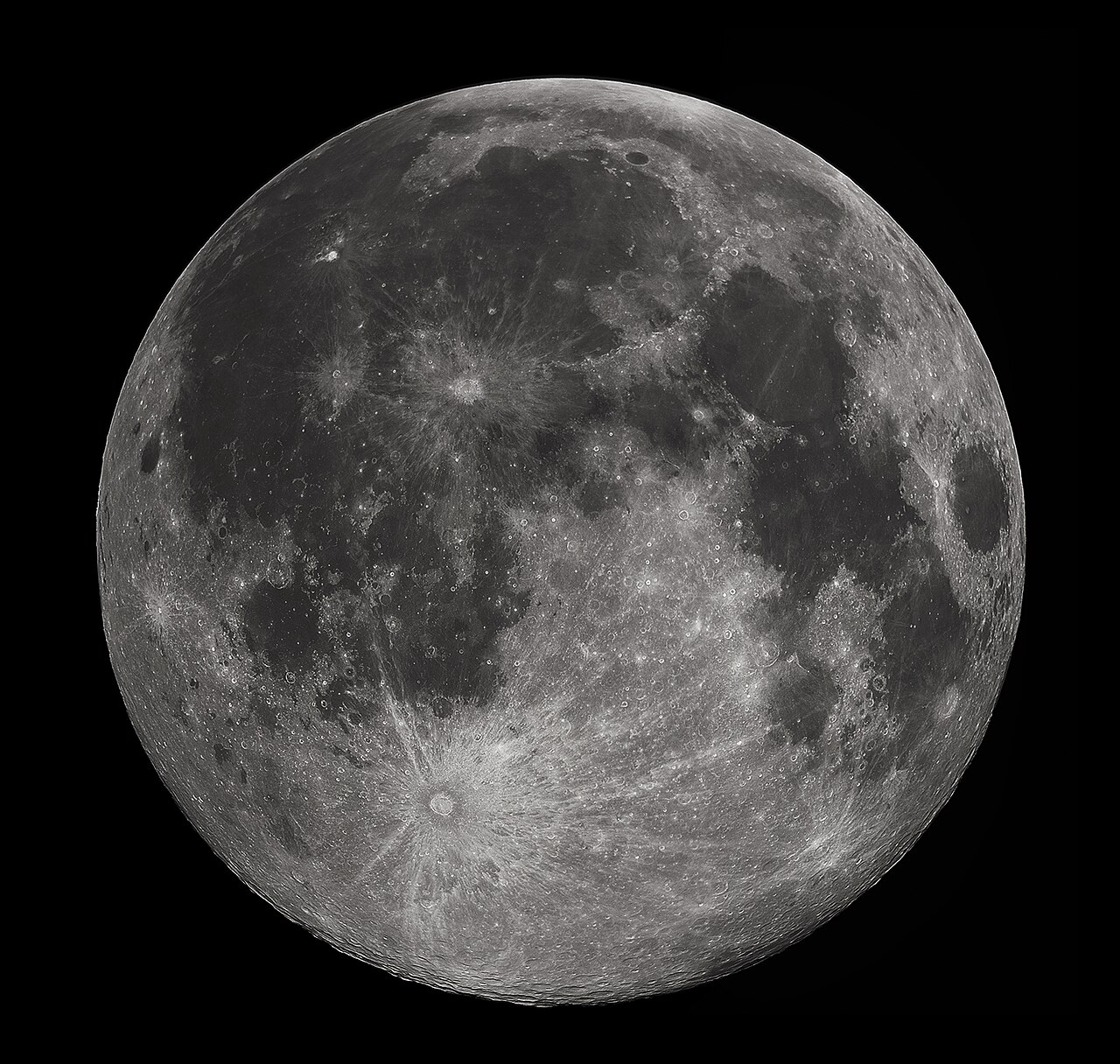
The Moon is Earth’s only natural satellite and the most prominent object in our sky after the Sun. It is visible both at night and sometimes by day. From Earth the Moon appears about half a degree across, though its physical diameter is about one quarter that of Earth. Its surface is rocky and covered in fine dust, and its weak gravity—roughly one-sixth of Earth’s near the surface—affects how objects fall and how astronauts move.
Image gallery
10 Images




Physical characteristics
The Moon lacks a global atmosphere and liquid water on the surface today. Its terrain includes dark, basaltic plains called maria, brighter highlands, craters of many sizes, and regions of regolith made by constant micrometeorite impacts. The lunar day (a full rotation relative to the Sun) equals about one lunar month, producing long periods of daylight and darkness at any given location.
Origin and orbital behavior
Most scientists explain the Moon’s origin by a large collision early in Earth’s history that ejected material which later coalesced into the Moon. The Moon orbits Earth and is slowly receding at a measurable rate due to tidal interactions, a process that also transfers angular momentum and influences Earth’s rotation.
Exploration, uses, and importance
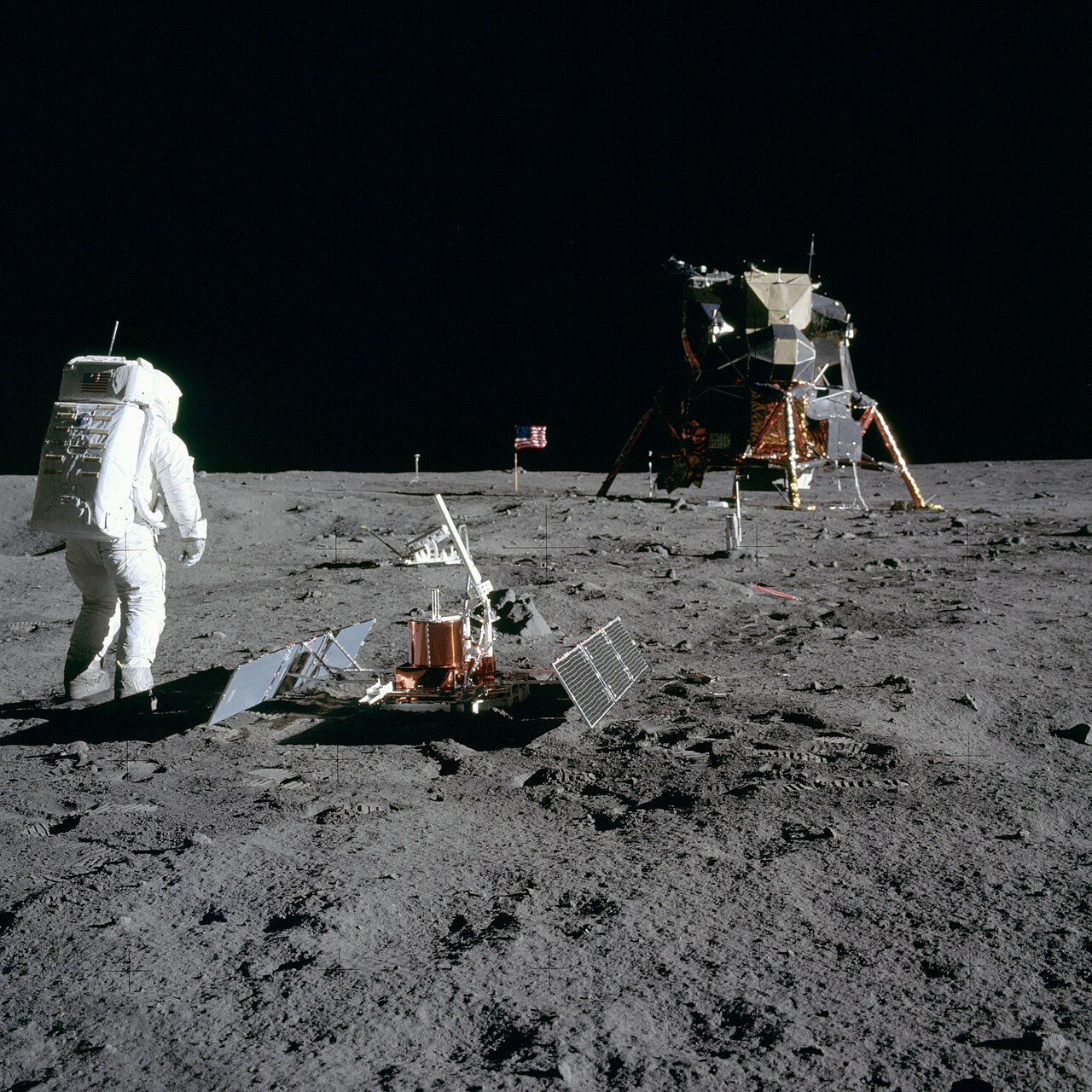
Human interest in the Moon spans navigation, calendars, and culture. In the 20th century, robotic probes and crewed missions visited and sampled the surface, advancing knowledge of planetary formation and geology. The Moon also serves as a laboratory for testing technologies for deeper space exploration and is discussed as a potential site for scientific bases.
Notable facts and distinctions
- It is the largest natural satellite relative to its planet in the inner Solar System and uniquely influential on Earth’s tides and axial stability.
- Its apparent size in the sky is about 0.5°, a coincidence that allows solar eclipses to occur when the Moon aligns with the Sun.
- Its surface gravity is about one-sixth of Earth’s; this affects weight and motion on the surface.
For basic definitions and further reading see Earth and Moon relations, materials on natural satellites at natural satellite references, observations of apparent size at apparent angular size, and resources on lunar gravity and tides at tidal and gravity studies.
Questions and answers
Q: What is the Moon?
A: The Moon is Earth's only natural satellite.
Q: How often can we see the Moon?
A: We can usually see the Moon in the night sky and also during the day.
Q: Do other planets have moons or natural satellites?
A: Yes, some other planets also have moons or natural satellites.
Q: How big is the Moon compared to the Earth?
A: The Moon is about a quarter the size of the Earth.
Q: How does gravity on the Moon compare to gravity on Earth?
A: The gravity on the Moon is one-sixth of the Earth's gravity.
Q: What is the surface of the Moon like?
A: The Moon is a rocky and dusty place.
Q: How does the Moon move away from the Earth?
A: The Moon moves slowly away from the Earth at a rate of 3.8 cm per year, due to the effect of tidal dissipation.
Related articles
Author
AlegsaOnline.com Moon (Earth's natural satellite) Leandro Alegsa
URL: https://en.alegsaonline.com/art/66540
Sources
- doi.org : 10.2138/rmg.2006.60.3
- nssdc.gsfc.nasa.gov : "Moon Fact Sheet"
- adsabs.harvard.edu : "Near-Surface Temperatures on Mercury and the Moon and the Stability of Polar Ice Deposits"
- doi.org : 10.1006/icar.1999.6175
- britannica.com : "Encyclopædia Britannica"
- ui.adsabs.harvard.edu : 2006RvMG...60...83L
- doi.org : 10.2138/rmg.2006.60.2
- news.bbc.co.uk : "1969: Man takes first steps on the Moon"
- doi.org : 10.1086/427539
- thestar.com : "NASA: 'lots of water' on the moon"
- cnn.com : "U.S. reveals secret plans for '60s moon base"
- popsci.com : "LUNEX: Another way to the Moon"
- unoosa.org : "Can any State claim a part of outer space as its own?"