
Black smoker (deep-sea hydrothermal vent)
A black smoker is a type of deep-sea hydrothermal vent that emits mineral-rich, superheated fluids and builds chimney structures, supporting unique chemosynthetic ecosystems and concentrating metallic sulfides.
Overview
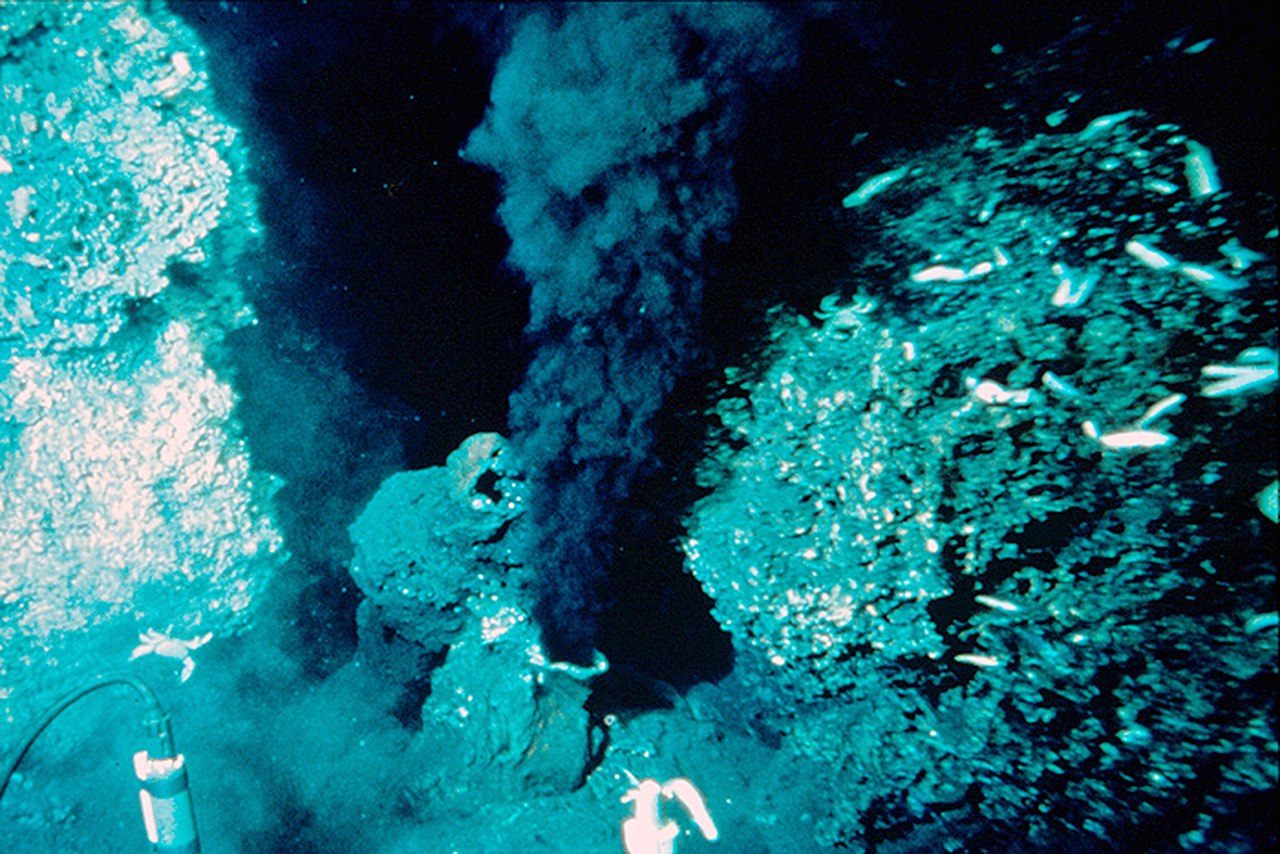
A black smoker is a form of submarine hydrothermal vent on the ocean floor where geothermally heated water is expelled through cracks in the crust. Fluids rising from beneath the seabed are rich in dissolved metals and sulfides; when they meet the cold ambient seawater, metal sulfides precipitate and form dark, billowing plumes that resemble smoke. These vents occur most often in regions of intense geological activity, for example where tectonic plates separate or where volcanic heat is near the seafloor.
Image gallery
10 Images





Formation and physical characteristics
Seawater penetrates fractured rock, is heated by underlying magma, and reacts chemically with the host rock. The resulting fluid can reach very high temperatures and become loaded with iron, copper, zinc and sulfur. As that fluid exits the seafloor and mixes with cold seawater, the change in temperature and chemistry causes rapid precipitation of fine-grained mineral particles. Over time these particles build vertical chimney-like structures composed mainly of sulfide minerals. The visible ‘‘black smoke’’ is the suspended mineral particles in the vent plume rather than combustion.
Chemistry, biology and ecosystems
Black smokers create localized chemical gradients that sustain rich biological communities independent of sunlight. Primary production is based on chemosynthesis: microorganisms such as sulfur-oxidizing and methane-oxidizing bacteria and archaea convert chemical energy from reduced compounds into organic matter. These microbes form the base of food webs that support specialized animals including tube worms, clams, mussels, shrimp and various crustaceans. Such communities can be extremely productive relative to the surrounding deep sea and often host species found nowhere else.
- Typical biological inhabitants: tube worms, clams, mussels, shrimp, microbial mats (see vent communities).
- Common minerals deposited: iron, copper, zinc sulfides; large accumulations can form massive sulfide deposits.
- Associated terrestrial analogues: hot springs, fumaroles and geysers (see also fumaroles and Yellowstone for surface hydrothermal examples).
Distribution and scientific significance
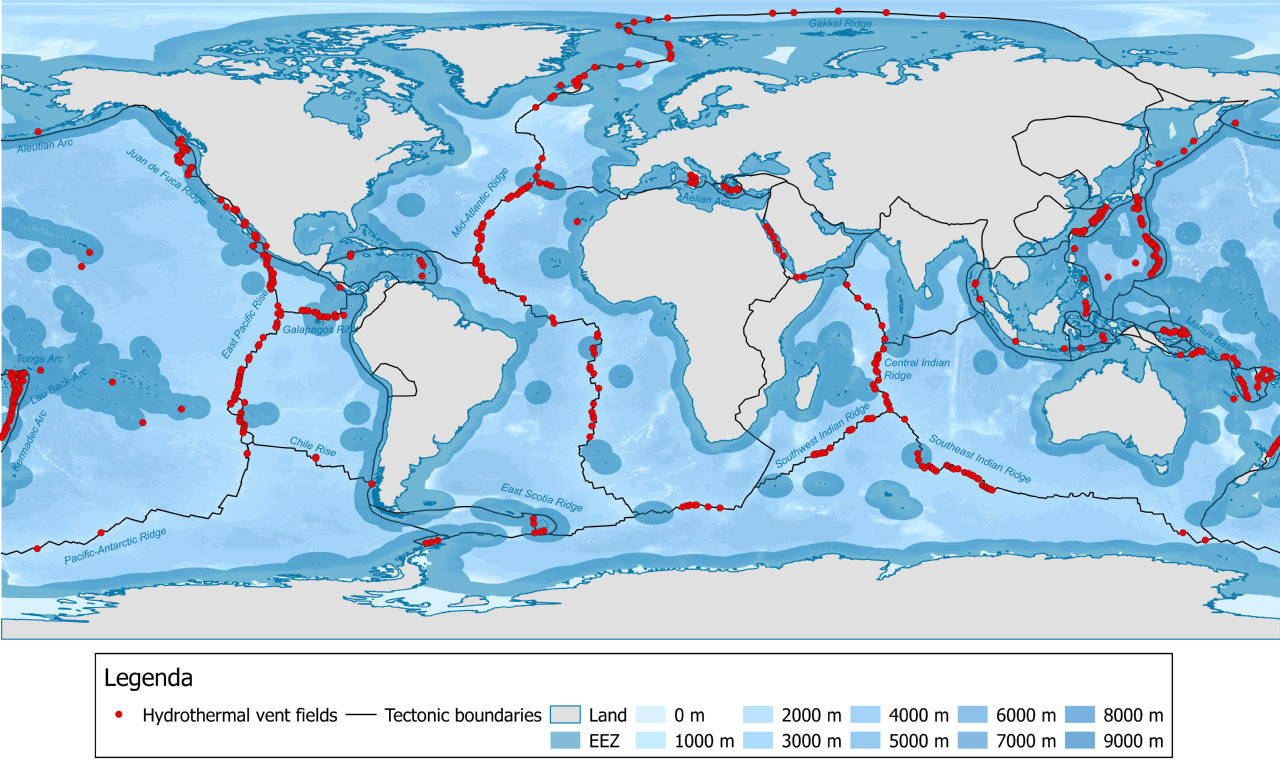
Black smokers are commonly found along mid-ocean ridges, back-arc basins and other volcanic or tectonically active regions, and were first documented during deep-sea exploration in the late 20th century. They are important for several reasons: they host unique ecosystems, they contribute to ocean chemistry and they concentrate economically interesting metal sulfides on the seafloor. Their existence has also influenced ideas about the origin of life because chemosynthetic processes at vents could have provided energy and organic precursors on the early Earth.
Notable distinctions and extraterrestrial interest
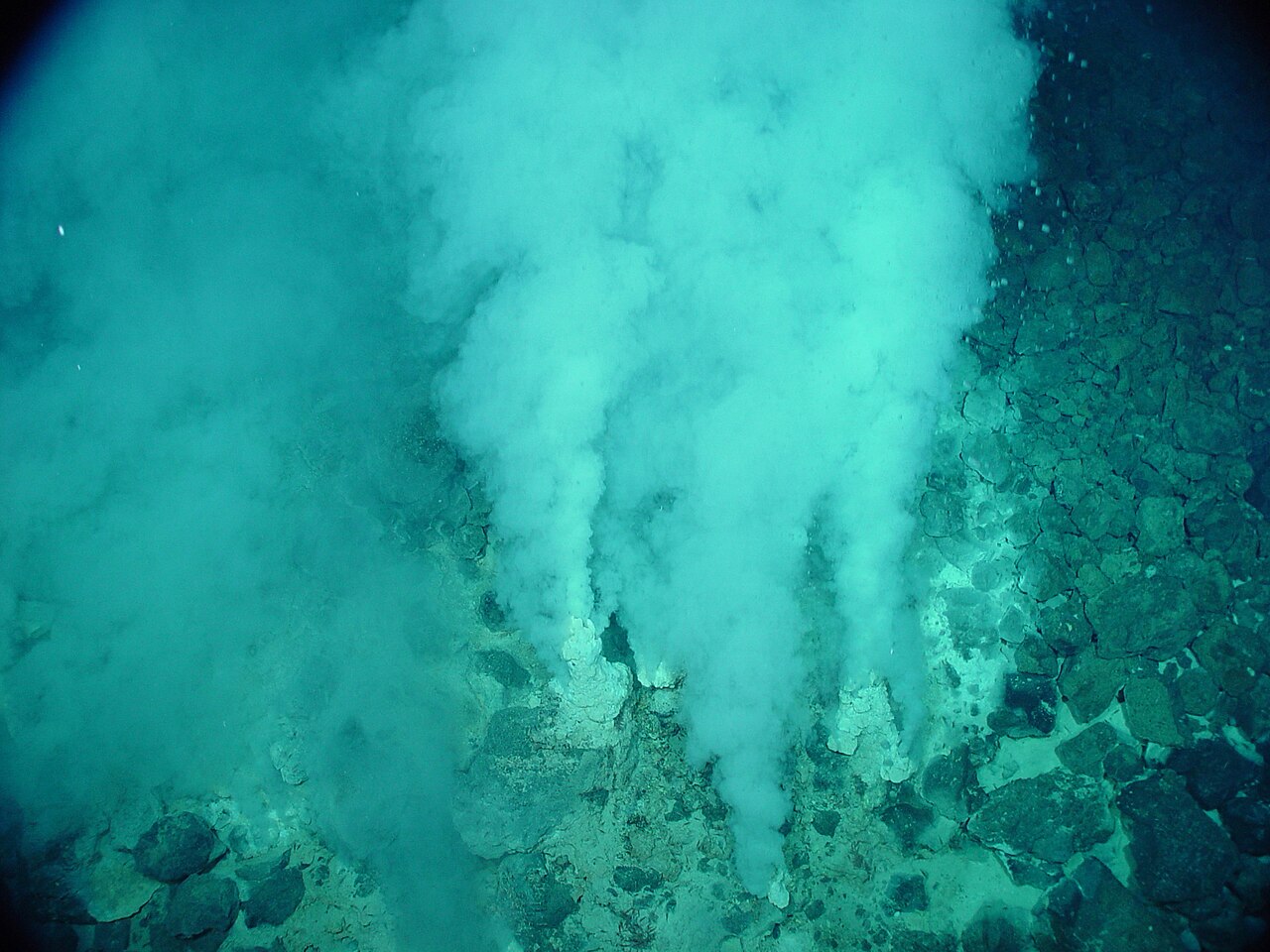
Not all hydrothermal vents look or behave the same. "Black smokers" are distinct from cooler, lighter-colored vents often called "white smokers," which emit fluids rich in silica, barium or calcium rather than abundant metal sulfides. Active venting has also been proposed or inferred beyond Earth; for example, scientists consider the possibility of hydrothermal activity beneath the icy shell of Jupiter's moon Europa and have speculated about ancient venting on Mars. Research continues to explore the roles vents play in planetary processes and in concentrating mineral resources.
For more detailed introductions and expedition summaries see resources on hydrothermal systems and exploration—starting points include general overviews of vents (hydrothermal vent), geothermal processes (geothermal) and hotspot-related activity (hotspots).
Related articles
Author
AlegsaOnline.com Black smoker (deep-sea hydrothermal vent) Leandro Alegsa
URL: https://en.alegsaonline.com/art/11969