
Rosidae — a historical subclass of flowering plants
Rosidae is a botanical subclass name historically used to group rosid-like flowering plants; its circumscription varies by system but always includes the rose family (Rosaceae).
Rosidae is a botanical name applied at the rank of subclass to a set of flowering plants that, in most traditional schemes, include the rose family. Because the name is a rank-based taxon, its exact limits depend on the classification system adopted; the single consistency is that it includes the family Rosaceae. In modern treatments the plants once placed in Rosidae largely correspond to the clade informally known as the rosids.
Image gallery
1 Image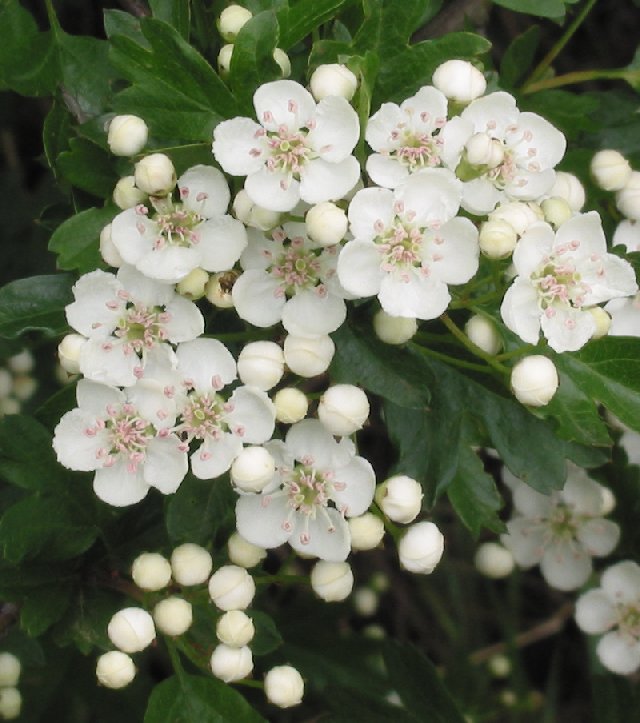
Characteristics and scope
The group is morphologically diverse and cannot be defined by a single obvious feature. Members range from herbaceous legumes and aromatics to large trees. Common traits that occur in many constituent lineages include actinomorphic or slightly zygomorphic flowers, often with well-developed petals and numerous stamens, and a predominance of woody and herbaceous growth forms. Molecular data in recent decades have been decisive in delimiting relationships among these lineages.
History and changing circumscriptions
Rosidae appears as a formal subclass in several historical systems, notably the Cronquist system of 1981 under the governance of the International Code of Botanical Nomenclature (ICBN). With the advent of molecular phylogenetics and the APG (Angiosperm Phylogeny Group) frameworks, the traditional concept of Rosidae was reorganized into more phylogenetically natural clades, often divided into two large assemblages commonly called Fabidae (eurosids I) and Malvidae (eurosids II).
Typical orders and groups often included
- Crossosomatales
- Geraniales
- Myrtales
- Fabidae group: Celastrales, Cucurbitales, Fabales, Fagales, Huaceae, Oxalidales, Malpighiales, Rosales, and Zygophyllales
- Malvidae group: Brassicales, Huerteales, Malvales, and Sapindales
These orders are examples of taxa that have been associated with Rosidae in various treatments; different authors and modern systems may add, split, or reassign some groups as phylogenetic evidence accumulates.
Importance: the assemblage includes many economically and ecologically important plants — fruit trees, timber-producing trees, legumes, oilseeds, spices and ornamentals. The taxon's changing boundaries illustrate how botanical classification has shifted from morphology-based groupings toward classifications grounded in evolutionary relationships.
Related articles
Author
AlegsaOnline.com Rosidae — a historical subclass of flowering plants Leandro Alegsa
URL: https://en.alegsaonline.com/art/84193