
Rosales (order of flowering plants)
Rosales is an order of flowering plants that contains nine families including roses, many fruit trees, figs, nettles, hops and cannabis; important for food, ornamentals and other uses.
Overview
Rosales is an order of plants within the angiosperms commonly recognized for including the true roses and a wide range of other familiar species. Botanists group these taxa together on the basis of shared evolutionary relationships: modern classifications place them in a single order of flowering plants. The order comprises nine families that show considerable diversity in form, ecology and human use.
Image gallery
4 Images

Characteristics
Members of Rosales range from herbaceous species to shrubs and large trees. There is no single outward trait that all members share; instead, the grouping rests primarily on molecular and genetic evidence. Flowers, leaves and fruit types vary widely across the order, producing everything from fleshy pomes and drupes to aggregated fruits and dry achenes. Many species bear simple or compound leaves and some have conspicuous stipules or inflorescence structures.
Taxonomy and history
The modern circumscription of Rosales is the result of comparative morphology and, more recently, DNA-based phylogenetic studies. Late twentieth- and early twenty-first-century molecular work rearranged several traditional groupings and confirmed that a set of families with varied appearances share common ancestry. The order is usually described as containing nine families; researchers continue to refine relationships within and among those families using genetic data and fossil evidence.
Notable families and examples
Although the roses are the best-known members, Rosales also includes many economically and culturally important plants. Examples include:
- Rosaceae (the true roses and many fruit crops) — see Rosaceae
- Berry-producing genera such as strawberries, blackberries and raspberries
- Pome and stone fruit trees: apples, pears, plums, peaches and apricots
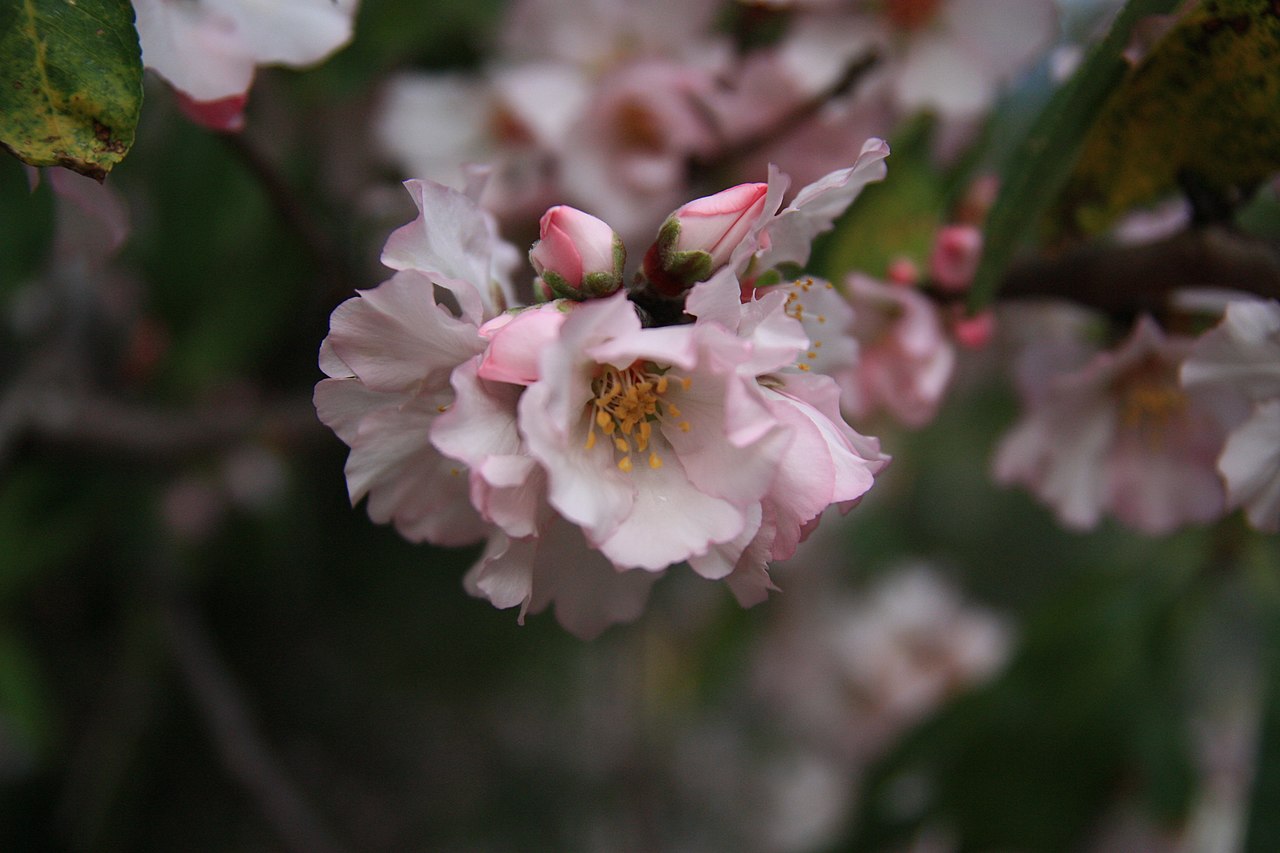
- Nut-producing trees such as almonds
- Trees and shrubs like rowan and hawthorn, and timber-producing elms
- Moraceae and related families that include figs and mulberries
- Families that include nettles, hops and Cannabis
A short list of familiar names — roses, strawberries, apples, figs, nettles, hops and cannabis — indicates the breadth of the order and its importance to food, ornament and industry.
Uses, distribution and ecological role
Species in Rosales occupy habitats worldwide but are especially common in temperate regions. They supply major agricultural crops (fruits and nuts), ornamentals (roses and flowering shrubs), timber and fibers, and in some cases raw materials for beverages or medicinal compounds. Ecologically, members can be keystone species in their ecosystems, offering fruits for wildlife and serving as host plants for insects.
Distinctions and notable facts
One important distinction is between the order as a whole and the family that contains the "true roses": the family Rosaceae is just one family within Rosales. The broader order unites groups that at first glance seem very different, a result that highlights the power of genetic studies in modern plant classification. For further general context about the order and its families see resources on plant orders and evolutionary relationships (nine families, genetic studies and comparative morphology).
Related articles
Author
AlegsaOnline.com Rosales (order of flowering plants) Leandro Alegsa
URL: https://en.alegsaonline.com/art/84121