
Fabales: the order of legumes and related flowering plants
Fabales is an order of eudicot flowering plants that includes the large legume family and several related families; important for ecology, agriculture, and nitrogen cycling.
The order Fabales comprises a group of flowering plants placed within the rosid clade of the eudicots by modern classifications such as the Angiosperm Phylogeny Group. It is best known for the legume family, which contains many familiar trees, shrubs and herbaceous species. Members of the order occur worldwide but are especially diverse in tropical and warm-temperate regions.
Image gallery
9 Images





Key families and taxonomy
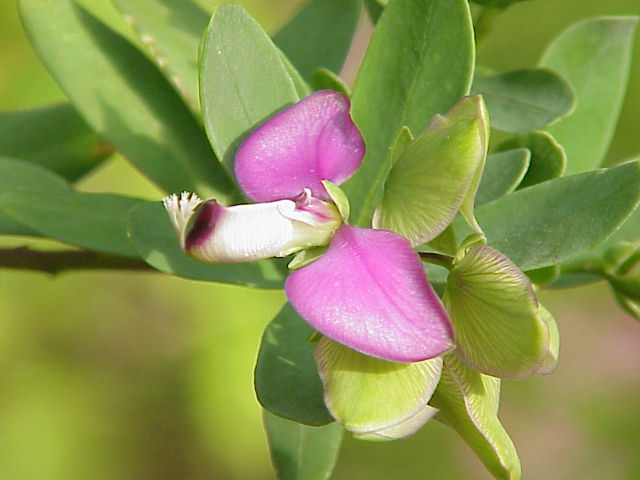
Contemporary systems divide Fabales into several families rather than treating all legumes alone. The largest family is the Fabaceae, commonly called the legumes, peas or beans. Other families included by some classifications are the Polygalaceae (milkworts), Quillajaceae and Surianaceae. Older systems such as the Cronquist arrangement often placed only Fabaceae in Fabales and assigned the others to separate orders.
Characteristics
Plants in Fabales show a range of growth forms from herbs to large trees. Common traits include compound leaves, zygomorphic (bilaterally symmetric) flowers in many legumes, and fruits that are typically pods (legumes) in Fabaceae. Root nodules that host nitrogen-fixing bacteria are a notable ecological feature of many legumes, though not all members of the order form nodules.
Uses and ecological importance
Legumes are agriculturally and ecologically significant. They supply staple foods (beans, peas, lentils), forage and cover crops, timber and ornamental species. Their ability to enrich soil nitrogen through symbiosis with rhizobia has made them central to crop rotations and soil restoration practices. Species in Polygalaceae and other families have medicinal or horticultural uses as well.
History and classification issues
The circumscription of Fabales has changed as botanical research moved from morphology toward molecular phylogenetics. The APG systems grouped the families now placed in Fabales based on genetic evidence, while earlier morphology-based systems split them into separate orders. Ongoing phylogenetic work continues to refine relationships within the rosids and among the families currently assigned to Fabales.
Notable facts
- Economic role: Many important crop plants belong to Fabaceae and support global food systems.
- Ecological role: Nitrogen fixation by legumes influences ecosystems from grasslands to forests.
- Taxonomic diversity: The order contains a mix of very large and small families, reflecting varied evolutionary histories.
For further reading on classification frameworks and specific family treatments see resources on the APG approach and family monographs: classification overview, Polygalaceae details, Fabaceae overview, Quillajaceae notes, and Surianaceae summary.
Related articles
Author
AlegsaOnline.com Fabales: the order of legumes and related flowering plants Leandro Alegsa
URL: https://en.alegsaonline.com/art/33168