
Bagpuss — the 1974 British children's television series
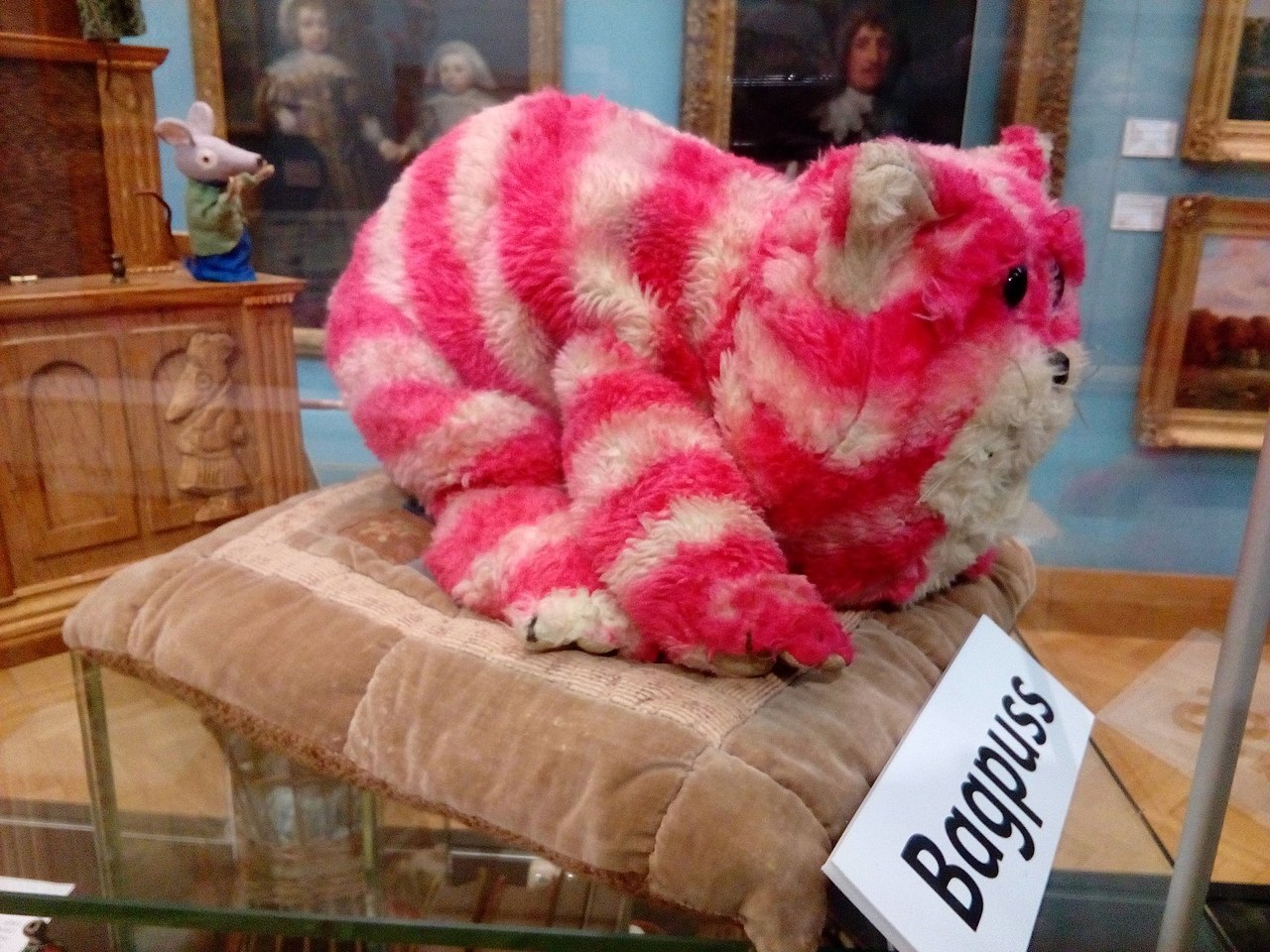
Bagpuss is a 1974 British children's television series by Smallfilms. Thirteen episodes featured a saggy toy cat and other shop toys that come to life; the show is noted for its handmade puppets and gentle storytelling.
Overview
Bagpuss is a short but influential British children's television series first broadcast in 1974 on the BBC television. Only 13 episodes were produced, yet the programme became a lasting favourite and was repeated for many years afterward. Conceived and crafted by Peter Firmin and Oliver Postgate under their production banner Smallfilms, the series combined simple animation techniques, handcrafted puppetry and a calm, story-led pace that appealed to both children and adults.
Image gallery
3 Images

Format and opening
Each episode followed an identical framing device. The show opened with sepia photographs and a short narration that introduces a little girl named Emily who runs a shop called Bagpuss & Co. Emily would bring an object — something lost or broken — place it before her favourite toy, the saggy stuffed cat Bagpuss, and then leave. Bagpuss is described in the programme as "an old, saggy cloth cat, baggy, and a bit loose at the seams." After Emily departs a short charm is sung to wake Bagpuss and the toys in the window, at which point the picture changes from sepia to colour film.
Characters and regular cast
The shop window is populated by a small ensemble of anthropomorphised toys who examine the object that Emily has found, tell its story, put it right and sometimes perform a musical number. The regular characters are:
- Bagpuss — the saggy cloth cat who acts as a sleepy, affectionate centre for the group.
- Gabriel — a toy toad who is slow and thoughtful.
- Madeleine — a rag doll, soft-spoken and kind; she is referred to in the programme as a rag doll.
- Professor Yaffle — a carved wooden woodpecker bookend who speaks like a pedantic academic and explains functions or origins, frequently addressing the audience.
- The mice — residents of the "mouse organ", named as a playful pun on mouth-organ; they provide music and high-pitched commentary from their tiny instrument.
Other small toys and objects appear from episode to episode. Most of the voices, narration and musical interludes were provided by Oliver Postgate, with a few distinct performances for characters such as Madeleine and Gabriel.
Production, creators and style
The series is associated with a handmade, low‑tech aesthetic. The creators favored simple mechanics, stop-frame touches and deliberately modest sets so that the personality of each puppet could come through. Peter Firmin was responsible for much of the visual design while Oliver Postgate wrote and narrated the stories. Their company, Smallfilms, produced a number of other well-regarded children’s programmes using similar methods.
Episodes, themes and reception
Across its run, each episode treats a found object as the trigger for a mini-adventure: the characters discuss the item, recall or invent its history, and often repair it. The rhythm of discovery, explanation and gentle musical interlude is a hallmark of the series. Professor Yaffle’s slightly pompous manner — complete with a mock German accent and pince-nez — contrasted with the mice’s high voices and the soft domestic presence of Madeleine and Gabriel, creating a warm balance of comic types.
Legacy and notable facts
Although brief, Bagpuss left a lasting cultural imprint. Its opening song and the description of the cat are widely remembered, and the programme has been cited as an example of economical, character-driven children’s storytelling. The series encouraged appreciation of small things, mending and imaginative play rather than fast-paced spectacle. Original episodes were repeated on television for many years after their first transmission, helping to secure its place in British childhoods. For contemporary viewers and researchers interested in children’s media, the programme is often discussed alongside other Smallfilms productions and is referenced in histories of British broadcasting and puppet-based television.
Further information on the show’s cast, production notes and episode list can be found through archival and fan resources; for more on the creators and their methods see credits for the stories and company background at Smallfilms. Cast and character details are often linked from broadcast histories and museum collections that document children’s television of that era. The show’s gentle approach and handmade look remain influential for animators and writers working in children’s media today.
Related terms and references: toy, cat, shop, window, woodpecker, books, professor, mice, high voices, BBC.
Questions and answers
Q: What was the name of the popular children's television series?
A: The popular children's television series was called Bagpuss.
Q: When did it first air on BBC television?
A: Bagpuss first aired on BBC television in 1974.
Q: How many episodes were made?
A: A total of 13 episodes were made.
Q: Who created the show and what company did they work for?
A: The show was created by Peter Firmin and Oliver Postgate through their company Smallfilms.
Q: What type of character was Bagpuss?
A: Bagpuss was a toy cat.
Q: How did each episode begin? A: Each episode began with looking through old sepia photographs as these words were spoken, "Once upon a time, not so long ago, there was a little girl and her name was Emily. And she had a shop." There was a shop called “Bagpuss & Co” and the cat sat in the shop window. Then Emily would leave the fixed thing in front of her favourite toy - Bagpuss - and he would wake up when she left.
Q: Who provided all of the voices except those of Madeleine and Gabriel? A: Oliver Postgate provided all of the voices except those for Madeleine and Gabriel, who he also wrote stories for.
Related articles
Author
AlegsaOnline.com Bagpuss — the 1974 British children's television series Leandro Alegsa
URL: https://en.alegsaonline.com/art/8302