
Cat (domestic cat) — Felis catus: overview, traits, history, and roles
An accessible encyclopedic overview of the domestic cat (Felis catus): its biology, behaviour, history of domestication, common roles, breeds and distinctions from wild felids.
Overview
The domestic cat (Felis catus) is a small carnivorous mammal in the family Felidae, commonly kept by people around the world. Often called a house cat when living indoors, the species has been associated with humans for millennia and exists in many forms: companion animals, working farm cats and populations that live independently of people. Domestic cats are one branch of the larger group of felids that also includes many wild species.
Image gallery
10 Images



Physical characteristics and behaviour
Cats are typically small, agile predators with sharp retractable claws, acute night vision and sensitive hearing. Their diet is primarily meat, and they display hunting behaviours even when well fed. Typical descriptors include:
- Body: lithe and flexible, enabling climbing and jumping.
- Senses: excellent low-light vision, strong olfaction and hearing tuned to detect small prey.
- Social behaviour: ranges from solitary to loosely social; many individuals form bonds with people and other animals.
- Life stages and terminology: young cats are called kittens; intact females are often called queens and intact males toms.
Domestication and history
Evidence indicates that cats began living close to human settlements roughly several thousand years ago, drawn to grains and the rodents that fed on them. Over time this association became mutually beneficial: cats reduced pest numbers and humans tolerated and eventually bred them. The relationship between cats and humans developed differently from that of dogs, with a more independent domestic pattern that retained many wild-type behaviours.
Roles, uses and human relationships
Cats serve multiple roles today. Many are kept primarily as companions and household pets (pets), valued for company and emotional support. Others act as working animals: farm or barn cats help control rodent populations on farms. Where domestic animals adapt to living without regular human care, they form feral populations that can impact local wildlife and ecosystems.
Breeds, varieties and classification
There are many recognized cat breeds, plus numerous mixed or unpedigreed cats. Cats are often described by coat length—shorthair, longhair or hairless—or grouped as "domestic shorthair" and "domestic longhair" when not of a specific pedigree. Breed standards emphasize features such as coat pattern, body shape and temperament, but mixed-breed cats are common and diverse.
Wild relatives and important distinctions
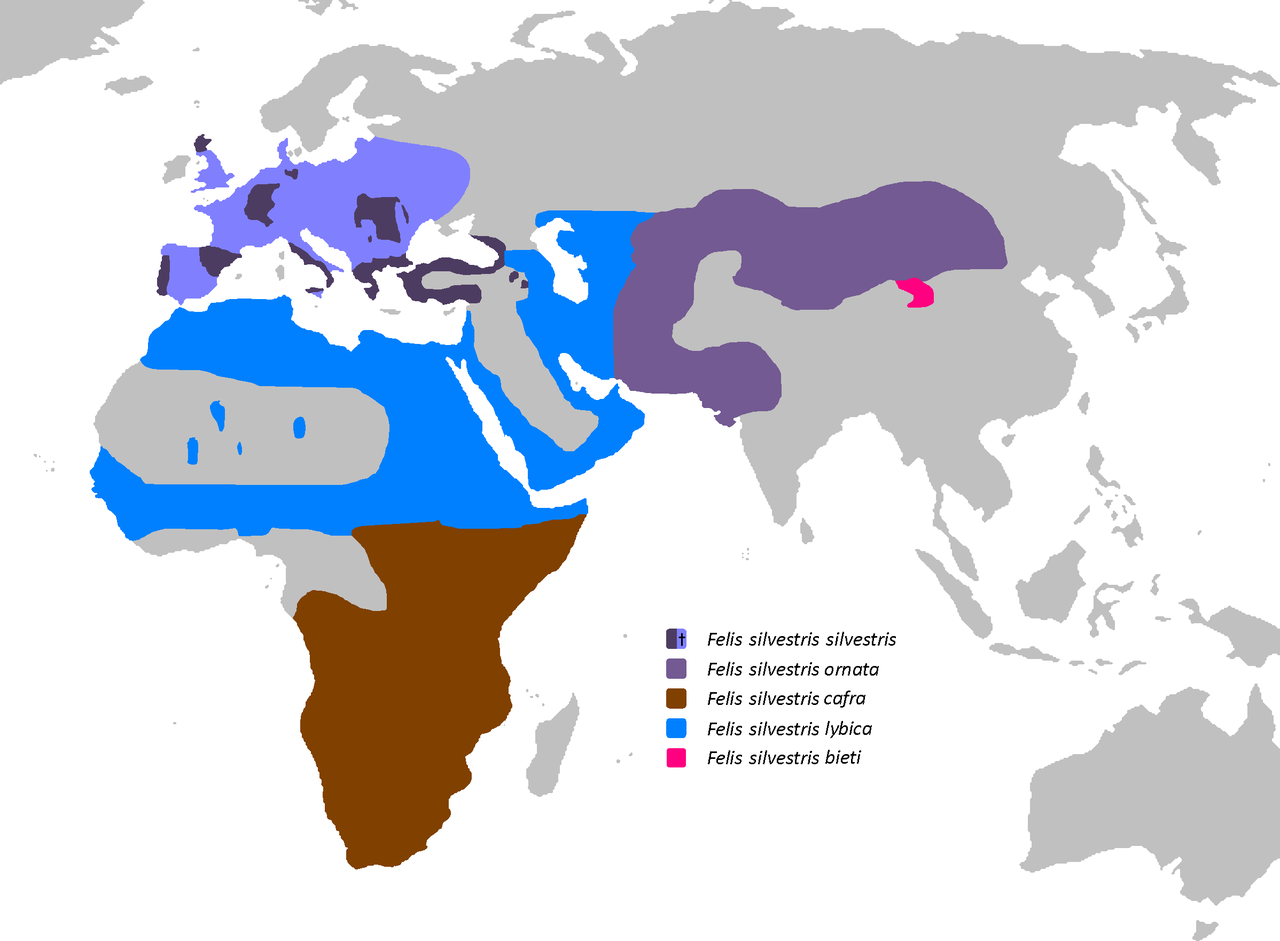
The term "cat" is also used for wild felids, which range from the small wildcats found across many regions to the large, charismatic species often called "big cats." Well-known examples of large wild felids include the lion, tiger, leopard, jaguar, puma and cheetah. Smaller wild species, such as the lynx, occur in parts of northern Europe and other regions. Wild felids tend to be less tolerant of people and may be dangerous; domestic cats generally lack the size and strength of those larger relatives.
For more information on biology, behaviour and conservation, consult recognized animal care and wildlife sources: classification and traits, domestication studies, and practical guides on cat care and population management (health and reproduction). Additional resources explore the cultural and ecological roles of cats in human societies and in wild ecosystems (felid family overview, mammalian context).
Specialized links and further reading: leopard, farm cat roles, companion care, cheetah, puma, jaguar, tiger, lion, lynx, feral cat issues, rodent control, Felidae family, human-cat interactions, domestication, reproductive terms, traits overview, regional wild species, mammalian features, felid distinctions.
Questions and answers
Q: What are cats?
A: Cats, also known as domestic cats (Felis catus), are small, carnivorous mammals of the family Felidae.
Q: How long have cats been domesticated?
A: Cats have been domesticated (tamed) for nearly 10,000 years.
Q: Why do people keep cats as pets?
A: People keep cats as pets for hunting rodents and companionship.
Q: What is a kitty?
A: A kitty is another word for a cat.
Q: What is a young cat called?
A: A young cat is called a kitten.
Q: Are there different breeds of cats?
A: Yes, there are about 92 breeds of domestic cats which can be shorthair, longhair or hairless.
Q: What are big and small wild cats called?
A Big wild cats are well-known animals such as lions, tigers, leopards, jaguars, pumas and cheetahs while small wild cats include lynx found in northern Europe.
Related articles
Author
AlegsaOnline.com Cat (domestic cat) — Felis catus: overview, traits, history, and roles Leandro Alegsa
URL: https://en.alegsaonline.com/art/17563
Sources
- news.nationalgeographic.com : "Oldest known pet cat? 9500-year-old burial found on Cyprus" · archive.org · archive.org
- bioweb.uwlax.edu : "Cat skeleton" · web.archive.org
- pubmed.ncbi.nlm.nih.gov : 11390844
- books.google.com : Outwitting cats
- jhered.oxfordjournals.org : "Heredity of polydactyly in the cat"
- pubmed.ncbi.nlm.nih.gov : 20242531
- youtube.com : "Gizmo Flushes"
- channel3000.com : "Meows mean more to cat lovers"
- vlsstore.com : "Prolific cats: the estrous cycle"
- catcollection.org : "Penile spines of the domestic cat: their endocrine-behavior relations"
- doi.org : 10.1002/ar.1091570111
- worldcat.org : 0003-276X