
Rainbow lorikeet (Trichoglossus haematodus)
A colorful Australasian parrot known for its brush-tipped tongue, nectar diet, and loud social behavior. Native to eastern Australia and nearby islands; sometimes introduced elsewhere.
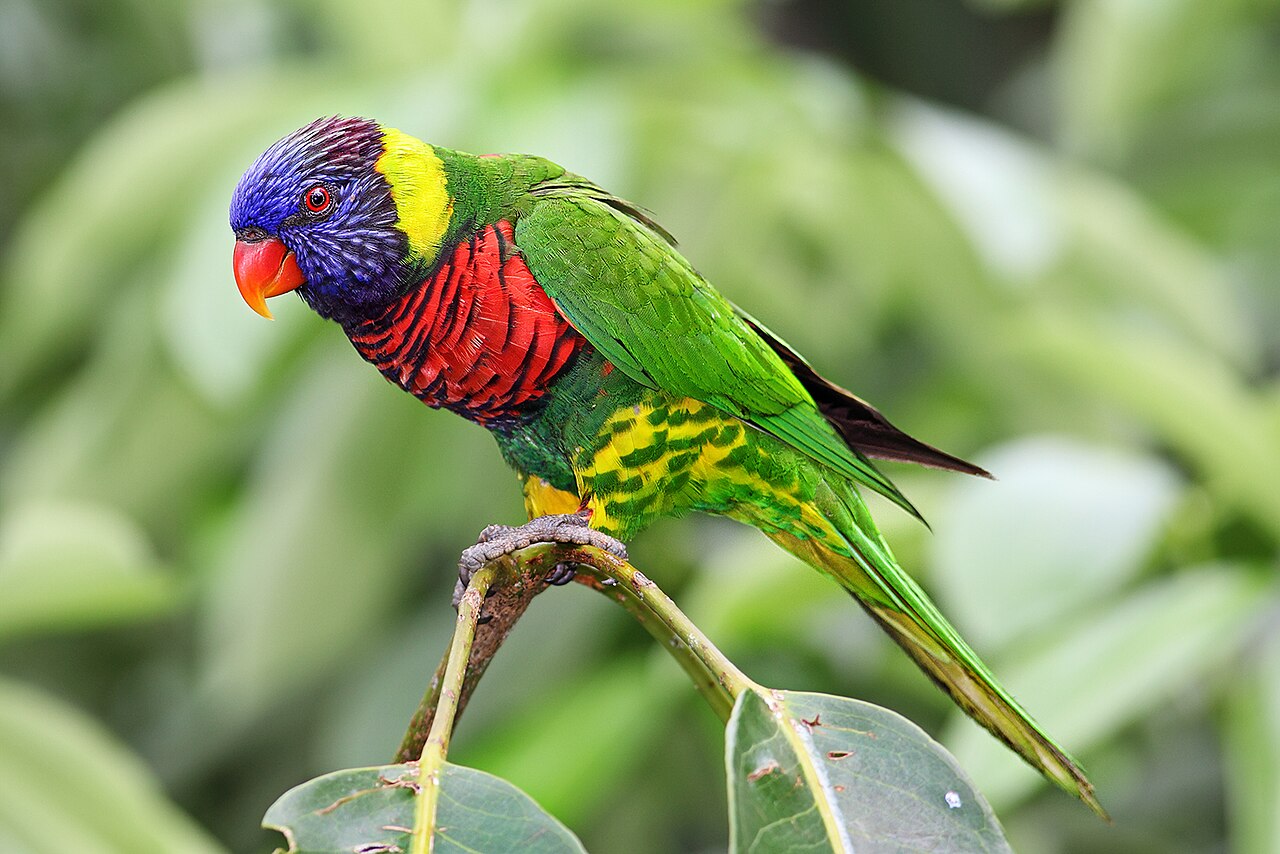
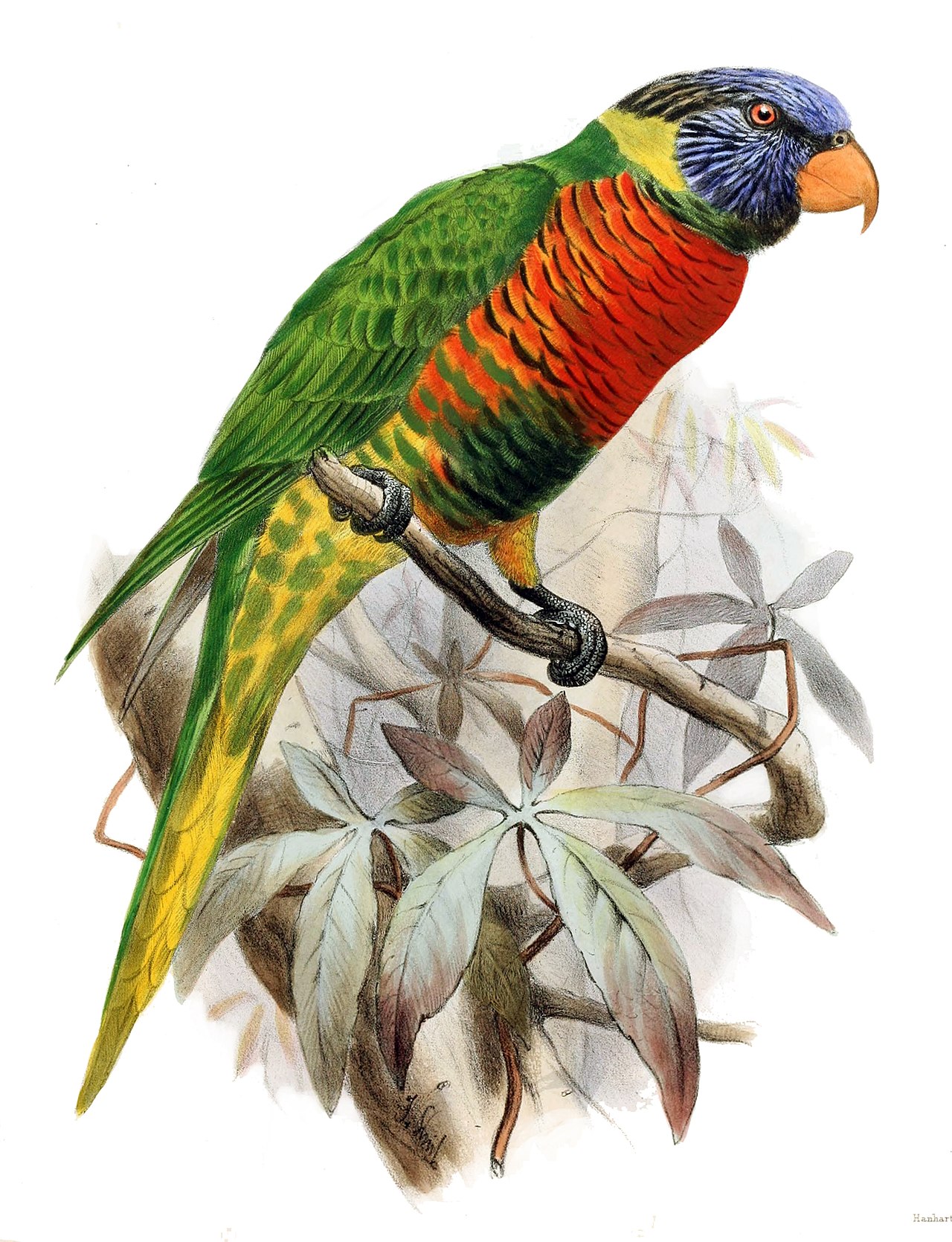
The rainbow lorikeet (Trichoglossus haematodus) is a medium-sized, vividly colored parrot native to parts of Australasia. Recognizable for its bright plumage — including blues, greens, reds and yellows — it is one of the most familiar and conspicuous birds in coastal and forested areas where it occurs. Lorikeets are highly active, social and noisy, and they are adapted for feeding on nectar and pollen.
Image gallery
8 Images



Appearance and adaptations
Rainbow lorikeets typically show a striking combination of colors: a blue or bluish head, green wings and back, and a breast with red, orange or yellow tones. Their bodies are compact and their tails moderately long. A distinctive anatomical feature is the brush-tipped tongue, made of stiffened papillae, which the bird uses to gather nectar and pollen from flowers. Their beak is curved and strong, suited for manipulating blossoms and soft fruit.
Distribution and habitat
Members of the species and closely related forms are found across eastern Australia and on islands in the region, extending to parts of eastern Indonesia, Papua New Guinea and various Pacific islands. Within Australia the birds are common along the east coast and occupy a range of habitats including rainforest edges, coastal scrub, urban parks and open woodland. Several subspecies or regional forms have been described; taxonomic treatments vary and some authorities recognize around twenty subspecies or closely allied taxa.
Diet and behavior
Rainbow lorikeets feed primarily on nectar and pollen, but they also take soft fruits, seeds and occasionally blossoms or insects. Their brush-tipped tongues allow efficient extraction of floral resources. They are diurnal, often seen in noisy flocks that travel between feeding and roosting sites. Pairs frequently form long-term bonds and engage in mutual preening. Vocalizations are loud and varied, used to maintain contact within flocks and to defend feeding territories.
Breeding and life history
Breeding typically takes place in tree hollows or other cavities where the pair raises a clutch. Nests are simple and parental care is intensive: both adults feed the young with regurgitated nectar and fruit. Young fledge after a period of development in the nest; survival depends on food availability and predation pressure. In captivity and the wild, rainbow lorikeets can live for many years when conditions are favorable.
Human interactions and conservation
The rainbow lorikeet is a popular aviary bird because of its bright colors and lively behavior. In some regions where it has been introduced, such as parts of Western Australia and New Zealand, established populations are considered pests because they compete with native birds, damage fruit crops and can transmit disease. Conservation status varies by region and subspecies; many populations are abundant, while island or isolated forms may be more vulnerable to habitat loss and introduced predators.
Notable distinctions
- Feeding specialization: brush-tipped tongue adapted for nectar and pollen.
- Social ecology: often forms noisy flocks and strong pair bonds.
- Taxonomy: a complex of forms with several subspecies and close relatives across Australasia.
Further reading and resources
- Overview: Australasian parrots and lorikeets
- Range notes for eastern Australia
- Distribution in Australia
- Records from eastern Indonesia
- Western New Guinea populations
- Papua New Guinea occurrences
- New Caledonia and nearby islands
- Solomon Islands records
- Vanuatu and island populations
- Queensland regional information
- South Australia reports
- Tasmania occurrence notes
- Habitat: rainforests and woodlands
- Coastal scrub and urban habitat
- Woodland and feeding ecology
- Subspecies and taxonomy
- Introduced populations in Western Australia
- Introductions on New Zealand's North Island
- Management where considered a pest
Questions and answers
Q: What is the rainbow lorikeet?
A: The rainbow lorikeet (Trichoglossus haematodus) is an Australasian parrot.
Q: Where does the rainbow lorikeet live?
A: The rainbow lorikeet lives on the east coast of Australia, eastern Indonesia (Maluku and Western New Guinea), Papua New Guinea, New Caledonia, Solomon Islands and Vanuatu. In Australia, it is common along the eastern seaboard, from Queensland to South Australia and Tasmania. Its habitat is rainforest, coastal bush and woodland areas.
Q: How many subspecies are there of the rainbow lorikeet?
A: There are a number of subspecies of the rainbow lorikeet - some classifications list about 20 subspecies.
Q: Has the rainbow lorikeet been artificially introduced in some places?
A: Yes, in some places such as Western Australia and the North Island of New Zealand they have been artificially introduced.
Q: Is it seen as a pest species in these places where it has been artificially introduced?
A: Yes, in these places where it has been artificially introduced it is seen as a pest species.
Q: What type of environment does the rainbow lorikeet prefer to live in?
A: The natural environment for the rainbow lorokee prefers to live in includes rainforest, coastal bush and woodland areas.
Related articles
Author
AlegsaOnline.com Rainbow lorikeet (Trichoglossus haematodus) Leandro Alegsa
URL: https://en.alegsaonline.com/art/80911
Sources
- sciencewa.net.au : ScienceWA Rainbow lorikeet joins Perth pest list
- biodiv.org : Rainbow Lorikeet pest